

Published on :
Updated on :
In short : the ND is one of the most dependable affordable sports cars you can buy, rated 4.0 out of 5 by RepairPal. For 2019, the ND2 raised the 2.0 to 181 hp with a 7,500 rpm redline and added a dual-mass flywheel (Mazda). On CarGurus, used ND model years average from about $19,200 (2016) to $32,600 (2025). Let condition decide between two examples.
This page covers the ND soft-top. For the retractable hardtop, see the Miata RF guide.
Last verified: October 1, 2026
Fourth-gen Miata guide
Everything on the ND Miata, in order
Everyone tells you the same thing before you buy one. Get a Miata, they say, you will never regret it. Then you open the listings and the fourth-generation cars stare back at you. ND1, ND2, Sport, Club, Grand Touring, soft-top, RF, and a price spread wide enough to swallow your budget whole.
The ND Miata is the easiest Mazda MX-5 Miata to love and the easiest to buy badly. It looks almost identical from 2016 to 2023. It is not. The wrong year, the wrong engine, or a soft-top that has been chafing quietly for three years can turn a bargain into a slow drain on your wallet.
This guide is written by an MX-5 owner from sourced data and published owner reports, and it covers the three mistakes buyers make most often. No brochure talk. Just what the ND actually is, which version fits which driver, what breaks, and what it costs to run one for real.
Not sure whether the ND is even the right generation for you? Keep reading, the honest version starts now.
What the ND Miata actually is
Model years 2016 to 2023
One shape, two very different cars
The ND is the fourth-generation Mazda MX-5 Miata, launched for the 2016 model year and built through 2023 in this exact form. In North America it is the Miata, or the MX-5 Miata on the paperwork. In Japan it is the Roadster, built in Hiroshima. Same car, three names, one philosophy.
Mazda did something rare with the ND. It made the car smaller and lighter than the NC before it. That was deliberate, part of what Mazda called the Gram Strategy, shaving weight gram by gram. The result is a roadster that weighs around 2,330 pounds and drives like something twice its price should not.
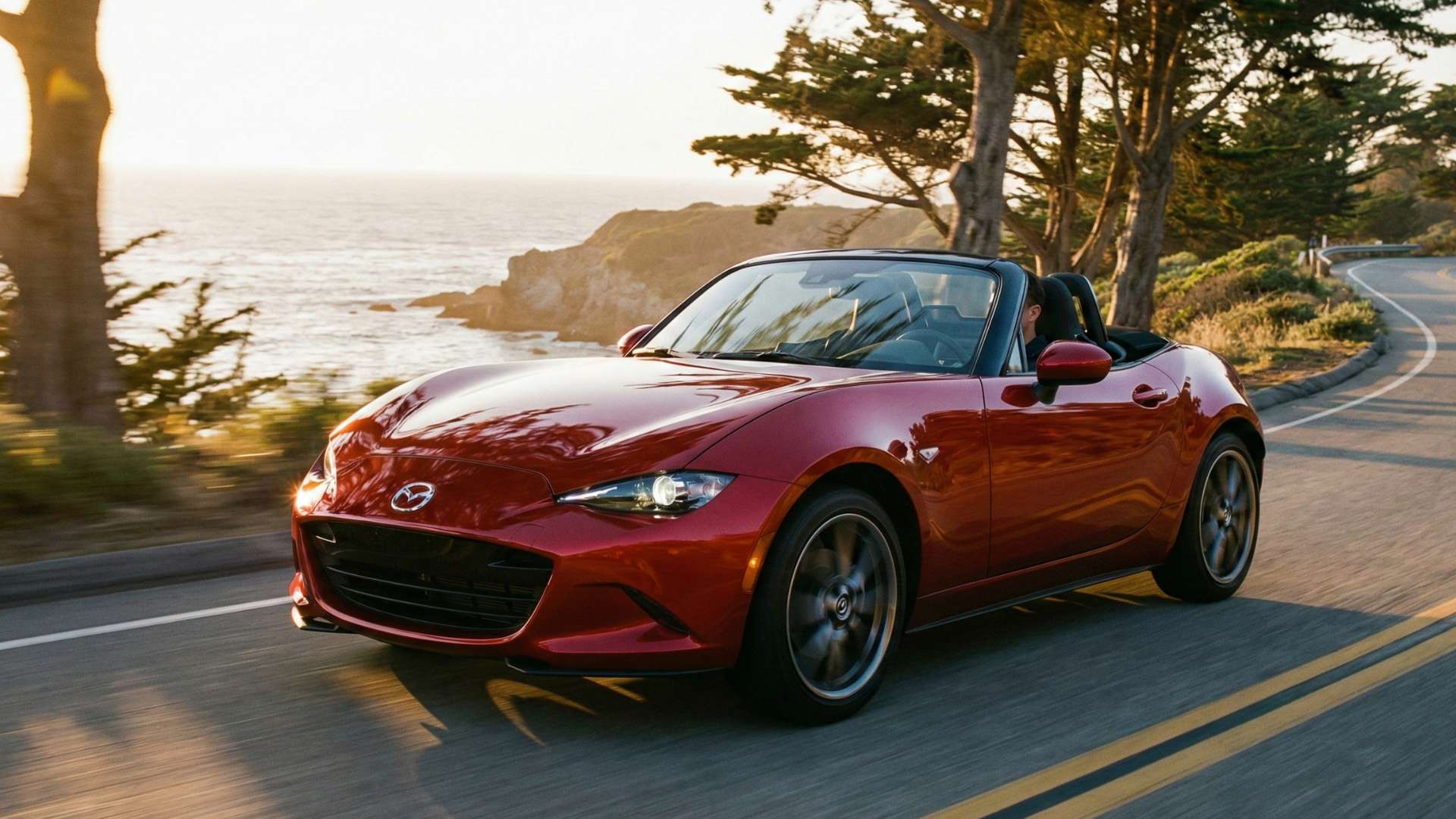
The layout matters too. The ND runs a front mid-engine, rear-wheel-drive setup, with the mass pushed back behind the front axle. That is why it changes direction the way it does. This is the Jinba Ittai idea Mazda keeps repeating, horse and rider as one, and on the ND it stops being marketing and starts being obvious after the first corner.
Two body styles exist. The soft-top convertible, which is the classic drop-the-roof-in-ten-seconds Miata. And the RF, the Retractable Fastback, a targa-style hard roof that folds electrically and leaves the rear buttresses in place. They drive differently and they age differently, which we will get to.
ND1 vs ND2, the split that decides everything
If you remember one thing from this guide, make it this. The ND comes in two distinct phases, and the difference is bigger than the badge suggests.
The early cars, 2016 to 2018, are the ND1. The 2.0-liter engine here makes 155 hp and runs out of breath around 6,800 rpm. Willing, but it asks you to keep it busy.
For 2019 Mazda revised the 2.0 for the ND2. Power jumped to 181 hp, the rev limit climbed to 7,500 rpm, and the transmission was redesigned. According to Jalopnik’s used ND buyer’s guide, that revised transmission eliminated the worn 2nd and 3rd gear synchros that troubled early manual cars, which is one reason ND2 examples take a harder life better.
A buyer who was set on a cheap early 2.0 test-drove an ND2 by accident at the same dealer. He walked out having spent two grand more than planned. The extra revs and the sharper throttle changed the car enough that the ND1 suddenly felt flat to him. This happens a lot.
The ND2 also brought a telescoping steering wheel that finally adjusts for reach, better seats, and a backup camera on higher trims. None of it is dramatic on paper. All of it matters when you live with the car.
The engine, and why ND1 and ND2 feel different
One 2.0-liter, two personalities
The 1.5-liter never came to North America, so your real choice is ND1 versus ND2.
In North America this question is really about phase, not displacement. The 1.5-liter that purists overseas love was never sold here, so your choice is between the 155 hp ND1 2.0 and the 181 hp ND2 2.0.
The ND1 is the purist’s pick anyway: lighter-feeling, eager, happiest when you wring it out on a back road. It gives up a little straight-line speed and it does not care. Just budget for the known early quirks.
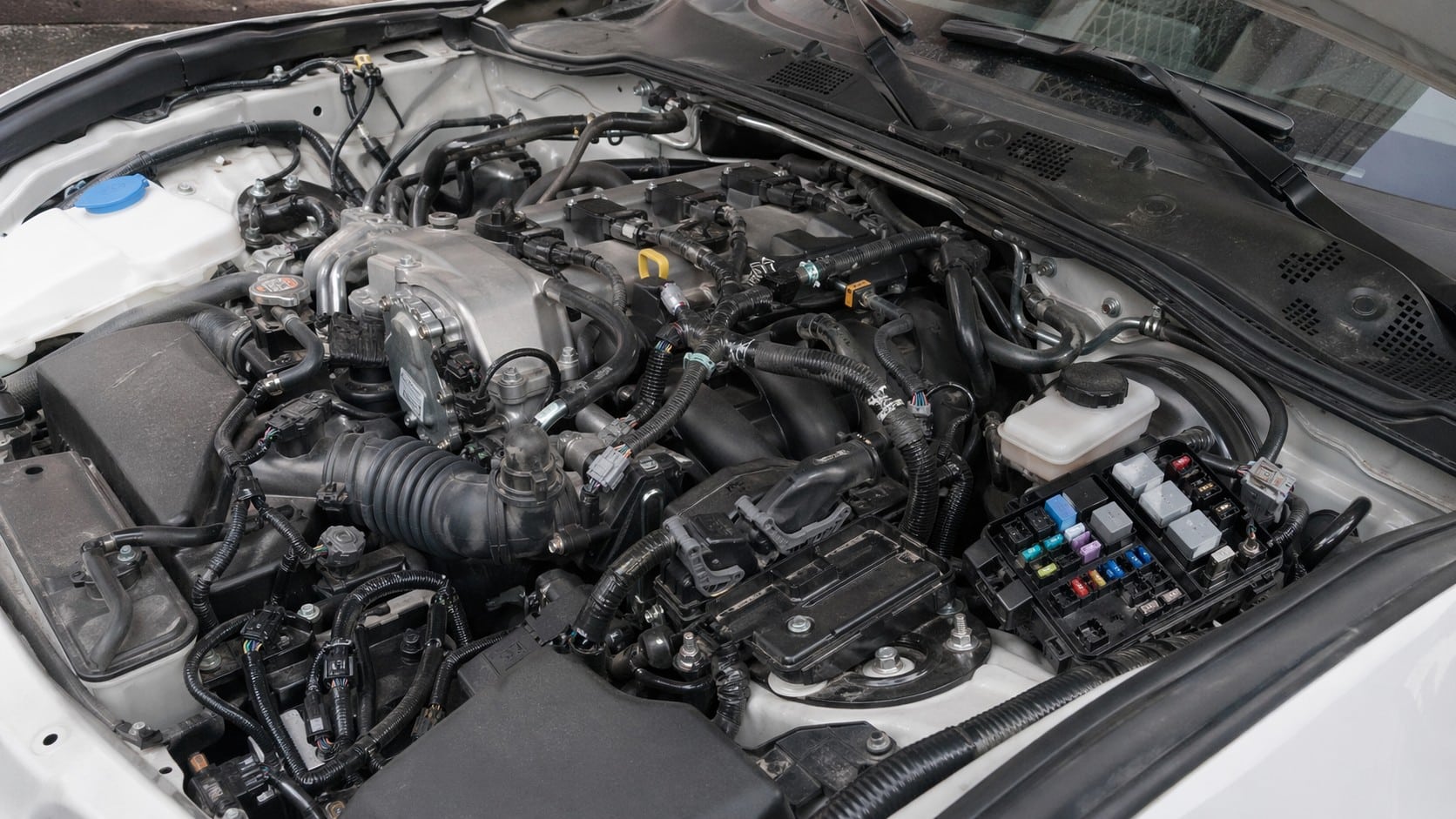
Here is the honest split. If you want the lightest, most engaging ND and you love to rev it out on tight roads, the ND1 will make you grin more often. If you cover distance, want stronger passing power, or simply want the strongest engine with the early bugs already sorted, the ND2 is the answer.
Whichever phase you land on, the transmission is the real heart of this car. The six-speed manual shift is short, mechanical and genuinely joyful, and it is what turns an ordinary drive into a reason to take the long way home.
What about the automatic
Mazda offered a six-speed Skyactiv-Drive automatic on the 2.0. It is competent and smooth. It is also not why anyone buys a Miata. The manual is the one to hunt for. Unless a physical need rules out a clutch, row your own gears.
ND Miata reliability, the reassuring version and the caveats
Known weak points, ranked by how much they should worry you
None are dealbreakers. All are worth checking before you pay.
Start with the good news, because there is a lot of it. The ND is a genuinely dependable sports car, which is not a phrase that gets used often. RepairPal rates the MX-5 Miata above average at 4.0 out of 5 (8th of 21 subcompact cars), and Jalopnik’s used ND guide says both 2.0 engines can easily cross 200,000 miles with proper maintenance.
The mechanical core is tough. Jalopnik’s used ND guide credits the ND2’s redesigned transmission with fixing the early cars’ worn 2nd and 3rd gear synchros, and flags a few engine points to check: oil consumption on higher-mileage ND1 cars, an ND1 valve spring recall, and carbon buildup on high-mileage engines. That is the baseline. Now the caveats, because a great reputation is exactly what makes buyers switch their brain off.
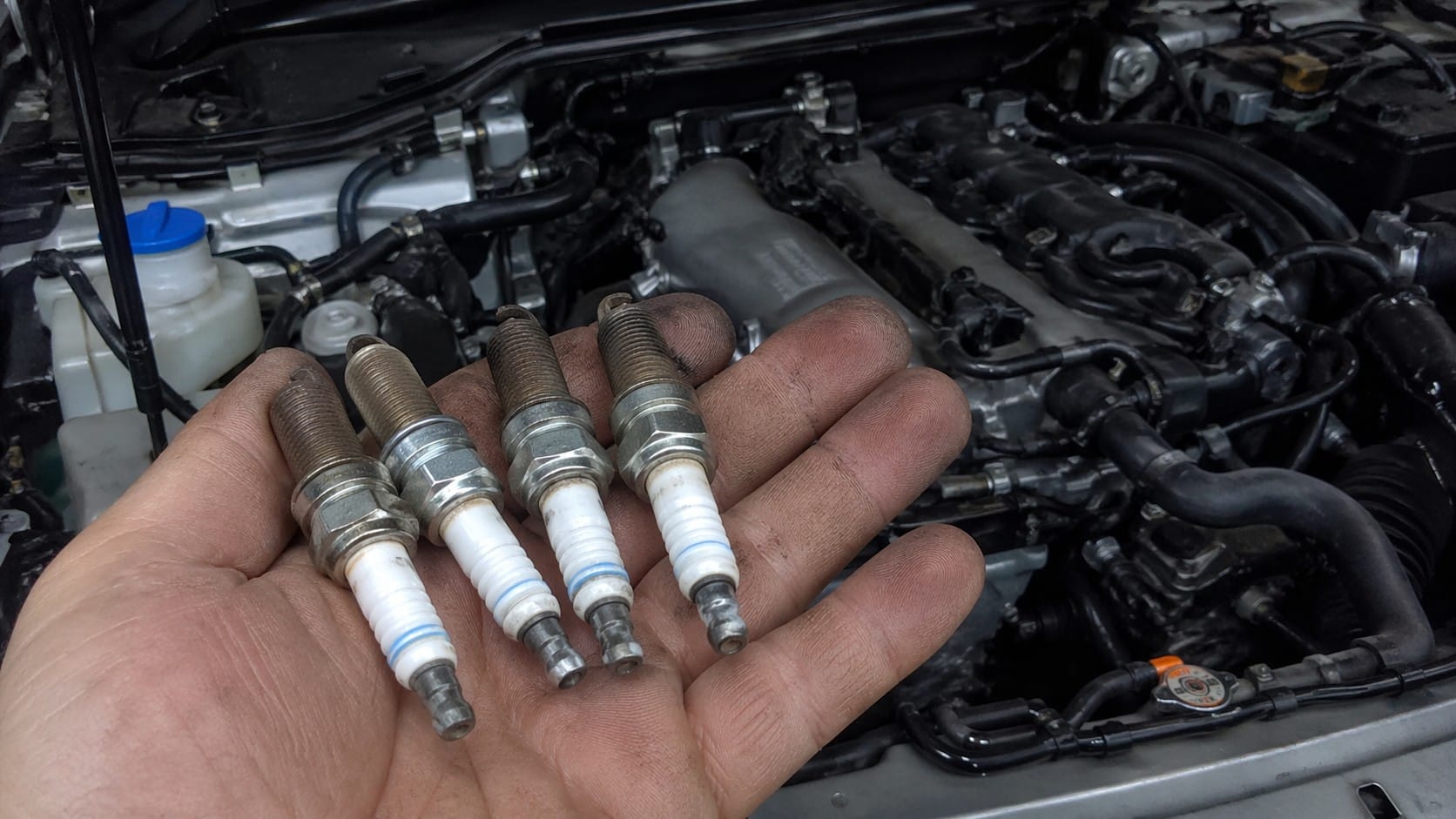
The weak points are specific and known. The ND1 3rd-gear synchro can balk cold, so listen for a grind on the test drive. The AC discharge line can crack on any year. Higher-mile ND1 engines use a little oil from piston wear. And early soft-tops can chafe on the roll hoops, so check the fabric at the rear corners.
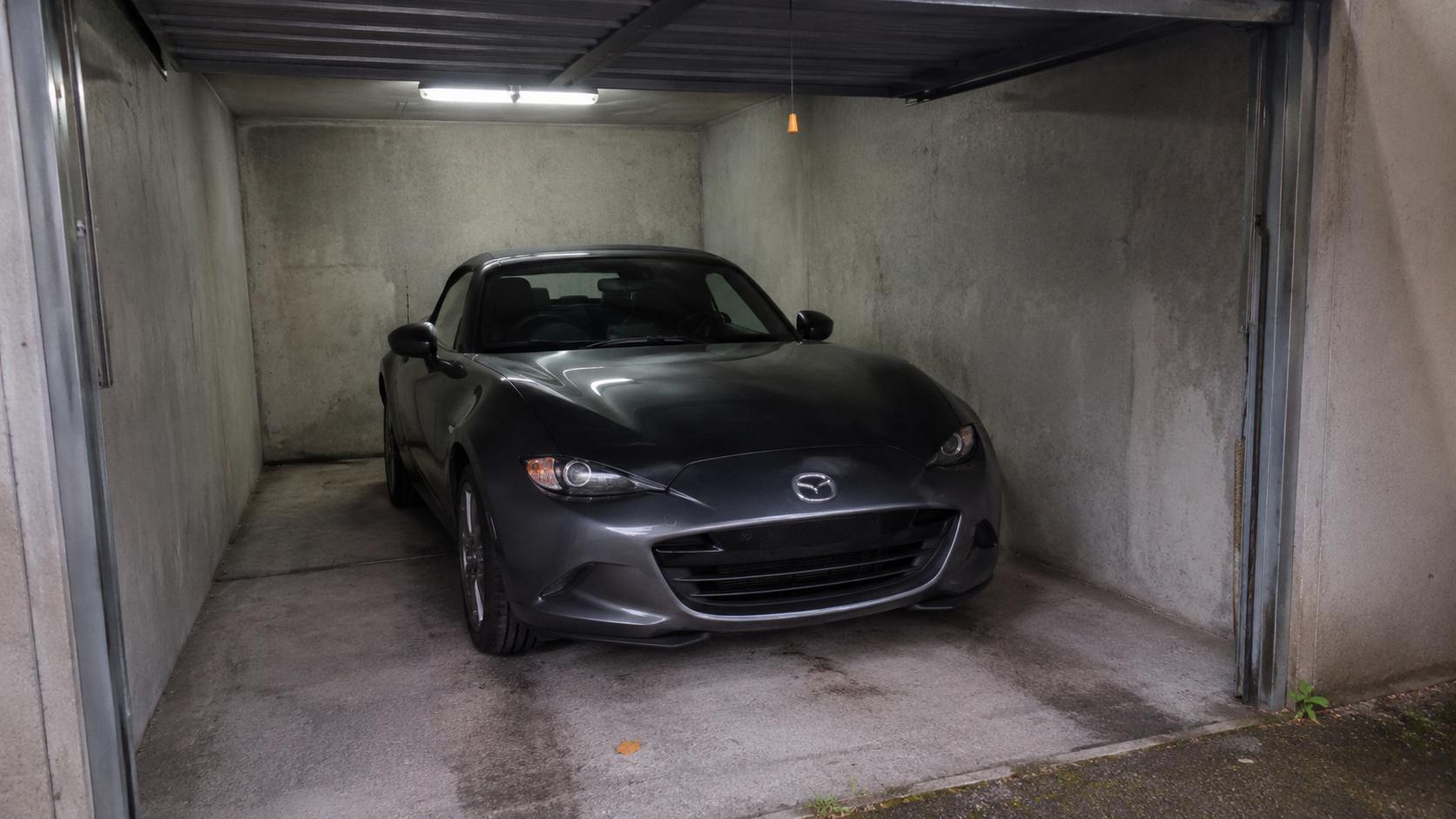
One owner kept his ND garaged and barely drove it, thinking he was preserving it. He was doing the opposite. The battery failed, the tires started to dry-rot, and the rear brake calipers began to seize. A Miata is happiest being used. Low mileage is not automatically a good sign on this car.
Rust, the Rust Belt warning
Where a road-salt ND rusts first
A California car and a Michigan car are two different purchases. Salt decides it.
This is where the buyer in Michigan, Ohio or the Northeast has to pay more attention than the one in Arizona. Factory corrosion protection on the ND is minimal, and states that salt their winter roads eat the difference. Rust is, by a distance, the worst enemy of a used Miata.
The rocker panels and fender arches show paint bubbling first. The drain channels that run from the soft top empty behind the front seats, and once they clog with leaves, water sits on the floorboards and rusts them from inside. Clear those drains once a year and the problem never starts.
The Miata has form here. Earlier generations, the NB especially, became infamous for rusty front frame rails and rocker panels, and plenty of owners learned that the hard way. The ND is far better, but far better is not immune once road salt gets involved.
This splits ND values quietly. A Sun Belt car with clean underbody photos and a service history will always beat a cheaper Rust Belt car with a suspiciously fresh undercoat hiding who-knows-what. And always check for a salvage title, a rebuilt flood or collision car is a very different buy from a clean-title example.
What an ND Miata costs to buy in 2026
CLASSIC.COM logs the average ND sale at about $26,900, with the cheapest recorded example a 2016 Club at $10,800. Buy the best-kept car your budget allows, not the cheapest example of a higher trim. On the ND, condition beats specification every time.
The used ND market is strong and buyers feel it. According to CarGurus price-trend data, the average used MX-5 Miata sells for about $26,150, and recent model years average about $23,817 (October 2026). This is not a depreciating economy car, it is one the market has decided to hold onto.
The direction of travel is clear. Miatas defy depreciation the way few cars do, and the ND holds strong on modern appeal and steady demand. WorthDriving’s resale guide puts most used NDs from about $15,000 for early, higher-mile cars up past $30,000 for newer, top-trim RF models.
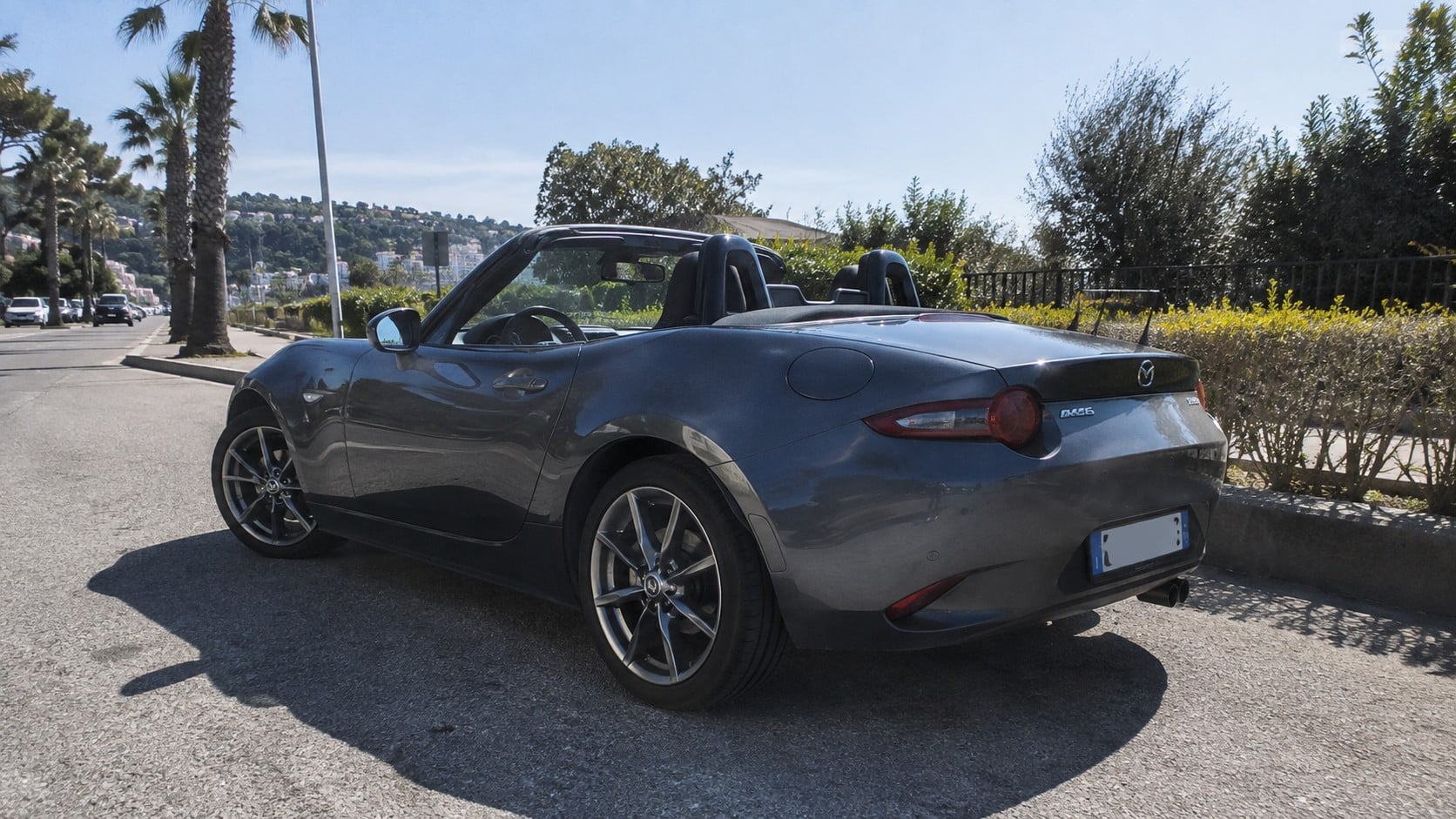
Set expectations by segment. An honest ND1 with service history is the affordable way in. A clean ND2 in Club or Grand Touring trim is the sweet spot most buyers eventually want. The RF sits above both, and newer top-trim cars sit above that again.
Worried about walking into a rough car?Explore the MX5Global Miata guides before you make an offer.Running costs, the numbers that actually surprise people
What an ND really costs to keep
Here is the part that makes the ND make sense as a real car rather than a toy. It is cheap to keep. EPA combined economy is 30 mpg for 2016 to 2023 cars, 29 mpg for the 2024 to 2026 automatic (fueleconomy.gov), and climbs on the highway, which is remarkable for a rear-drive sports car. There is no federal road tax, and registration and inspection costs vary by state.
Repairs are modest too. RepairPal pegs the Miata’s average annual repair cost at about $429, below the $456 subcompact average, and ranks it 8th of 21 subcompact cars for reliability. For a two-seat roadster that grins the way this one does, those are commuter-car numbers.
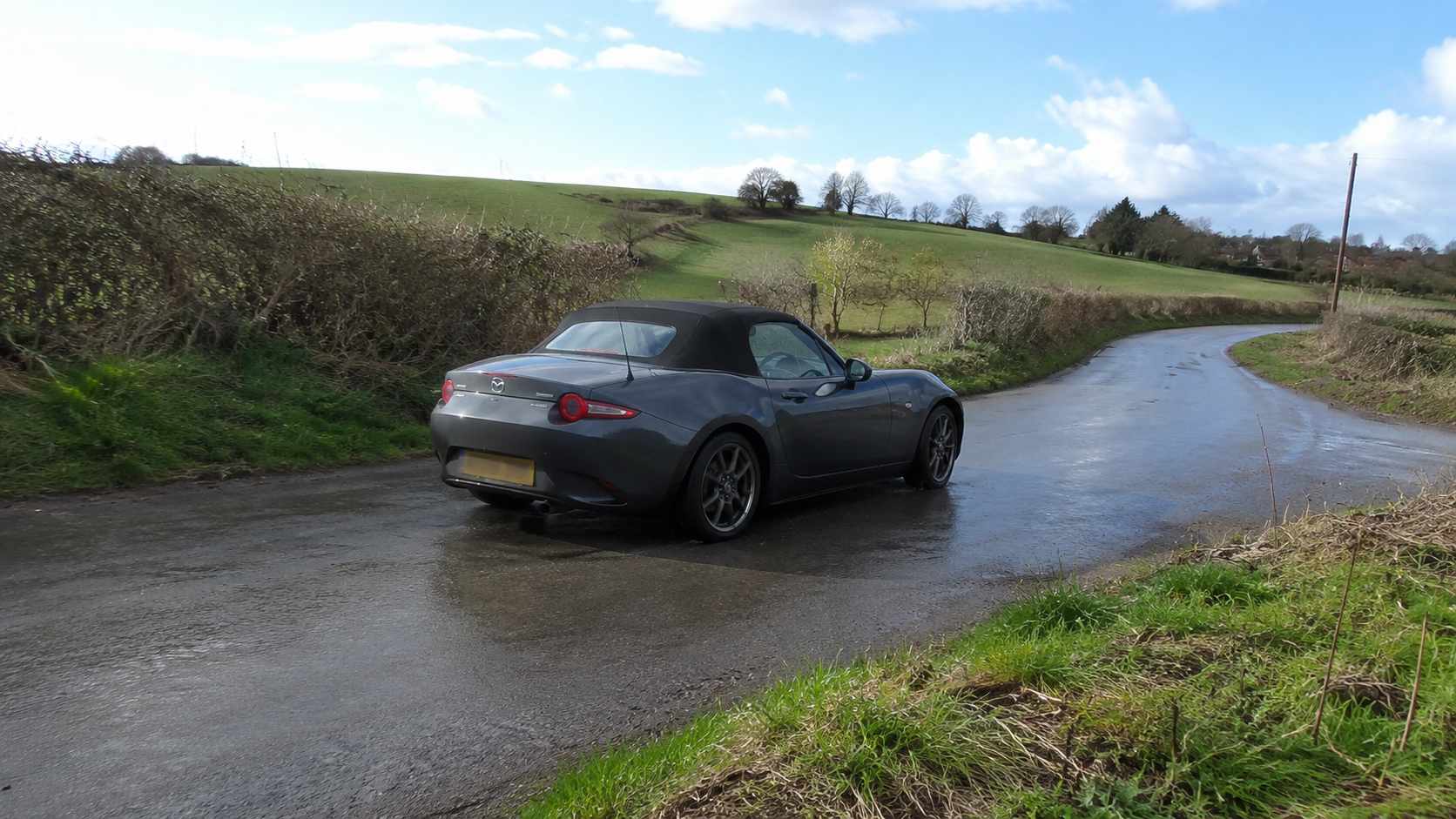
The real-world twist is worth knowing. So many NDs are garage-kept weekend cars that they look mint with almost no miles. That is exactly why dry-rotted tires and seized calipers show up on cars that have barely been driven, the parts age out on the calendar, not the odometer.
Budget for consumables on an age basis, not a mileage basis, and the ND rewards you. Ignore that, and the running costs bite in ways the EPA sticker never warned you about.
Soft-top or RF, choosing the right roof
Two roofs, two different questions answered
These two feel like the same decision and are not. The soft-top is lighter, cheaper to buy, cheaper to fix, and drops in seconds by hand from the driver’s seat. It is the purest Miata experience and the one most enthusiasts default to.
The RF adds refinement, a quieter cabin with the roof up, and a sense of security a fabric roof cannot match. Owners also report the steel-roofed RF as relatively trouble-free on the roof front. It is heavier, pricier, and its power-folding mechanism is one more thing to maintain.
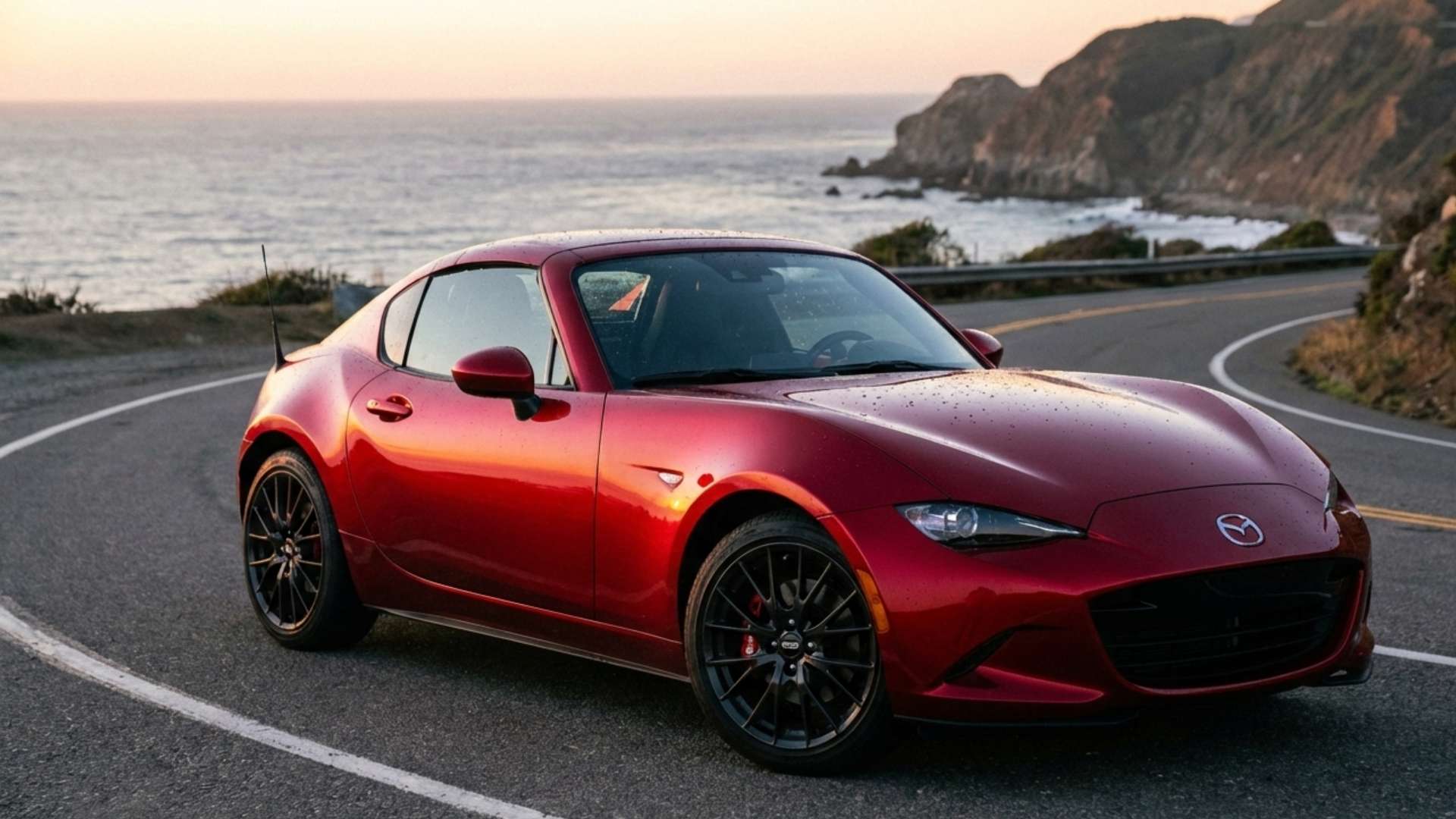
The honest steer is simple. If you want maximum lightness and the classic roadster feel, the soft-top wins. If you want a quieter car that doubles more comfortably as a daily and you like the coupe look, the RF earns its premium. Always cycle an RF roof at the viewing, an untested power mechanism is a red flag.
Three mistakes that catch ND Miata buyers
Get the order of decisions wrong and one of these gets you
After watching this market for a while, the same errors repeat. Avoiding them is most of the battle. The first is the deadliest: buyers see the identical shape and shop on price alone, then wonder why their early car feels tame next to an ND2.
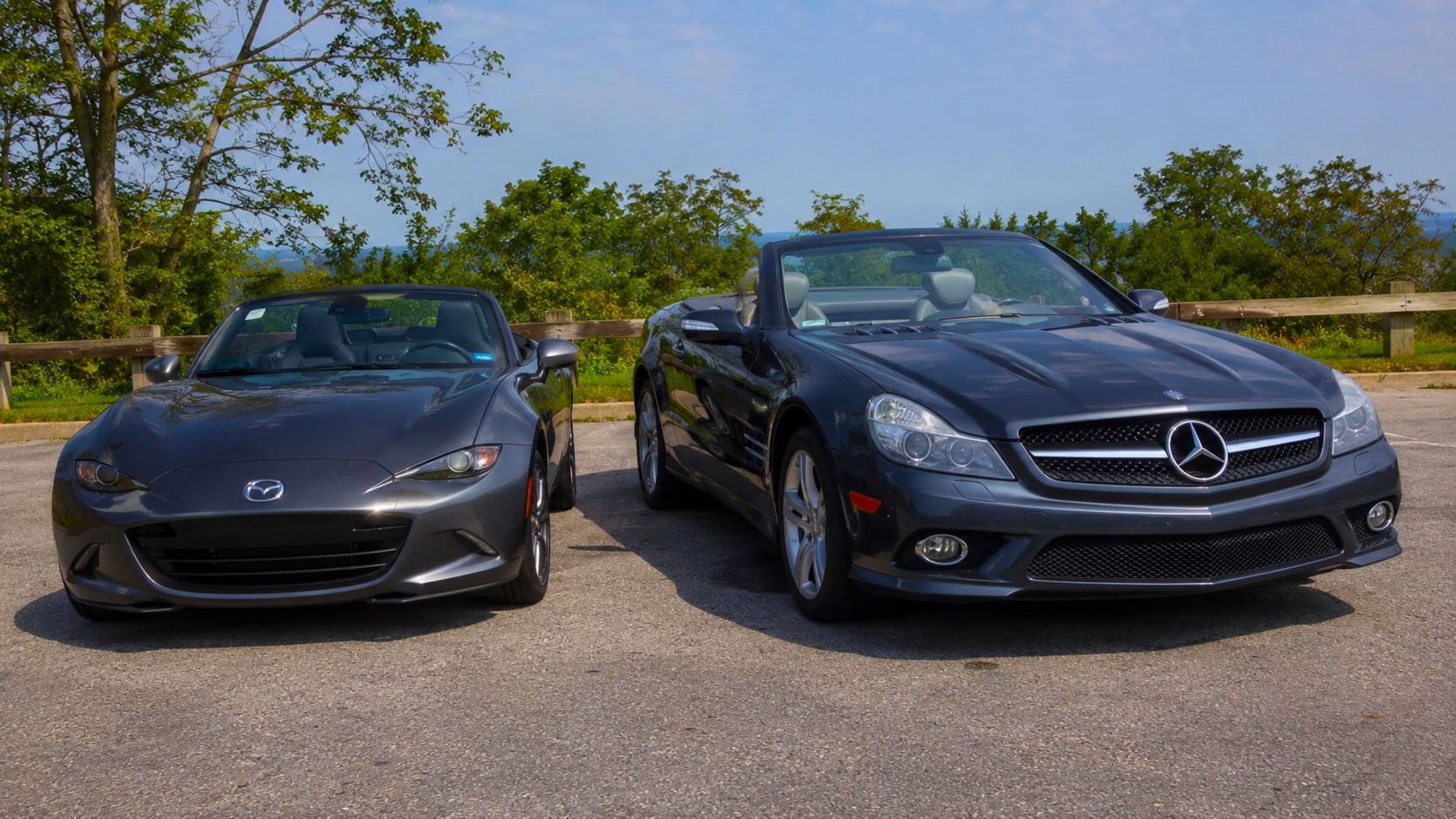
The second and third mistakes are quieter. A low-mileage car feels like a safe bet and often is not. And the paperwork, the VIN history and the underbody are exactly the checks buyers skip and later regret. Run the recalls, look under the rockers, cycle the roof.
Which ND Miata should you buy? Quick chooser
Find your ND in three honest questions
This points at the version that fits your driving, not the internet’s favorite.
1. Where do you mostly drive?
2. What matters most to you?
3. Your budget stretches to:
Your match
This is the shortcut version of everything above. Answer three honest questions and it points you at the version that fits your driving, not the version the forums shout loudest about.
The chooser is a starting point, not a verdict. Whatever it lands on, the same rule holds: let the car’s condition decide between two examples of the same spec. A tired ND2 is a worse buy than a cherished ND1.
The bottom line on buying an ND Miata
Buy in this order, not the other way around
Get that order right and the ND does something few modern cars manage. It makes an ordinary drive feel like the reason you bothered owning a car at all.
The ND is the rare car that lives up to its own hype, provided you buy with your eyes open. It is light, it is properly reliable in the ways that matter, and it costs far less to run than its grin suggests. The joy is real and it is not expensive to keep alive.
The mistakes are equally real. Confusing ND1 with ND2, trusting low mileage blindly, and skipping the title and underbody checks are what separate a happy owner from a frustrated one. Decide your phase first. Inspect condition second. Let price come last, not first.

Buy the best-kept car your budget allows, inspect it properly, and the ND rewards you every single time you take the long way home. That, in the end, is the whole point of a Miata.
Your most common questions about the ND Miata
Is the ND Miata reliable enough for daily use?
Which ND years should I avoid?
ND1 or ND2, is the upgrade worth the money?
How much does an ND cost to own per year?
Soft-top or RF for a first Miata?
Sources
- Wikipedia , Mazda MX-5 (ND) technical overview and specifications
- Jalopnik , used ND Miata buyer’s guide and what to check
- Miatafy , ND Miata reliability by year, best and worst
- Worth Driving , ND Miata buyer’s guide and known issues
- Worth Driving , Miata resale value guide by generation
- CarGurus , used MX-5 Miata price trends
- CoPilot , Miata reliability and RepairPal ratings
- Mazda of Conshohocken , best year Miata to buy and common problems
- OnAllCylinders , ND Miata year-by-year buyer’s guide
- Flyin’ Miata , ND generation technical reference and parts
- Mazda USA , MX-5 Miata official model information

Alan Chevereau, founder of MX5Global, independent SEO consultant and Mazda MX-5 owner. He launched the site in November 2025 to give buyers sourced, honest guides to every generation.
Support MX5 Global
No fluff here: just guides that save you time, money, and sometimes a bad Miata. If you want this to keep going, you can support the site. It pays for hosting, tools, and above all the time it takes to publish solid guides.
Support MX5 Global

Leave a Reply