
Published on :
Updated on :
In short : the Miata RF is the retractable-fastback MX-5, with a power roof that folds in about 13 seconds. It weighs about 100 to 110 lb more than the soft-top but drives almost the same. For the best used RF, target a 2019 or later car with the 181 hp 2.0. New for 2026, the RF runs from $38,750 to $42,200.
This page covers the RF hardtop. For the ND soft-top and ND1 vs ND2, see the ND Miata guide.
Last verified: October 1, 2026
The Mazda MX-5 Miata RF is the version a huge share of buyers actually choose. That surprises people. The soft-top is the purer roadster, the one purists lecture you about. Yet for daily driving, street parking and highway commutes, the folding metal roof wins hearts and wallets. This guide cuts through the forum noise. Note the badge: the car is the MX-5, sold as the Miata in North America.
You want to know three things. Does the RF ruin the Miata magic? What does one really cost, new or used? And what breaks on a ten-year-old retractable roof? We answer all three, with real US prices, real owner faults and honest trade-offs.
By the end you will know whether the RF is your Miata, or whether the cloth roof deserves your money instead. Not sure which Miata suits you at all? Start with our Miata hub for the full picture across every generation.
What the RF badge actually means
Retractable Fastback
A targa, not a full convertible, and only on the ND
Roof down, the rear buttresses stay up, so the RF keeps a coupe-like silhouette the soft-top never has. It exists on the fourth generation alone.
RF stands for Retractable Fastback. It is not a full convertible and not a coupe. It sits between the two, and that middle ground is the whole point.
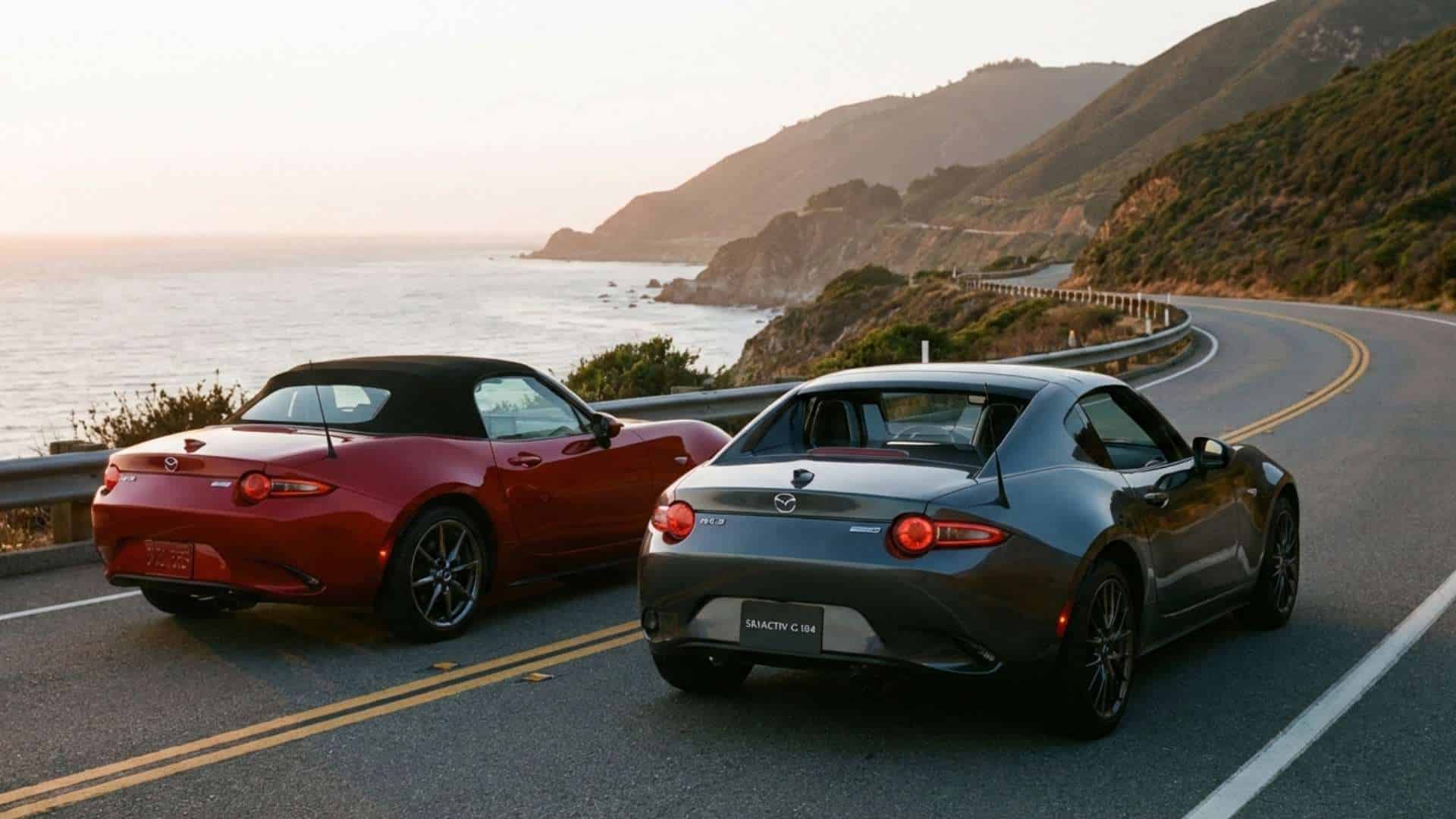
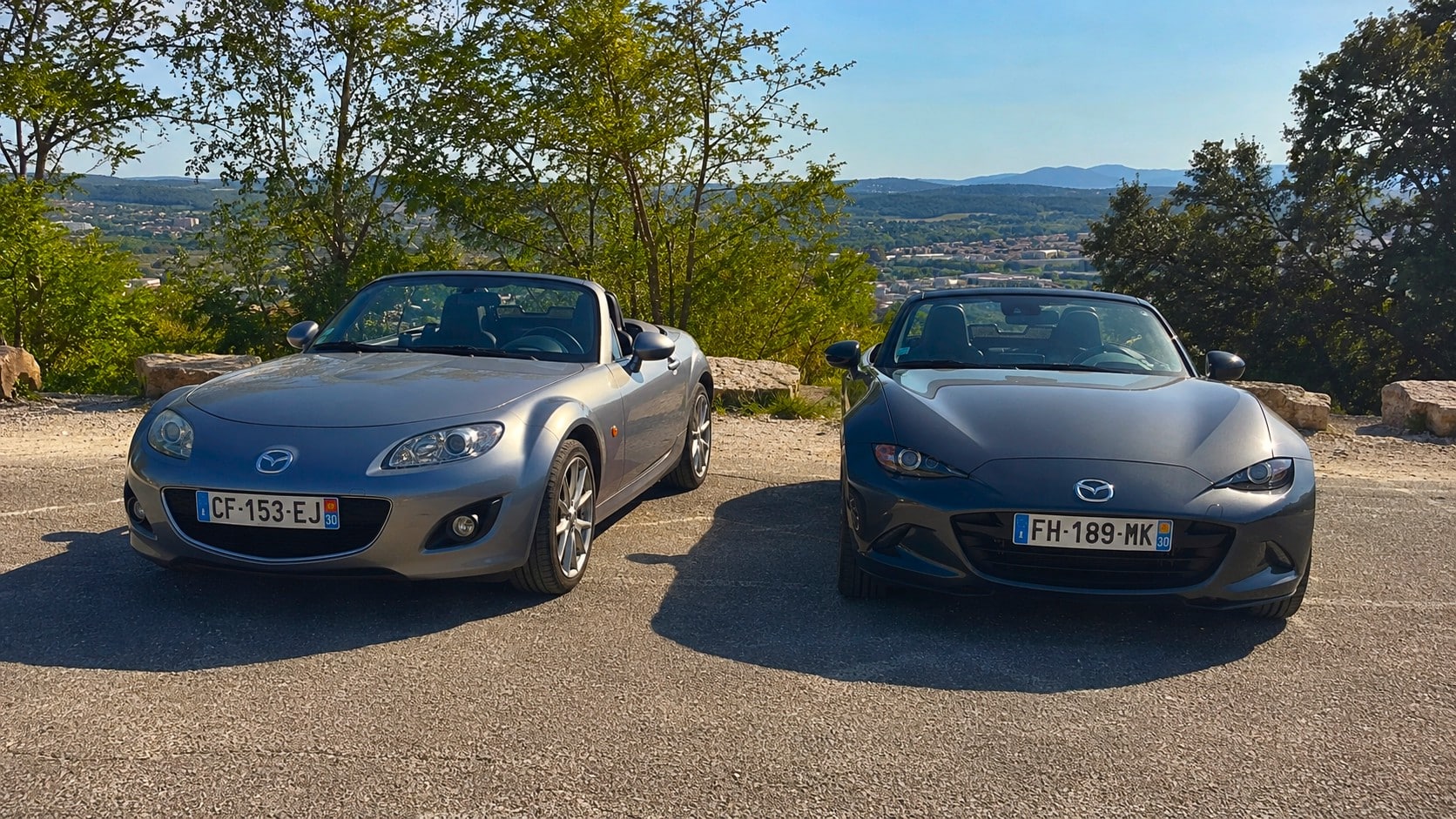
Press a switch and the roof folds in around 13 seconds, according to Mazda, at speeds up to about 6 mph, according to press tests. The rear buttresses stay in place. So even roof-down, the RF keeps a targa-style silhouette rather than the clean, exposed look of the soft-top. Some love it. Some find the wind buffeting worse with the buttresses up.
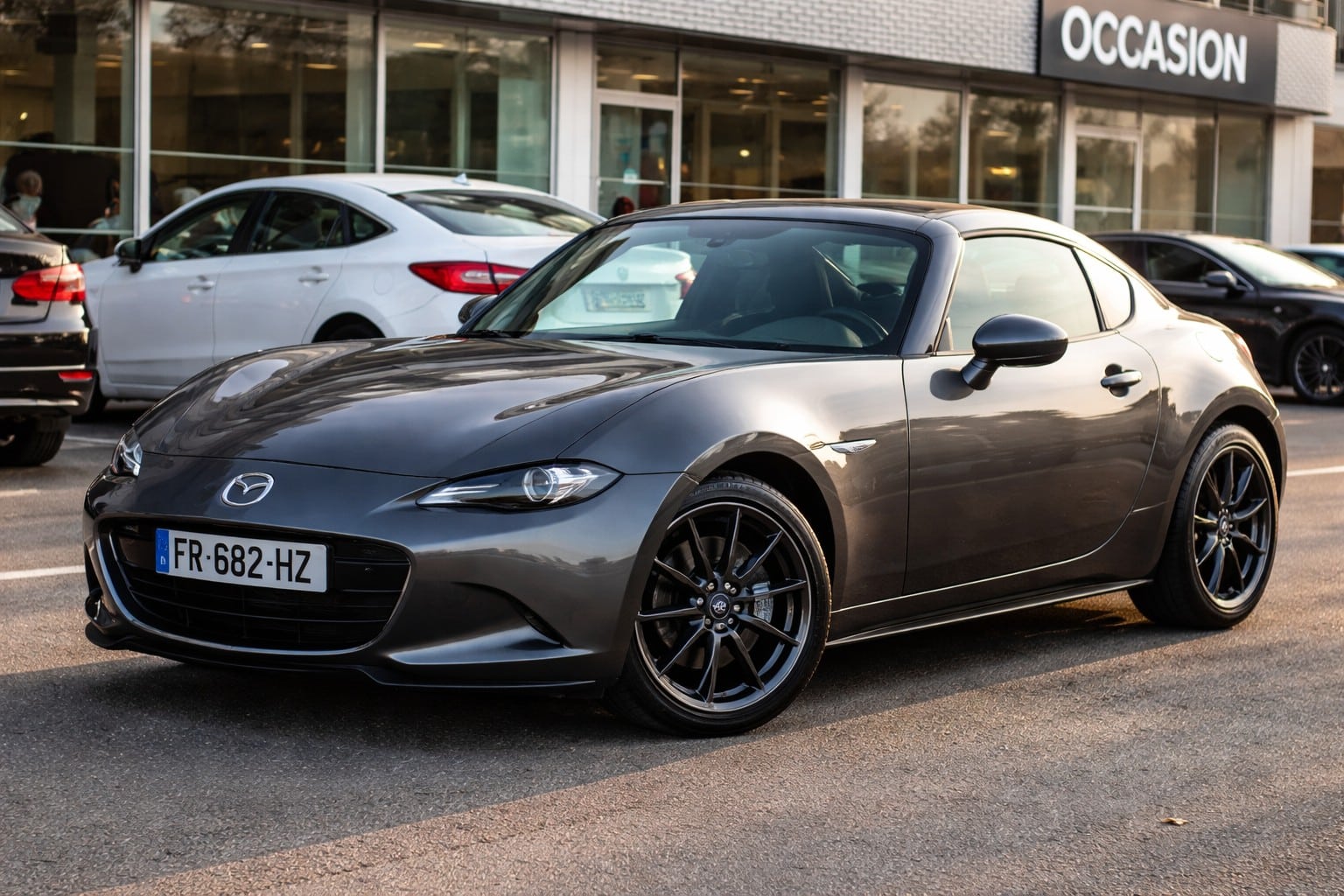
Here is the part owners forget. The RF is only sold on the fourth-generation Miata, known as the ND. There is no NA, NB or NC version of the RF. If you want an older folding hardtop Miata, you are looking at the NC-era Power Retractable Hard Top, a different car entirely.
RF versus the old NC hardtop
The confusion is common. The third-generation NC offered a Power Retractable Hard Top, and it sold strongly here. That PRHT was the first Miata with a power-folding hard roof, and it hugely widened the car’s appeal with buyers who did not want a dedicated convertible. The ND RF continues that tradition but with a bolder, more coupe-like design and fully automatic operation.
So when a seller lists a “hardtop Miata” from 2010, that is the NC PRHT, not an RF. Different roof mechanism, different quirks, different money. Do not mix them up when you shop.
Does the folding roof spoil the drive?
+113lb
The roof’s entire weight penalty over the cloth car
Still a featherweight. The extra mass shows only at the very limit and in fast direction changes, never on a favorite back-road run. Steering, shifter and chassis balance survive intact.
This is the fear. Add a metal roof and motors, and you add weight, and weight is the enemy of every Miata. So does the RF still feel like a proper Miata?
Mostly, yes. The weight penalty is real but small. The Miata RF is about 100 to 110 lb heavier than the soft-top, yet still a featherweight at roughly 2,469 lb for a 2025 manual (Mazda spec deck). You feel the extra mass at the very limit and in fast direction changes, not on a normal back-road run.
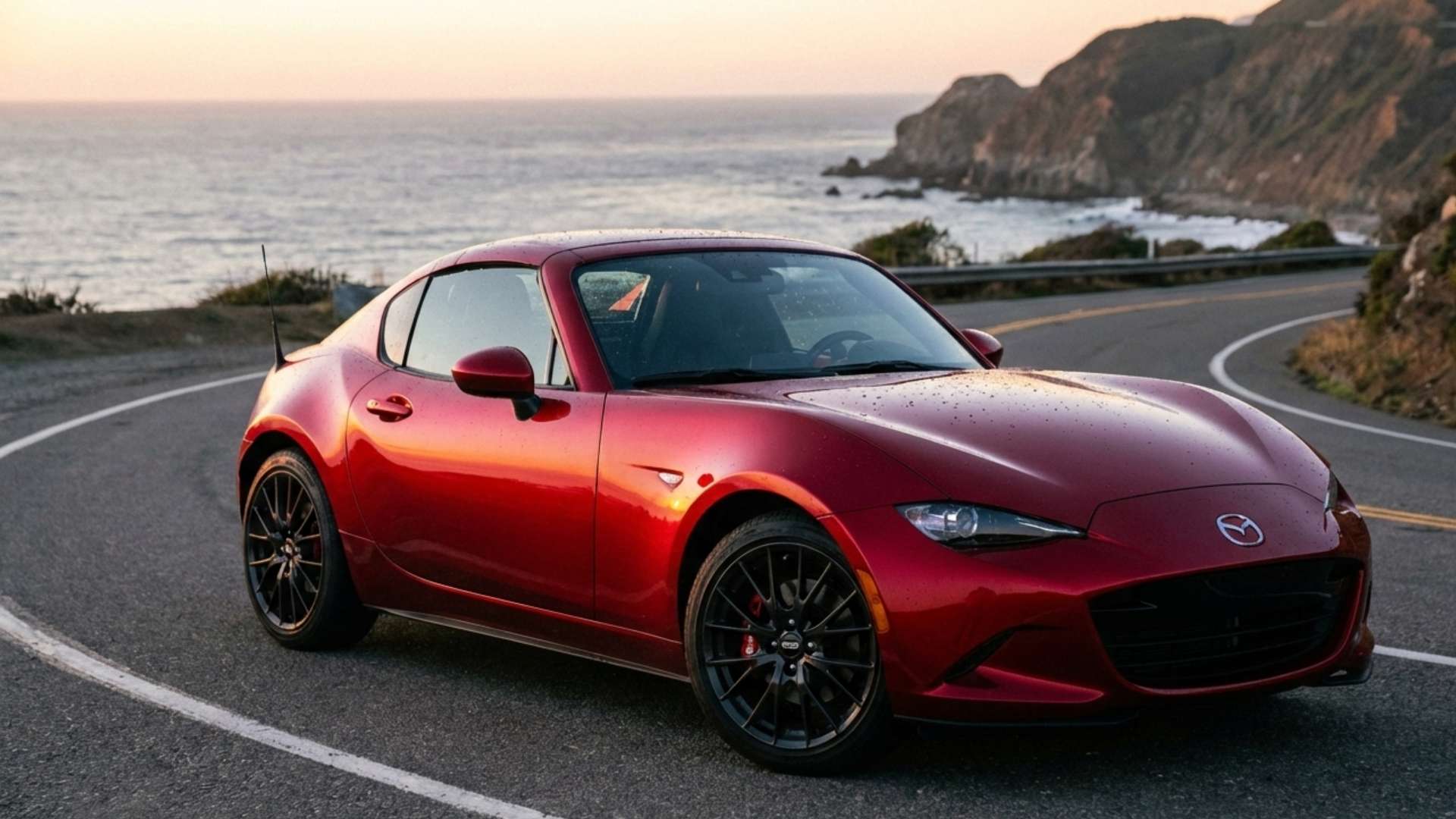
The steering, the short-throw shifter, the eager chassis, all survive intact. The RF stiffens the structure slightly with the roof up, which some testers actually prefer for highway refinement. Roof down, it is unmistakably a Miata: light, playful and endlessly adjustable on the throttle.
The honest catch is noise. Roof up, the RF is quieter and more grown-up than the cloth car. Roof down, the raised buttresses create more turbulence around your head than the fully open soft-top. Tall drivers notice it most, and owners routinely flag more wind buffeting with the hardtop stowed.
Picture a buyer coming from a muscle car who expects the Miata to feel like a toy. The likely verdict: slower in a straight line, far more fun everywhere else, and every bit as quick where it counts. Buying more power than a real road can ever exploit is a common regret.
The 2.0 engine and what to expect
US buyers get one engine, and it is the right one. The 2.0 Skyactiv-G arrived at 155 hp on the earliest cars, then jumped to 181 hp for 2019 with lighter internals, a higher redline and stronger top-end pull. Unlike Europe, there was never a 1.5-liter Miata sold here, so the choice is really about model year, not displacement.
The numbers matter. The pre-2019 RF, with 155 hp, runs 0-60 mph in the high-six-second range, while the 181 hp car is genuinely quicker, landing around six seconds depending on the test. It also pulls much harder past 5,000 rpm. If you want the RF to feel effortless rather than worked hard, hunt the 2019-or-later 181 hp car.
How much does a Mazda Miata RF cost?
RF depreciation estimator
See roughly what an RF is worth after the first owner takes the hit
Owned for 3 years
6,000 miles
Estimated value now
$22,700
Value lost: $13,365 from new. The first three years account for most of it, which is exactly where used buyers win.
Indicative only: a simplified editorial model (about 37% over three years plus a mileage adjustment), not a published statistic. Starting prices are approximate 2022 window stickers. Real prices vary by condition, trim and color.
New, the RF carries a clear premium over the cloth car. That premium is the first thing to weigh. A brand-new 2026 Miata starts at $30,730 (Sport, before a $1,315 destination charge), and the RF, sold only in higher trims, runs from $38,750 (Grand Touring) to $42,200 (Club), per Mazda USA. Depending on trim, the RF asks a few thousand dollars more than the equivalent soft-top.
Used is where the RF gets interesting. Depreciation does the heavy lifting for you. According to Kelley Blue Book, a clean 2022 RF Grand Touring has a KBB Fair Purchase Price around $27,400, down from a $36,065 sticker new, and higher-mile early cars dip well below that. Across the whole fourth generation, used values run roughly $19,300 to $33,800. Miata values hold up better than most, but they still fall, and that first owner's loss is your bargain.
Where the RF sits against rivals
The RF's real advantage is that almost nothing else offers a folding hardtop this cheap. Its closest sports-car rivals, the Toyota GR86 and Subaru BRZ, are fixed-roof coupes, so neither gives you open-air driving at all. There is no direct hardtop-convertible competitor near the price.
Step up to any other retractable-hardtop convertible and the money jumps sharply, into six figures for something like a Porsche 911 Targa. The RF is close to a class of one, which is a large part of its appeal on the used market right now.
RF reliability and the faults that actually matter
Where RF trouble actually lives
Electrical, not structuralA working RF roof is reliable. The faults below appear as switch contacts age, and they are cheaper to fix than owners fear. Knowing them makes you a sharper buyer.
Deck position sensor
Most common trigger for the "hard top malfunction" warning
Deck and limit switches
Dealers often swap these to cure intermittent stops
Window circuit dry joint
Window fails to drop, which blocks the whole roof cycle
The pattern is electrical, not structural. That is good news: sensors and switches cost far less than motors or panels. The trap is a dealer replacing parts on guesswork.
The Miata is famously dependable, and reliability trackers rate the fourth generation highly. The RF adds one thing the soft-top does not have: a complex electric roof with motors, sensors and switches. That is where the specific RF risk lives, and it is worth understanding before you buy used.
Let us be clear first. A working RF roof is reliable, and most owners never touch a wrench. The problems below are the ones that appear as cars age and switch contacts wear, plus a known 2016 launch-year issue with hardtop fitment. Knowing them turns you into a sharper buyer.
The retractable roof: what goes wrong
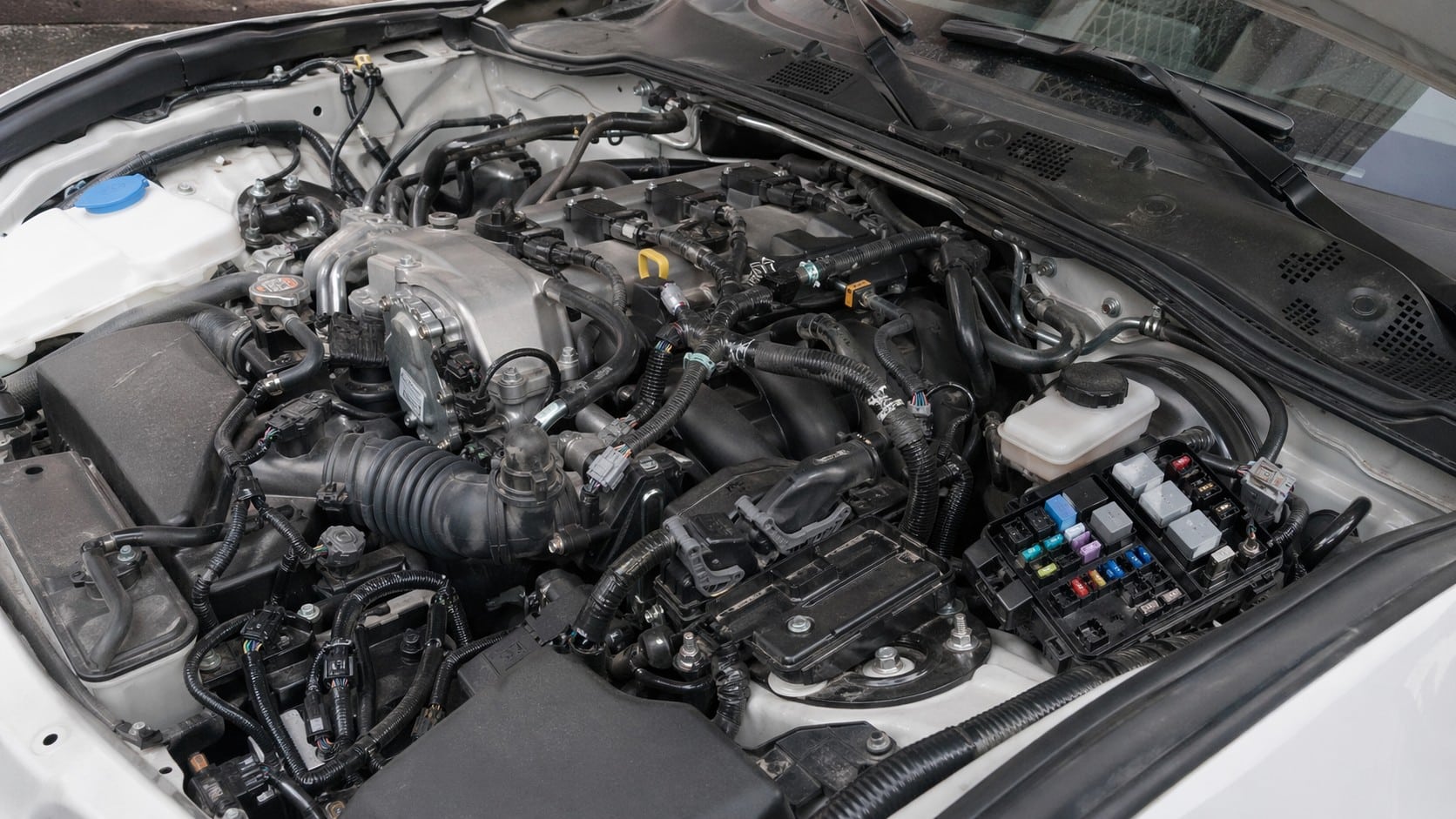
When an RF roof fails, it usually throws a "retractable hard top malfunction" warning and simply stops. Owners on enthusiast forums report a consistent set of culprits: the deck position sensor, the deck and limit switches, and on earlier cars a dry solder joint on the window switch board that stops the window dropping.
The pattern is electrical, not structural. That is good news, because sensors and switches are cheaper than motors or panels. It is bad news if a shop starts swapping parts on guesswork, as some owners have found to their cost.
One RF owner spent four frustrating months and several shop visits before the fault was traced to the deck switches. The lesson we take from cases like this: always test the roof through several full cycles before buying, ideally cold, because intermittent faults hide when everything is warm.
Roof finish, rust and the Rust Belt
Two age-related issues deserve a mention. First, the painted roof panels. Owner surveys flag clear-coat wear on the hardtop roof of higher-mileage cars, a cosmetic fault rather than a mechanical one, but a costly repaint if you are fussy. Inspect the roof panels in good light.
Second, rust. The ND is far better protected than the classic NA and NB, but no Miata is immune. If the car spent winters in the Rust Belt, in states like Michigan, Ohio, Pennsylvania or New York, road-salt corrosion is a real risk. Check the rockers, wheel wells and the underside on any used RF. A clean, salt-free car from the Sun Belt is worth paying for.
Read the title before anything else
One check matters more than any panel gap: the title. A salvage or rebuilt title, common on cheap Miatas after a minor front-end hit, tanks resale value and can complicate insurance. Run the VIN, confirm a clean title, and treat a suspiciously cheap RF as guilty until proven innocent.
Small mechanical niggles worth checking
Beyond the roof, the ND platform has a couple of documented minor faults. Owner reports point to air-conditioning lines that can crack over time from engine vibration, causing a slow refrigerant leak, plus the usual convertible checks: blocked roof drains and tired window seals. None of these are deal-breakers. All are negotiating points.
What does an RF really cost to run?
Running costs
Cheap to keep for something this quick
A naturally aspirated four with a manual box has few expensive failure points. Here is where your money actually goes.
34 to 40 mpgReal-world highway economy
Registration variesSet by your state, not federal
Affordable to insureReasonable premiums for a sports car
Independent shopsMiata specialists beat dealer rates
The one habit that pays off in salt states: annual undercoating. It protects the underbody from road salt, the single thing that erodes Miata values over a decade in the Rust Belt.
Purchase price is only half the story. The RF has its own running costs, and it behaves very differently from a turbo hot hatch or a German coupe. The good news is that it is cheap to keep.
Gas mileage is modest for a sports car. EPA figures put the ND in the low-to-mid thirties combined, and gentle highway driving lands close to 40 mpg. Push the 2.0 hard and it drops, but you are still nowhere near thirsty. For a rear-drive roadster you can rev to the redline, that is remarkable economy.
Ongoing ownership costs depend heavily on where you live, because they are set by the states, not the federal government. Registration fees, safety inspection and emissions testing all vary widely. California enforces strict CARB emissions rules, a handful of states run annual safety inspections, and some states have no periodic inspection at all. Check your own state's DMV before you budget.
Insurance is reasonable for a sports car, and a two-seat Miata rarely triggers the premiums a turbocharged coupe does. Mechanically the ND is simple and robust, which keeps repair bills down. The consumables to budget for are ordinary: tires, brake pads, an occasional set of rotors, and routine fluids. The RF adds one line the soft-top does not, the roof mechanism, but as long as you check it works properly at purchase, it rarely becomes a running cost.
ND1 or ND2: which used RF should you target?
The two faces of the ND, and why the newer one drives harder
2016 to 2018
ND1
155 hp 2.0, sweet but revs out early
Cheapest way into RF ownership today
No telescoping steering wheel
Best if budget leads2019 onward
ND2
181 hp 2.0, higher redline, stronger top end
Lighter internals transform the engine
Adds telescoping wheel, easier fit for tall drivers
Best all-rounderBuyer's rule of thumb: condition beats spec. A tired ND2 with a flaky roof costs more long term than a well-kept ND1 with the smaller output.
Not all RFs are equal. The ND generation split into two distinct phases, and on the used market the difference shapes both price and driving feel. Getting this right saves you money and disappointment.
The early cars, often called ND1, launched the RF for 2017 with the 155 hp 2.0-liter. They drive beautifully but rev out early and feel a touch breathless at the top. They are also the cheapest way into RF ownership today, which is why they anchor the bottom of the used range.
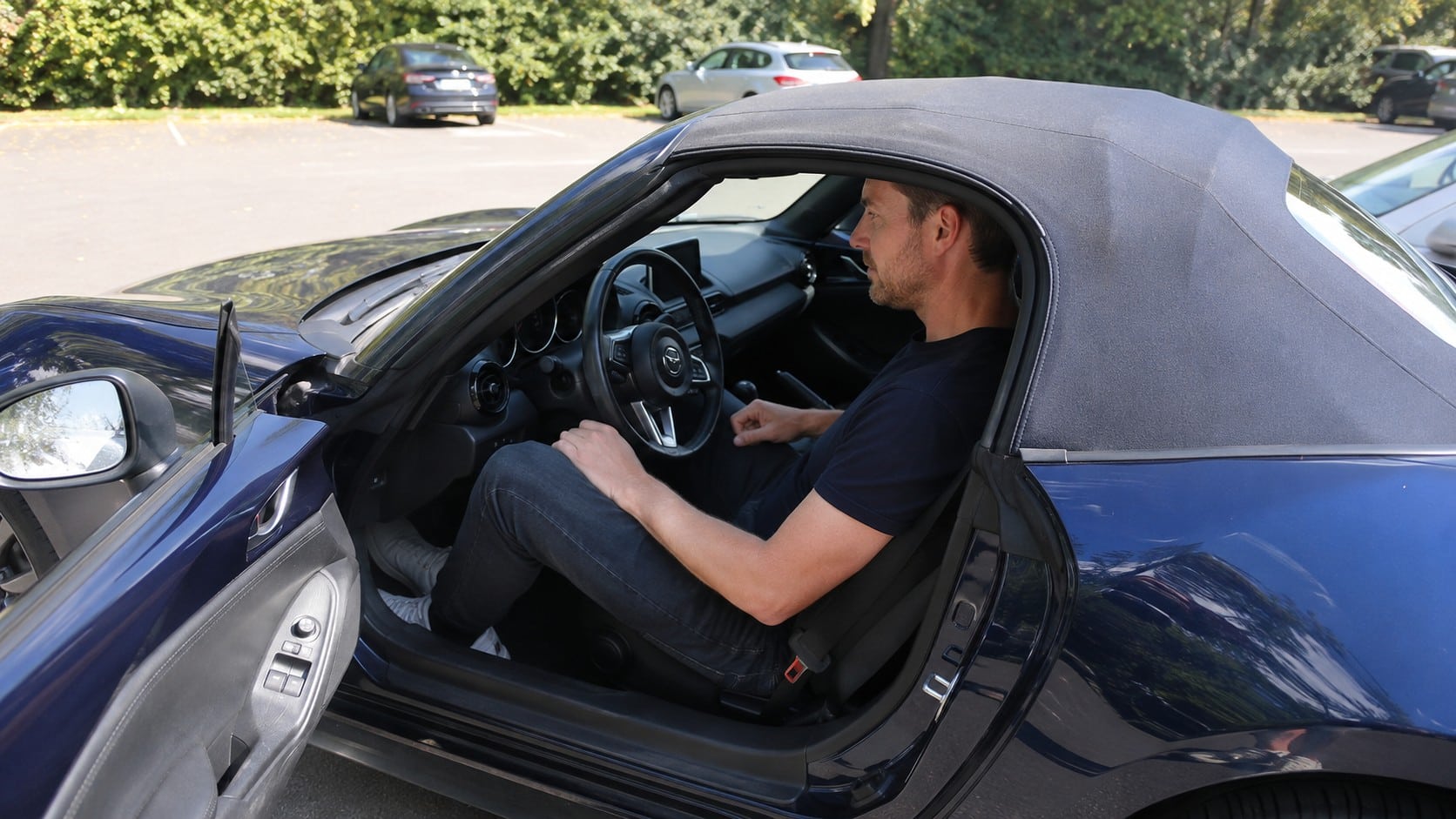
The updated ND2 arrived for 2019 and changed the character of the 2.0 engine meaningfully. Lighter internals, a higher redline and 181 hp transformed the top end, and it added a telescoping steering wheel that makes a real difference for taller drivers. If you plan to enjoy the engine rather than just cruise, the ND2 is the one to hunt down.
A buyer torn between a cheap ND1 RF and a pricier ND2 asked us which mattered more, the roof condition or the engine spec. Our answer surprised him: the roof, every time. A tired ND2 with a flaky roof mechanism will cost you more in the long run than a well-kept ND1 with the smaller output.
Should you buy the RF or the soft-top?
Two honest paths, pick the one that fits your life
You use the car all year round
You park on the street, security matters
You want refinement and coupe looks
The everyday, all-weather owner
Outright purity matters most
You want the lightest possible car
You drop the roof constantly, hate buffeting
The purist on a tighter budget
Owner sentiment settles it: RF owners rate the car 4.7 out of 5 on Kelley Blue Book and the vast majority recommend it. The metal roof wins fans who never look back.
This is the decision most readers are really here for. The RF is not automatically the better Miata. It is the better Miata for a particular kind of owner.
Choose the RF if you daily the car year-round, park it on the street, value refinement and security, or simply prefer the coupe-like looks. The metal roof deters thieves, keeps the cabin quieter and makes a rainy commute bearable.
Choose the soft-top if outright purity matters most, if you want the lightest possible car, if you drop the roof constantly and hate wind buffeting, or if budget is tight. The cloth roof is lighter, cheaper, faster to operate by a whisker and has fewer things to go wrong.
Three mistakes RF buyers make
The same errors come up again and again among RF shoppers. First, skipping the title check, because a salvage or rebuilt Miata looks like a bargain until you try to insure or resell it. Second, skipping the roof test, since a five-second demo is not enough, cycle it fully, several times, and listen for clattering. Third, assuming RF means rust-proof, when the metal roof says nothing about a salt-state underbody.
Ready to shortlist your Miata?Compare every generation and trim in one place before you spend a dime.
Explore the Miata guideThe verdict from the driver's seat
The bottom line
The RF is the Miata for people who want the roadster without the roadster compromises.
1
Condition firstA clean underbody and a healthy roof beat any spec sheet.2
Engine secondThe 2.0, ideally ND2, suits the RF's weight best.3
Roof history alwaysCycle it cold, several times, before you commit.The RF keeps almost all the fun and adds real-world usability that suits daily American driving. The soft-top is purer and cheaper, and there is no shame in choosing it. But the RF's blend of style, security and open-air thrills explains exactly why so many owners pick it and never look back.
Buy on condition first, engine second, title and roof history always. Get those right and the RF will reward you for years. With no direct hardtop-convertible rival at the price, it stays one of the smartest buys in affordable sports cars.
Your most common questions about the Mazda Miata RF
Is the Miata RF slower than the soft-top?
How long does the RF roof take to open?
Are RF roof repairs expensive?
Which model year RF should I choose?
Does the RF rust like older Miatas?
Is the RF a good daily driver?
Sources
- CarGurus, Mazda MX-5 Miata buying guide, reliability and used pricing
- Kelley Blue Book, Miata RF owner reviews and ratings
- Kelley Blue Book, used Miata RF prices and values
- MX5Nutz owners forum, RF roof malfunction diagnosis
- Mazda MX-5 ND overview, engines, weights and specifications
- Flyin' Miata, ND and RF parts, service and technical reference
- Hagerty, collector car insurance eligibility
- Kelley Blue Book, JDM imports and the 25-year rule
- Motorious, 25-year import rule explained
- JDM Drives, state-level import and CARB registration rules

Alan Chevereau, founder of MX5Global, independent SEO consultant and Mazda MX-5 owner. He launched the site in November 2025 to give buyers sourced, honest guides to every generation.