
Published on :
Updated on :
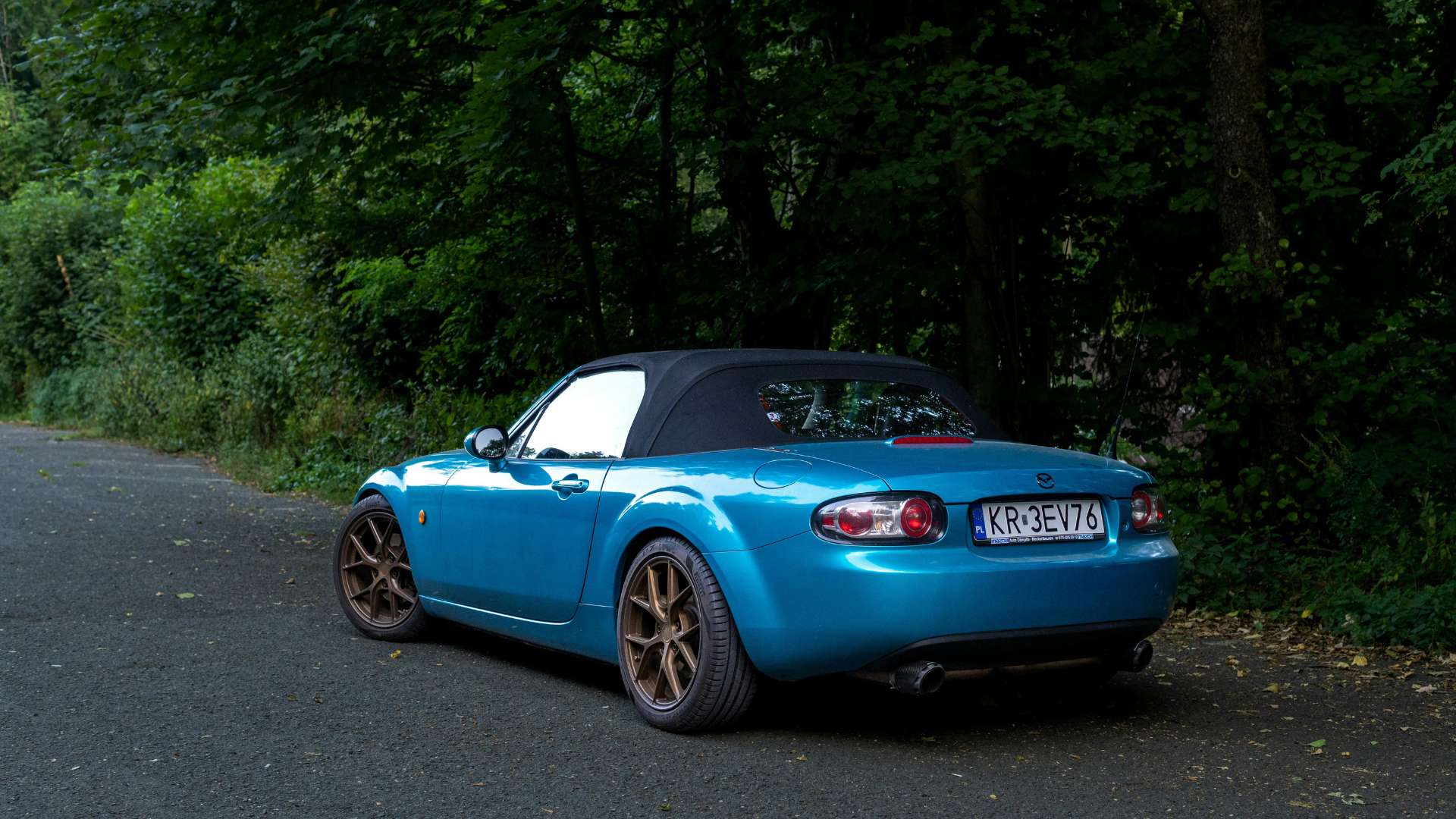
In short : the NC (2006 to 2015 model years) is the most underrated Miata: the first with a 2.0-liter engine, offered with a folding hardtop, and roomier than the NA and NB. Target 2009 or later (NC2): Mazda added a forged crankshaft and forged connecting rods, and manual cars got a 7,200 rpm redline (Mazda). A 2013 to 2015 Club manual is the sweet spot.
This page covers the NC. For the newer ND, see the ND Miata guide.
Last verified: October 1, 2026
NC Miata Guide
What this buyer’s guide covers
- Why the NC was dismissed, and why that was wrong
- NC1, NC2, NC3: the breakdown that matters
- Engine, gearbox and the defining numbers
- Reliability: what actually breaks
- The topless RX-8: the NC’s tuning secret
- Buying in 2026: values, timing, titles
- Living with an NC every day: costs
- Is the NC the right Miata for you?
- The verdict on the underrated Miata
Ask ten Miata people to name the black sheep of the family, and nine will point at the same car. The third-generation NC, built from 2006 to 2015, spent most of its life as the one nobody bragged about. Too big, too soft, too grown-up. That reputation was always lazy, and the used market has finally started to prove it.
This is the Mazda MX-5, sold as the Miata in North America, in its most misunderstood form. Bigger than the NA and NB, yes. But also the first to get a real 2.0-liter engine, a folding hardtop, and a chassis you can actually push hard without holding your breath. If you have been circling NC listings and wondering whether the internet jokes hold up, this guide settles it.
By the end, you will know which model years to chase, which ones to skip, what breaks, and what a clean example is worth in 2026. No forum tribalism, just what the car actually is.
Start here
Weighing the NC against the rest of the range? Open the MX-5 Miata generation hub ›
Why the NC Miata Was Dismissed, and Why That Was a Mistake
The forum verdict
Bigger and heavier than the NA
No pop-up headlights
Higher sills, softer image
Not a “real” Miata
What driving one shows
Stiffer chassis, eager front end
Wider cabin, real room for tall drivers
Proven at autocross and on track
Same driver conversation, more usable
The NC arrived into a hostile crowd. NA and NB owners had spent fifteen years defining what a Miata was supposed to be: tiny, raw, pop-up headlights, barely 2,200 pounds. Then Mazda showed up with a car that shared zero parts with either predecessor.
It was longer, wider, heavier on paper. The pop-ups were gone. The sills sat higher. To the faithful, it looked like Mazda had blinked and built something soft. The forums filled with the same complaint on repeat, and the reputation stuck for the better part of a decade.

Here is what the noise missed. The NC drives like a Miata where it counts. Hagerty put it plainly in their 2025 market feature, noting the NC has long since proven itself on back roads, at autocross, and on track. The stiffer chassis and eager front end deliver the same conversation between car and driver that made the nameplate famous. The weight gain reads worse in a spec sheet than it feels through a corner.
There is also a fact that trips up a lot of buyers. Mazda dropped the Miata name in the U.S. when the NC launched, so technically these cars are MX-5s, not Miatas. Nobody in an American parking lot cares, and the word Miata still gets used for every generation. But it explains why you see both badges floating around NC listings.
The one-line verdict
The NC is the generation that gives you real usability without killing the roadster feeling. If your only reference point is a stripped NA, it will feel plush. If your reference point is any modern convertible, it will feel like a proper lightweight sports car. Both things are true at once.
NC1, NC2, NC3: The Only Breakdown That Matters When Buying
Nine years, three faces
The NC timeline, and where the value sits
NC1
2006 to 2008
Launch car, rounded nose, 170 hp. PRHT hardtop arrives in 2007. Cheapest way in.
NC2
2009 to 2012
Facelift plus forged engine internals and a higher redline. The sweet spot.
Buy this oneNC3
2013 to 2015
Standard stability control, simplified trims, the enthusiast Club with the good hardware.
The NC ran nine years, the longest single generation in Miata history until the ND arrived. That is a lot of drift across one model code, so enthusiasts split it into three sub-generations. Get these straight before you shop, because the price gaps between them are real and often unjustified.
According to Flyin’ Miata’s generation reference guide, the split works like this: NC1 covers 2006 to 2008, NC2 covers 2009 to 2012, and NC3 covers 2013 to 2015. Same platform throughout, but the details move.
- NC1 (2006 to 2008): The launch car. Rounded nose that most resembles the older Miatas, 2.0-liter MZR making 170 hp, and the debut of the PRHT folding hardtop in 2007. Solid, honest, and the cheapest way into an NC today.
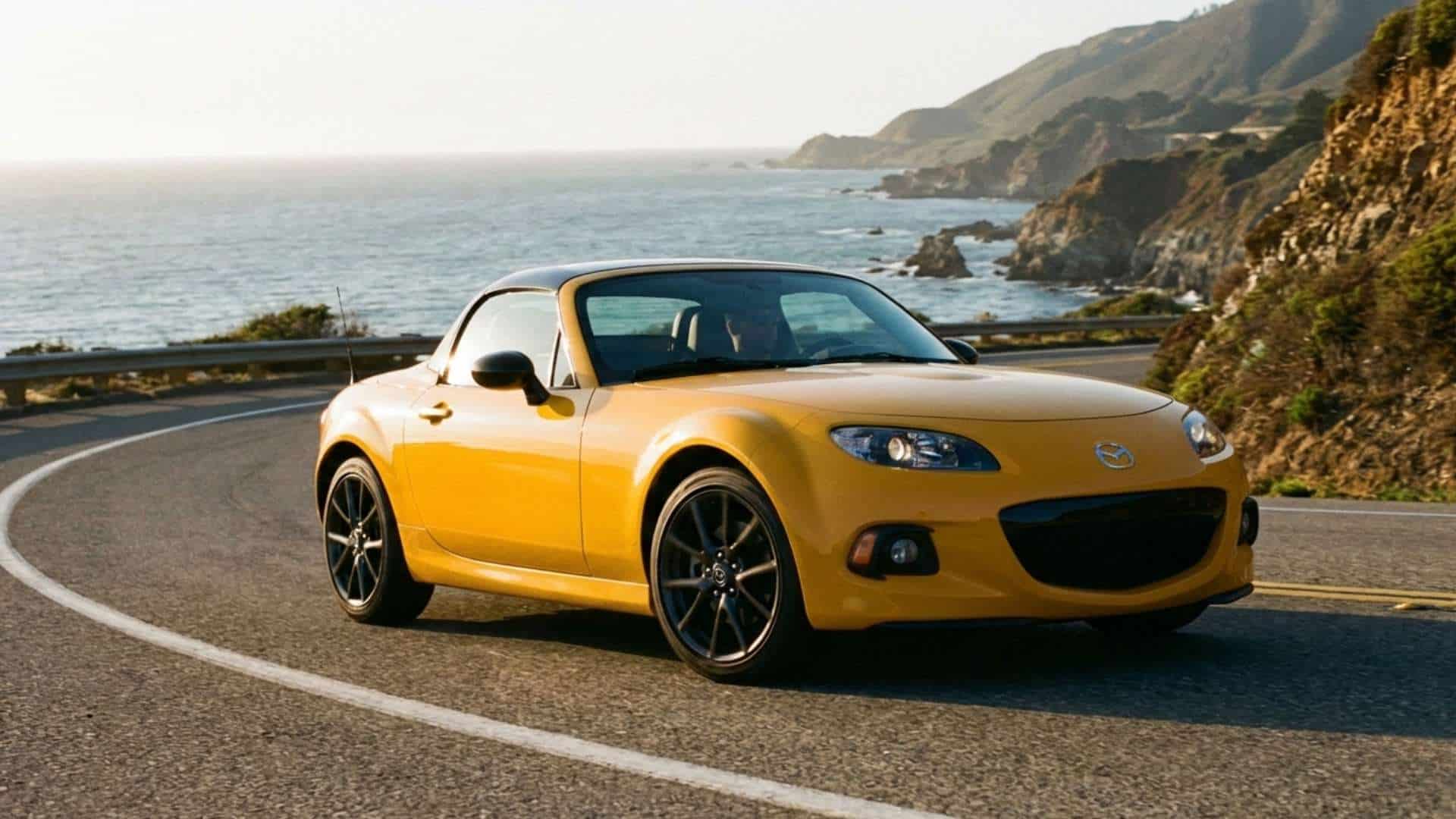
- NC2 (2009 to 2012): The facelift, and the sweet spot for most buyers. Sharper front fascia, revised suspension valving, and a genuinely stronger engine.
- NC3 (2013 to 2015): The final refinement. Standard stability control across the board, simplified trims, and the enthusiast-focused Club that bundled the good hardware.
What actually changed at the 2009 NC2 facelift
This is the update worth paying for, and not for the reasons most listings claim. The visible change is the grille, Mazda swapped the flat early face for the cheerful grin it put on everything that era. The change that matters lives under the hood.
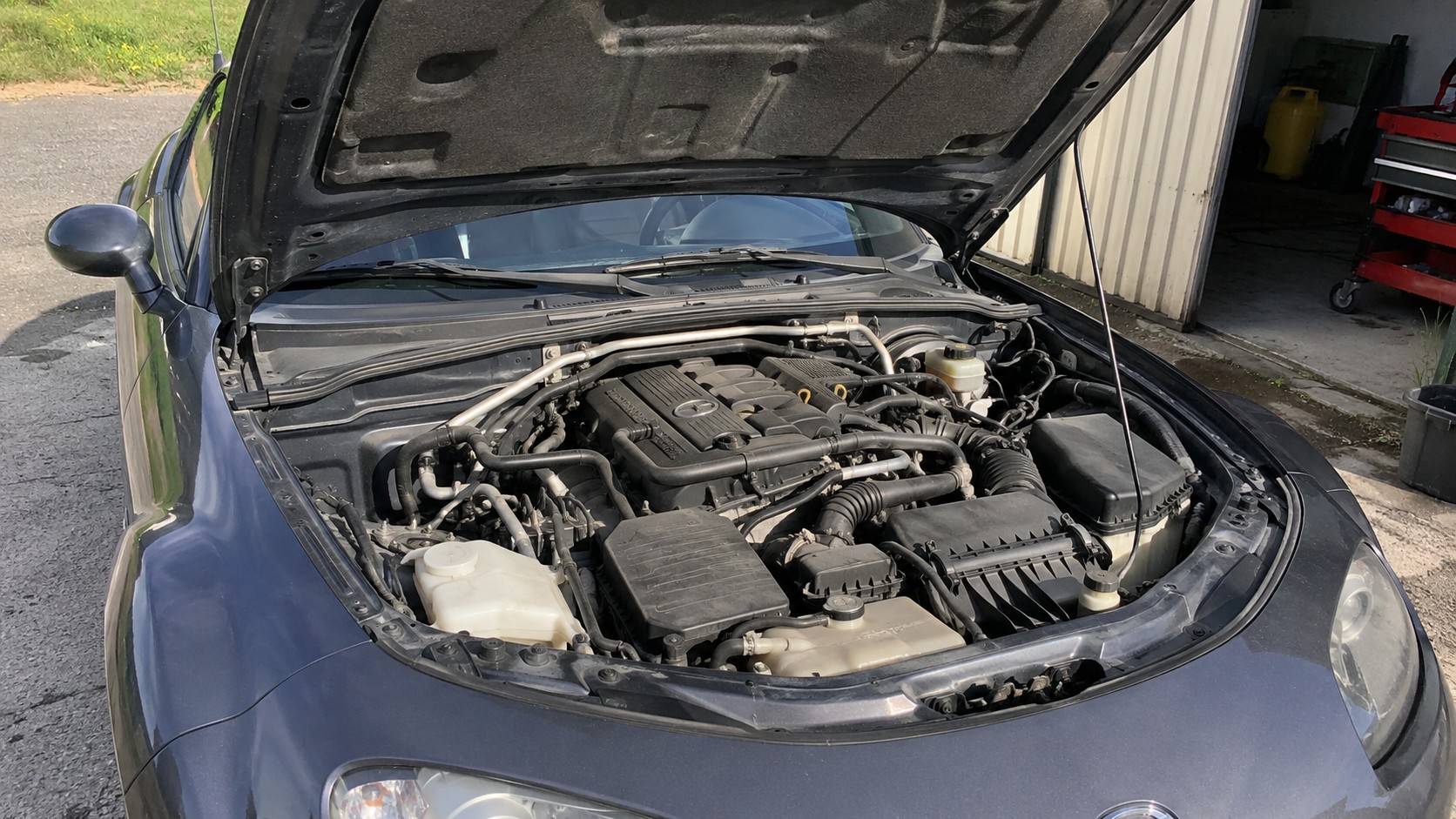
The onallcylinders NC buyer’s guide documented the 2009 engine revision in detail: forged crankshaft, forged rods with floating wrist pins, stronger pistons, stiffened valve springs, and an oil cooler. Manual cars got their redline raised to 7,200 rpm. That is not marketing polish, that is a measurably more robust bottom end.
One catch on the numbers. NC2 cars are often listed at 167 hp versus the NC1’s 170, and buyers panic about losing power. They did not. The drop is a change in how horsepower was measured, not a real reduction. The NC2 engine is at least as strong as the NC1 and internally tougher.
Why the NC2 and later manuals are the smart target
If you plan to keep the car stock, any NC is a good NC. If you have any intention of boosting it or tracking it, the 2009-and-up engine is the one you want under you. The forged internals give it real headroom, and that is common knowledge among people who build these cars.
The trim story tightened over time too. The Worth Driving trim breakdown notes that on NC2 and NC3 cars, the manual Suspension Package brought Bilstein dampers and a limited-slip differential, while automatics never got the LSD from the factory. For 2013, the new Club trim baked those performance bits in as standard on manual cars. If you find a manual NC3 Club, you are looking at the enthusiast build Mazda intended.
Engine, Gearbox, and the Numbers That Define the NC
2.0L
MZR engine
167hp
most US cars
91.7in
wheelbase
Read the gearbox before the mileage. A manual with an LSD tells you more about how the car will feel than any odometer figure. The automatic is fine for comfort buyers, just know what it is not.
The NC’s headline mechanical story is simple: it was the first Miata to get a 2.0-liter engine. That single change reshaped how the car drives compared to the smaller-displacement NA and NB.
The core spec, per Wikipedia’s NC technical data, is the 2.0-liter MZR LF-VE four-cylinder producing 167 hp in most U.S. cars. It sits behind the front axle in a front-mid-engine layout, driving the rear wheels, with a wheelbase of 91.7 inches (2,330 mm). A 1.8-liter version existed for some overseas markets, but you will almost never see one stateside, so treat the 2.0 as the American default.
Gearbox options tell you a lot about a listing before you even drive it. The 2.0 came with a five-speed manual, a slick six-speed manual, or a six-speed automatic. The six-speed manual is the enthusiast pick every time. The automatic makes about 158 hp and lacks the LSD, and it is the transmission most likely to be sitting unsold. That is not a knock on comfort buyers, it is just a market reality worth knowing.
The Power Retractable Hard Top is the NC’s signature party trick. It folds in about twelve seconds and, unlike most folding hardtops, it does not eat into trunk space. It adds roughly seventy to ninety pounds and it costs more used, but for daily drivers it transforms the car in cold and wet weather.
The soft-top is lighter, simpler, and cheaper to fix. For a purist or a fair-weather car, it is arguably the better choice. The decision comes down to how you will actually use the car, not which one sounds cooler. Both are correct answers for different drivers. If a folding roof is the feature pulling you toward the NC, our guide to the retractable-roof Miata RF is worth a read for how Mazda evolved the idea in the next generation.
NC Miata Reliability: What Actually Breaks
Age, not weakness
The NC checklist, ranked by how much it should worry you
Rust
Deal-breaker
Rocker panels and rear fender arches. Visible surface rust means far more underneath. A state-specific risk, not a given.
PRHT roof gears
Costly if ignored
Early cars used plastic gears that can fail. Cycle the roof fully several times before you buy.
Water leaks
A bargaining chip
Soft-tops soak the carpet through worn seals and a clogged cowl drain. Press the padding by hand.
Diff whine
Rarely serious
Scary on a test drive, usually just fluid. Investigate it, do not flee it. True diff failure is uncommon.
Let me be direct, because this is where the NC earns back its reputation. The MZR engine is close to bulletproof. With regular oil changes, many owners report NC engines well past 150,000 miles. But every NC is now at least eleven years old, and age creates predictable failure points. Knowing them turns a nervous purchase into a confident one.
The differential whine that scares buyers off
The most common panic on a test drive is a high-pitched whine from the rear at certain speeds. It is a well-documented NC trait, covered in Worth Driving’s NC troubleshooting guide, and it usually points to differential wear or low diff fluid rather than imminent failure. Fresh fluid often quiets it. Genuine diff replacement is possible but far less common than the noise suggests. Do not walk away over a whine, investigate it.
PRHT roof gears on early cars
This is the one PRHT-specific issue worth real attention. Early NC folding-roof mechanisms used plastic gears that could fail, and a broken roof is an expensive fix. When you inspect a PRHT car, cycle the roof several times, fully open and fully closed. Watch for hesitation, grinding, or a top that stalls partway. A blown fuse or a recently replaced mechanism on an early car is a flag to dig into, not necessarily a dealbreaker.
Water leaks and the wet-carpet test
Soft-top NCs are prone to leaks that soak the carpet and pool in the trunk. The usual culprits are perished seals and a clogged windshield cowl drain. Always reach under the carpet and press it with your hand. Damp padding or a musty smell means seals need attention and the car may have sat with standing water. It is fixable, but it is a bargaining chip.
Rust, and why the U.S. story is a state story
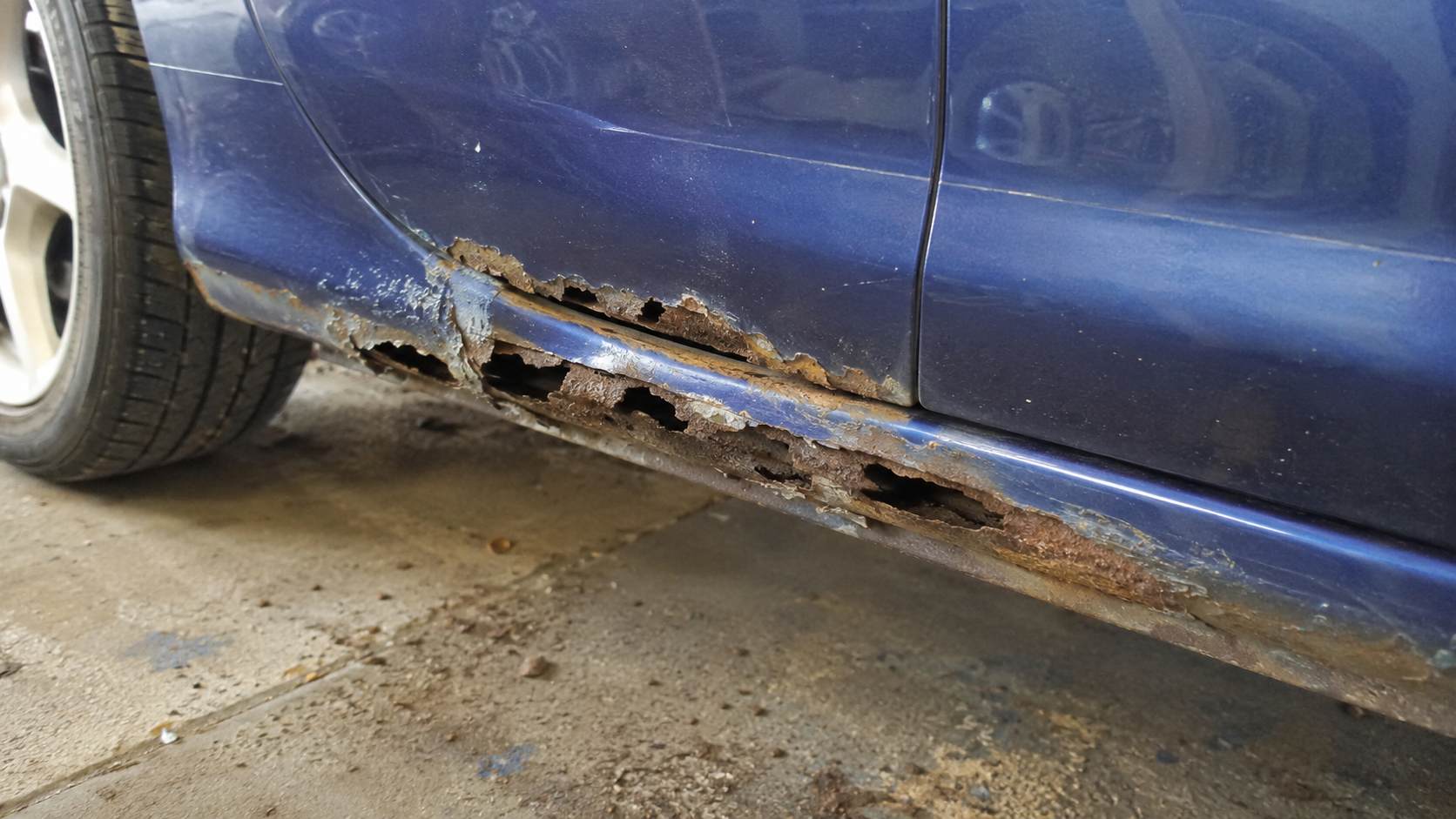
Rust is the Miata’s oldest enemy across every generation, and the NC is not immune. The rocker panels and rear fender arches are the classic rot zones, and TopMiata’s common-faults guide warns that by the time rust shows externally, there is often far more underneath. The problem is that visible surface rust is only the top of the iceberg.
Where this gets specifically American: corrosion risk depends heavily on which state the car lived in. A California or Arizona NC has usually never seen road salt and can be structurally pristine at 100,000 miles. A car from the Rust Belt, think Ohio, Michigan, the Northeast, may have eaten winters of salted roads and hide serious rot under fresh undercoating. Always ask where the car spent its life, and put a Southern or Western car at the top of your list if you are shopping remotely.
The smaller stuff worth a glance
- Stiff or whiny steering at low speed on some cars, test after the car is fully warm before assuming a pump issue.
- Throttle-body hesitation and a stumble off idle, usually cured by a clean rather than a part.
- Worn suspension bushings and top hats, if the car crashes over small bumps, the upper mounts may have collapsed.
- Seat belt retractors and window switches, minor interior gremlins that are cheap but common.
The NC’s Secret Weapon: It Is Basically a Topless RX-8
The one mod that fixes the NC
Good-Win Racing put it best: great chassis, great brakes, great engine, compromised by soft factory springs and shocks. Fix the suspension and the NC transforms.
Sway bars
RX-8 front bar is a popular bolt-on stiffness upgrade.
Front brakes
Bigger RX-8 setup, needs 17-inch wheels to clear.
Front hubs
Track upgrade, direct swap on 2009-plus cars.
Coilovers
The real cure for the marshmallow ride, not an RX-8 part.
The takeaway: the NC shares its platform with the RX-8, so beefier parts are cheap and plentiful. You do not need to boost it to wake it up. Springs, shocks, and a sway bar do most of the work.
Here is the part almost nobody mentions in the weight debate. The NC shares its platform with the Mazda RX-8. Brian Goodwin of Good-Win Racing described it bluntly years ago: think of the NC as a topless RX-8, because from a chassis standpoint that is essentially what it is.
That matters for one practical reason. A huge catalog of beefier RX-8 parts bolts onto the NC with little or no modification. Owners upgrade sway bars, front brakes, and front hubs straight from the RX-8 bin, and the parts are often stronger and cheaper than dedicated aftermarket kits.
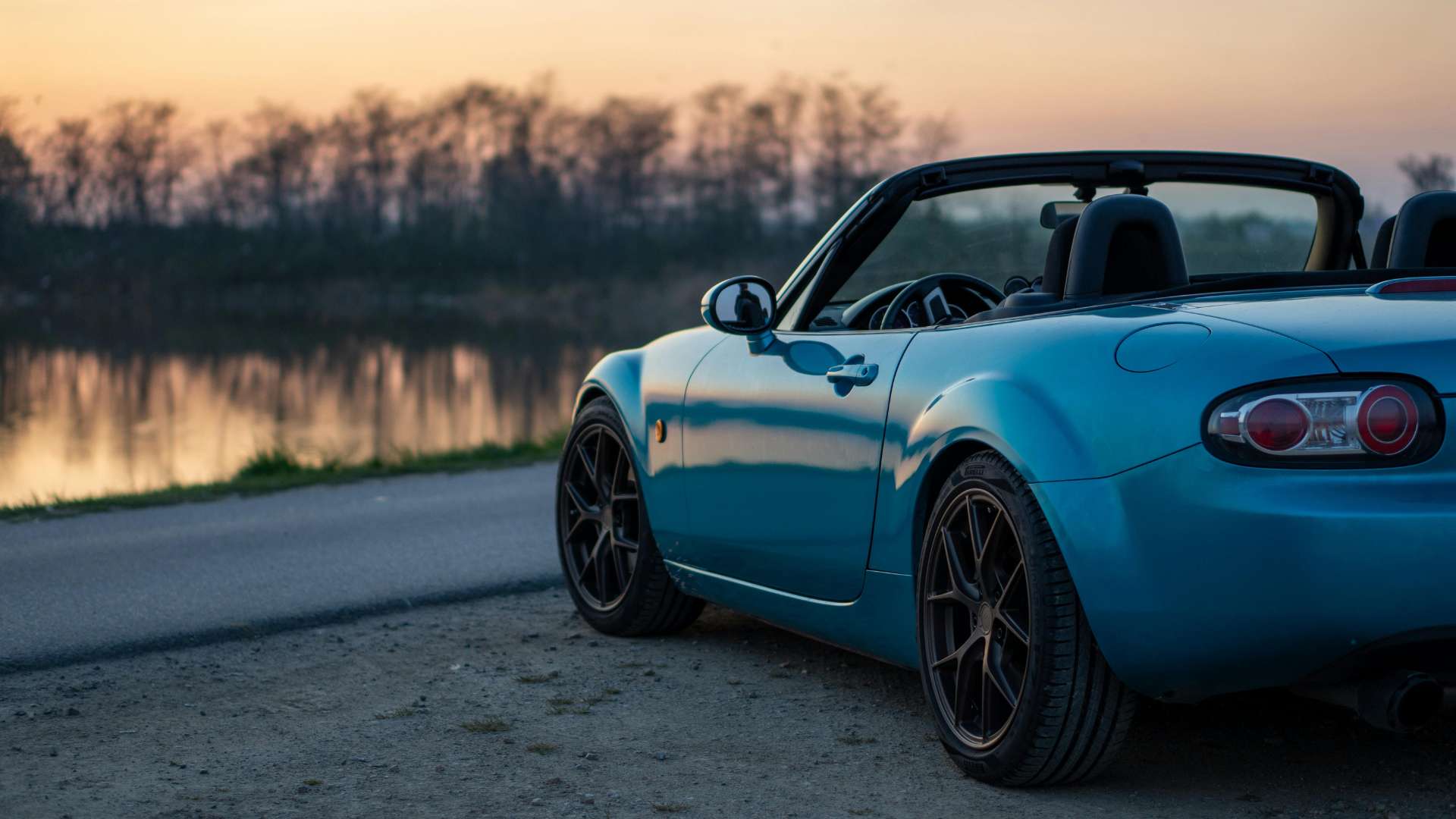
The single most transformative change costs less than you think, and it is not forced induction. The NC’s real weakness from the factory is soft springs and shocks, chosen to sell the car on comfort and big wheels. Fit coilovers or better dampers and the chassis that was always underneath finally shows itself.
If you do want more power, the 2009-and-up forged engine handles boost well, and superchargers and turbo kits are widely available. But the honest advice most NC veterans give is to sort the suspension first. A well-damped stock-power NC is a better car than an overpowered one on tired springs.
Buying an NC in 2026: Values, Timing, and the Import Angle
+57%
rise in insurance quote activity from NC owners since 2022, per Hagerty
Gen X & under
now the majority of NC buyers, the classic used-to-collectible signal
The NC has spent years as the cheapest way into a modern-feeling Miata, and that window is slowly closing. The market is waking up to what the car offers.
Hagerty’s 2025 NC market spotlight reported that average NC values had eased to around $14,600 for a number three (Good) condition car, down from a $17,000 peak in early 2023, but still well above pre-pandemic levels. The more telling detail is who is buying. Insurance quote activity from NC owners was up 57 percent since 2022, with Gen X and younger drivers making up the majority. That is the profile of a car crossing from used car into future collectible.
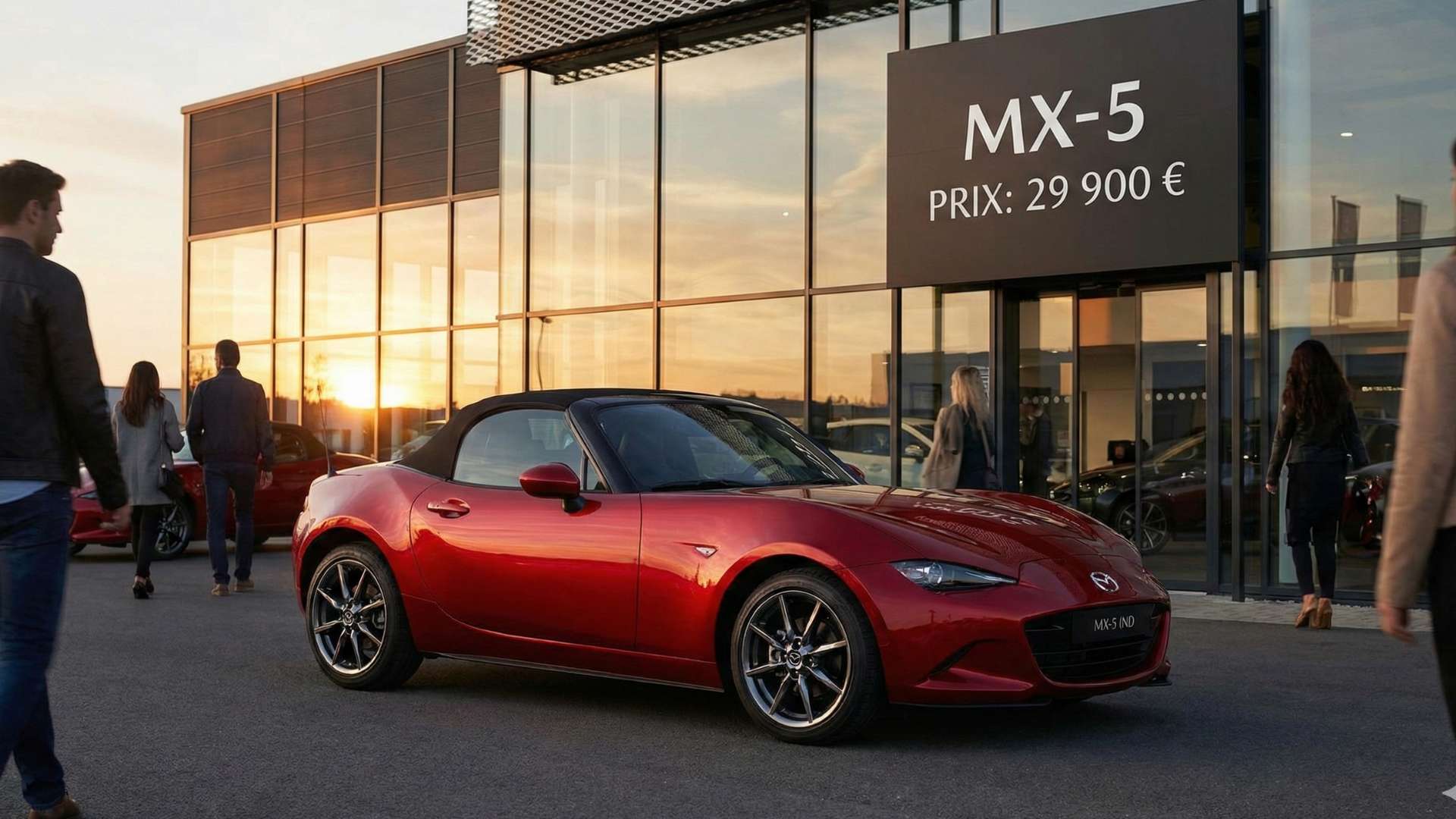
What that means for you is straightforward. Prices are soft right now relative to the 2023 high, but the trend line and the buyer demographics point upward. This is a reasonable time to buy a good one, not a moment to wait for a crash that the data does not support.
A note on titles and salvage cars
Cheap NCs with suspiciously low prices are often hiding a salvage or rebuilt title. In the U.S. that flag follows the car and tanks resale value, and it complicates insurance. Always confirm the title status before you get attached to a listing. A clean title on a slightly pricier car beats a salvage bargain almost every time.
Three mistakes that cost NC buyers money
- Overpaying for an NC1 that “looks like an NA.” The rounded early nose is charming, but you are paying a premium for looks while getting the weaker engine internals. An NC2 often costs the same and is the better car.
- Ignoring the roof on a PRHT. Buyers get seduced by the folding hardtop and forget to test it thoroughly. A failed roof mechanism can cost more than the price gap you thought you were saving.
- Skipping the rust crawl. People inspect the paint and the interior, then never look under the sills. On a car this age, five minutes with a flashlight underneath is the most valuable part of the whole viewing.
Buying remotely?
See how NC money stacks up against the current car before you spend a dollar
Open the ND Miata deep dive ›Living With an NC Every Day: Costs and Compromises
The everyday math
What an NC actually costs and asks of you
~$429/yr
avg maintenance
27–33mpg
real-world combined
2seats
and a small trunk
Easy to live with
Cheap to maintain for a sports car
Genuinely economical on the highway
PRHT makes winter commuting viable
Know before you commit
Some cars want premium gas
Trunk swallows a weekend, not a life
Road and wind noise are ever-present
The NC is the generation most people can actually daily, and the running costs back that up. It is a genuinely cheap car to keep on the road for something this fun, and the highway economy surprises people who assume a sports car drinks fuel.
Maintenance is modest for a rear-drive sports car. According to RepairPal’s Mazda MX-5 Miata ownership data, the model averages about $429 per year to maintain, below the $456 average RepairPal gives for subcompact cars. That figure is a big part of why the NC works as an everyday car rather than a weekend toy.
RepairPal, Mazda MX-5 Miata maintenance cost
The EPA rates the NC at 24 mpg combined. Owners reporting on fueleconomy.gov see roughly 30 to 33 mpg, from small samples. Cruise gently and highway numbers climb into the low thirties. Flog it on a back road and it drops, but even then it stays reasonable. One honest caveat: some NCs are happiest on premium gas, so factor that into the running cost.
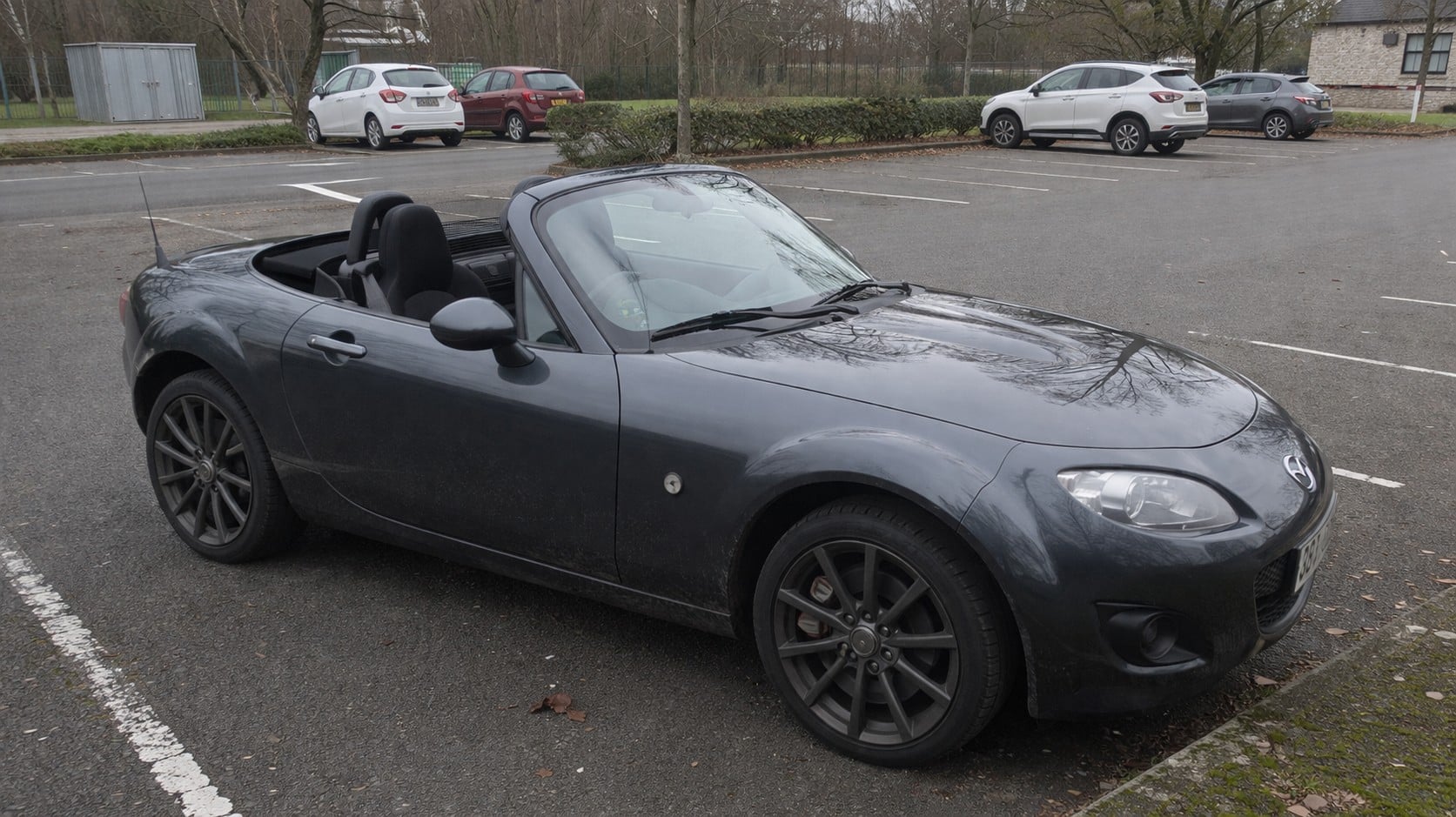
The compromises are the honest kind. It is a two-seater with a small trunk, so it holds a weekend of luggage, not a family’s worth. Road and wind noise are always present, more so with the soft-top than the PRHT. None of that is a surprise on a roadster, but it is worth naming before you make one your only car.
Is the NC the Right Miata for You?
The honest filter: use, not internet arguments
The NC is your car if
You want a Miata you can live with daily
You are taller and never fit an NA or NB
You want a proper folding hardtop
You want tuning headroom from a 2009-up engine
Look elsewhere if
Your whole reason is pop-up headlights
You chase sub-2,200-pound purity
You want the lightest, rawest roadster feel
In which case the NA is already calling you
The honest filter is about how you will use the car, not which generation wins an internet argument. The NC makes the most sense for a specific kind of driver.
It is the pick if you want a Miata you can live with daily, if you are taller and never fit comfortably in an NA or NB, if you want the option of a proper folding hardtop, or if you want tuning headroom from a 2009-and-up engine. It is the wrong pick if your entire reason for wanting a Miata is pop-up headlights and sub-2,200-pound purity, in which case the NA is calling and you already know it.
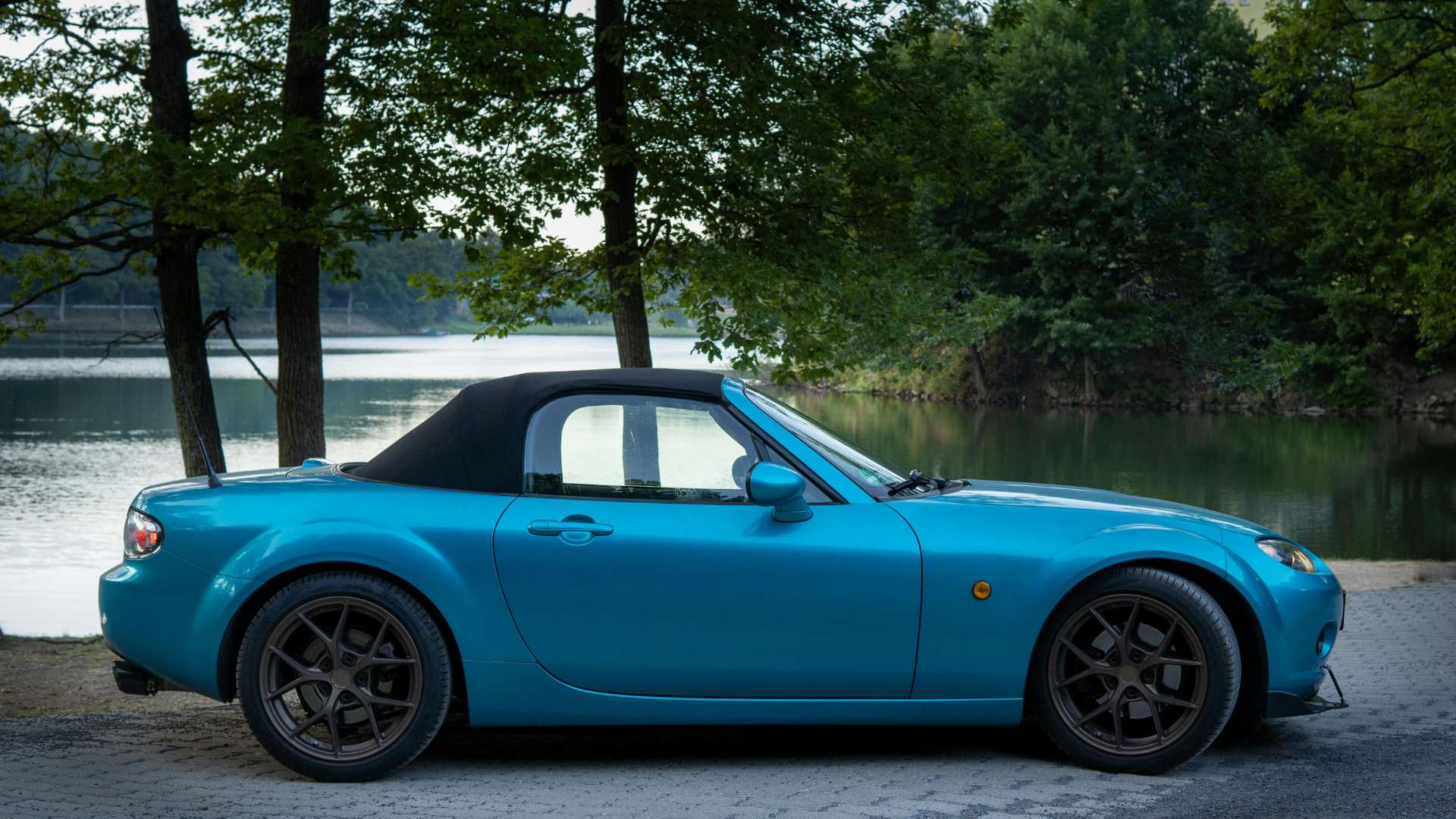
The most common pattern in NC buyer discussions is not confusion about the car. It is the gap between the reputation people arrive with and the car they find once they actually drive one. The NC almost always beats the low expectations the internet set for it. That surprise, repeated over and over, is the real story of this generation.
One more piece of context from the people who own these long-term. In the Hagerty comments, owners who had run one of every generation kept landing on the same summary: the NC trades a sliver of steering feel for real usability and space, and for most people that is a trade worth making. Coming from drivers who owned NAs and NBs too, that is about as fair a verdict as the NC will ever get.
The Verdict on the Underrated Miata
Bottom line
The internet’s least-loved Miata is one of the smartest used buys you can make
Real 2.0-liter power, a folding hardtop no other Miata offered, and a chassis that still talks to you through every corner, for less money than the hype generations command, on a market that is quietly climbing.
01
Target 2009-plus manual
Forged internals, higher redline, the LSD trims. The NC2 and NC3 are the sweet spot.
02
Crawl underneath
Five minutes with a flashlight on the sills and arches beats any listing photo.
03
Test that roof
Cycle a PRHT fully several times, and confirm a clean title with no salvage history.
The NC spent a decade as the Miata nobody defended, and that was always a misread. It is the generation that made the roadster livable without gutting what made it special. Real 2.0-liter power, a folding hardtop no other Miata offered, and a chassis that still talks to you through every corner.
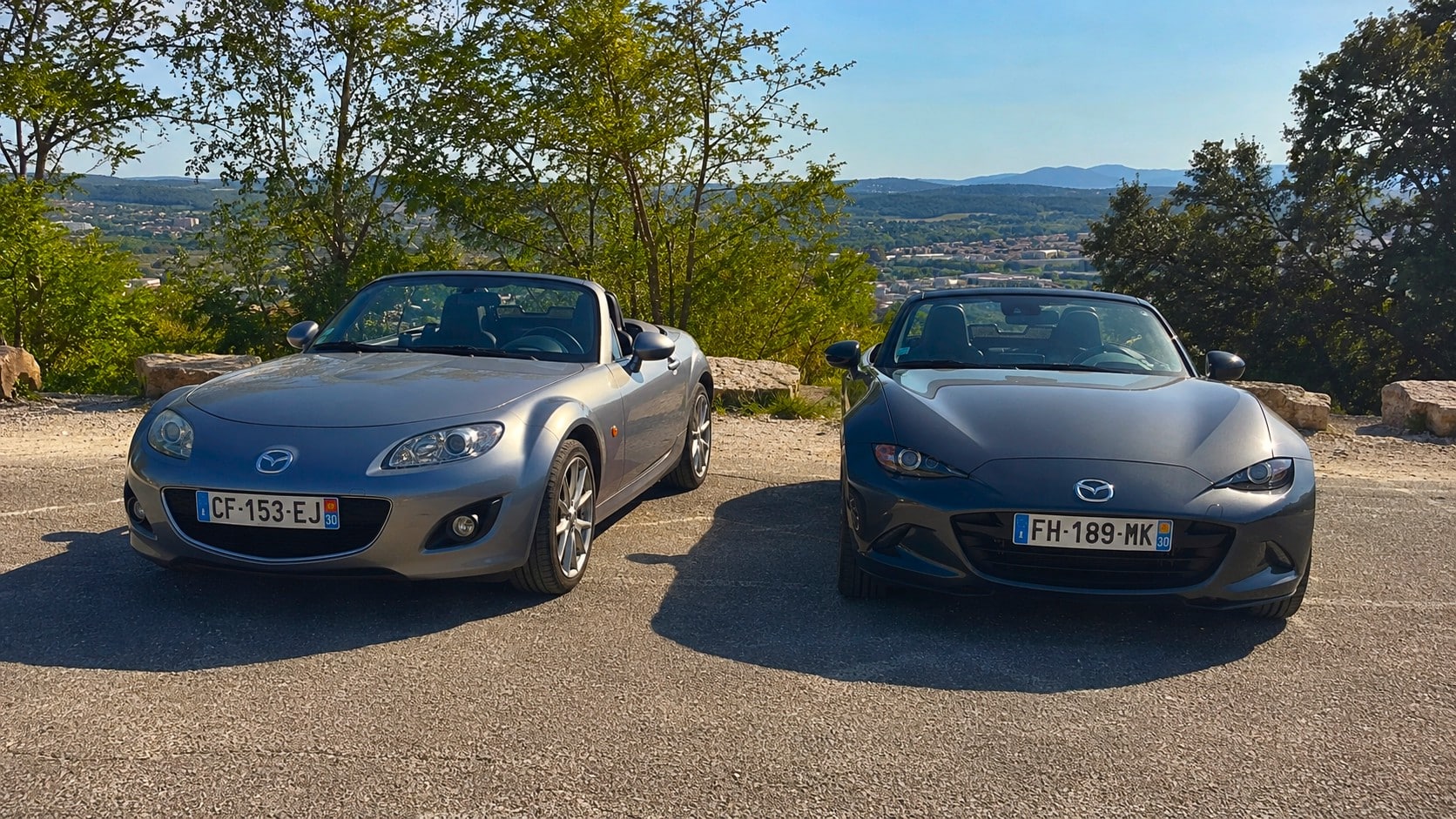
Buy the right one and you get a durable, involving sports car for less money than the hype generations command, on a market that is quietly climbing. Focus on a 2009-plus manual, crawl underneath for rust, and test that roof. Do that, and the internet’s least-loved Miata becomes one of the smartest used sports car buys you can make.
Your Most Common Questions About the NC Miata
Is the NC Miata reliable?
Which NC Miata year is the best to buy?
NC Miata soft-top or PRHT, which should I choose?
How much is an NC Miata worth in 2026?
Is the NC Miata good for tall drivers?
What should I check when buying a used NC?
Sources
- Hagerty , NC market spotlight and value data
- The Autopian , owner perspective on the NC’s reputation
- Flyin’ Miata , generation and sub-generation codes explained
- OnAllCylinders , NC year-by-year buyer’s guide
- Worth Driving , NC buyer’s handbook
- Worth Driving , NC trim levels and hardware
- Worth Driving , NC common issues and fixes
- TopMiata , MX-5 common faults and rust zones
- Wikipedia , NC technical specifications

Alan Chevereau
Founder of MX5Global, independent SEO consultant and Mazda MX-5 owner. He launched the site in November 2025 to give buyers sourced, honest guides to every generation.


Leave a Reply