
Published on :
Updated on :
In short : the NB2 is the 2001 to 2005 facelift of the second-generation Miata. The 2001 refresh changed the engine, the chassis, the brakes and the cabin, and the body gained 16% in bending rigidity and 22% in torsional rigidity. Rust decides the deal, so check the frame rails and rocker panels first. The 178 hp Mazdaspeed turbo is the collector pick.
This page covers the 2001 to 2005 NB2. For the whole NB generation, see the NB Miata guide; for NA vs NB, see our comparison.
Last verified: October 1, 2026
A silver Miata sits at the far end of the lot. Clear rear turn signals. Twin-lens headlights. Chunky 16-inch wheels. To most people, it is just another old convertible. To anyone who knows Miatas, it is an NB2 Miata. It is probably the one they wanted all along.
Here is the catch. Listings lump every 1999 to 2005 car together as “NB,” and asking prices barely separate them. Yet the 2001 refresh changed the engine, the chassis, the brakes and the cabin. Buy the wrong year and you pay NB2 money for NB1 hardware. Buy the right year with hidden rust and you pay twice.
This guide covers the 2001 to 2005 Mazda MX-5 Miata. Enthusiasts call it the NB2, or NBFL. You will learn how to spot one in seconds and what each model year added. You will also see where the rust hides and what a clean car costs in 2026.
Still weighing generations before you commit?
The NC replaced the NB2 in 2006, with more room and a 2.0-liter engine.
What Is an NB2 Miata, Exactly?
NB2
The facelifted second-generation Miata, sold in the U.S. from 2001 to 2005.Enthusiast shorthand, not an official Mazda name. Also written NBFL.
The NB2 Miata is the facelifted second-generation Mazda MX-5 Miata, sold in the U.S. for the 2001 to 2005 model years. The 1999 and 2000 cars are the NB1. “NB2” is not an official Mazda model name. It is community shorthand, and you will also see NBFL, for NB facelift.
The split is widely accepted across the Miata world. OnAllCylinders, Summit Racing’s editorial site, dates the NB2 from 2001 in its NB year-by-year buyer’s guide. Redline Auto Parts calls 2001 the year with the biggest changes of the whole NB run.
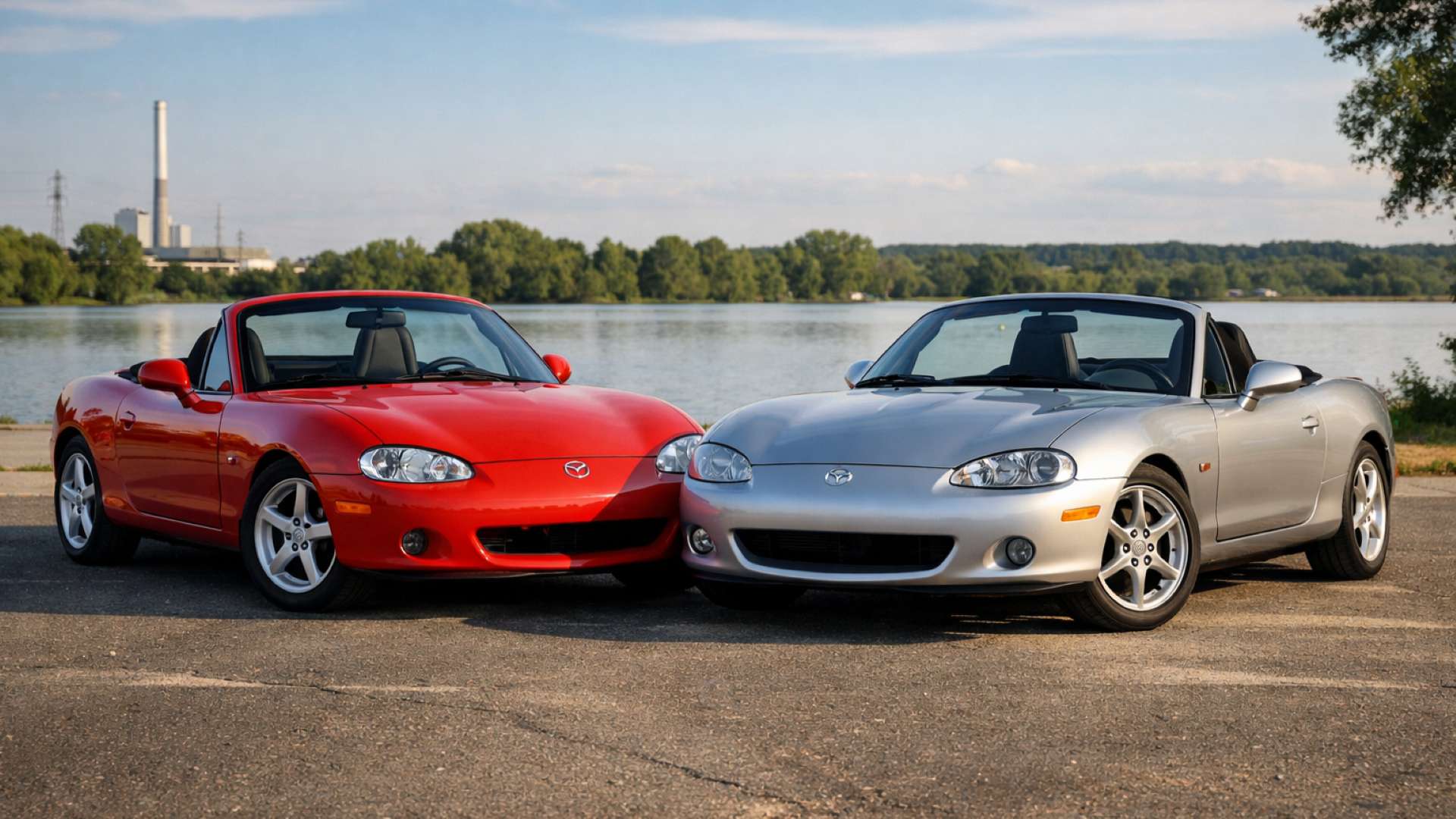
One naming quirk trips up searches. The car was sold simply as the Miata in North America through 2002. From 2003, the badge read MX-5 Miata. Same car, same platform, just a marketing change that explains why listings use both names.
Why the split matters when you shop
The chassis code stays NB for the whole 1999 to 2005 run. That is the problem. Sellers, auction sites and price guides often treat the generation as one block. The hardware inside that block is not uniform. The differences are exactly the ones you feel from the driver’s seat.
There is also no 1998 Miata in the U.S. The NB arrived for the 1999 model year. A “1998” NB listing usually means an import, a typo, or a 1998 build date read as the model year. The VIN settles which one.
NB1 vs NB2 Miata: How to Tell Them Apart in 30 Seconds
Three tells you can check in a minuteLeft, the NB1. Right, the NB2. Drawn from the details that actually changed.
The trap: an NB1 wearing an NB2 face
NB2 headlights bolt onto an NB1 with the later bumper and some rewiring. The engine, the brakes and the body stiffness stay old.
10th digit
of the VIN tells the truth the nose hides.
You do not need a spec sheet. Five visual cues and one number on the dashboard settle it. Learn them once and you will read every listing photo differently.
- Headlights: NB2 units use projector low beams with a separate high-beam lens. NB1 lights use a single bulb for both.
- Rear turn signals: clear on the NB2, amber on the NB1. This is the fastest tell from behind.
- Gauges: white faces with red backlighting became standard on the NB2.
- Center console and seats: redesigned console, taller seats with stronger side bolsters and taller headrests.
- Driver’s window: the NB2 added an auto-down function on the driver’s side switch.
Redline Auto Parts lists these changes in its NB Miata buyer’s guide. It also notes the revised front bumper, fog lights and larger ground effects. Fog lamps, once optional, became standard with the facelift.
The VIN check that beats every photo
The tenth character of the VIN gives the model year. On a North American NB2, it reads 1 for 2001 through 5 for 2005. An NB1 shows X for 1999 or Y for 2000. It takes ten seconds and it ends every debate with a seller.
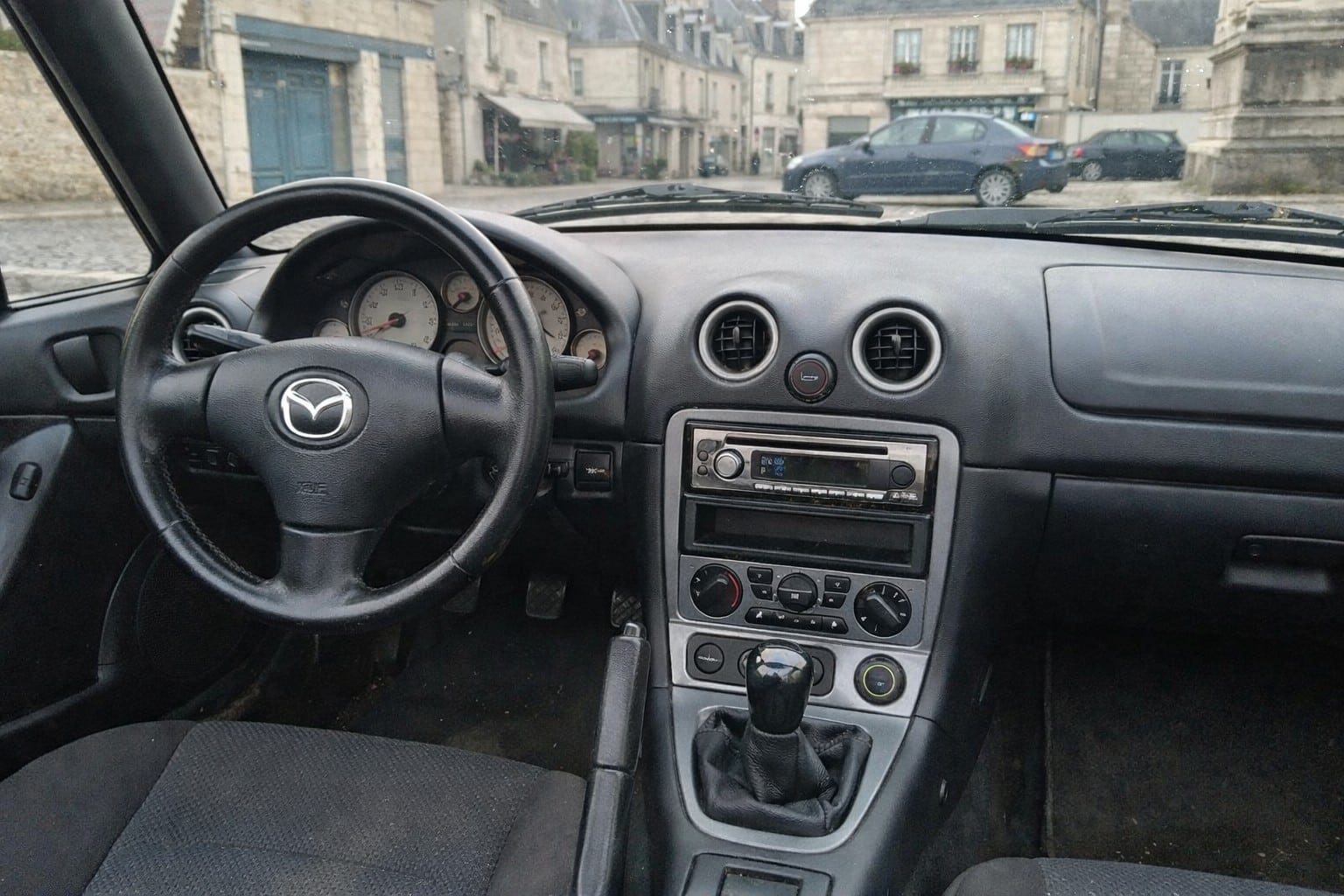
Why bother when the face looks right? Because the face can lie. Redline’s NB2-to-NB1 compatibility guide explains why. NB2 headlights bolt onto an NB1 with the NB2 front bumper and reworked wiring. Plenty of owners have done exactly that.
That leads to the first counterintuitive mistake. An NB2 face does not make an NB2 car. A 2000 with a facelift nose still has the older engine, the older chassis and the smaller brakes. Price it as what it is underneath.
What Changed Under the Skin in 2001
A stiffer shell and a smarter head
Body stiffness versus the NB1, with the NB1 as the 100 baseline.
Engine code
BP-Z3
Lateral grip Car and Driver measured on the upgraded 16-inch setup. The stiffer shell is what lets the tires work.
The cosmetic update gets the attention. The mechanical update is the reason enthusiasts pay for an NB2. It touched three areas: the engine, the structure and the brakes.
The BP-Z3 engine and its variable valve timing
The 1.8-liter four stayed, but the head changed. Mazda added variable valve timing on the intake camshaft and raised compression to 10.0:1. The intake, exhaust and engine computer were revised too. The NB1’s variable intake system disappeared in the process.
The peak gain was modest, a few horsepower, to 142 or 143 depending on the source. The real improvement lived lower in the rev range. An NB2 pulls more cleanly out of slow corners. That is where a Miata spends most of its life on a back road.
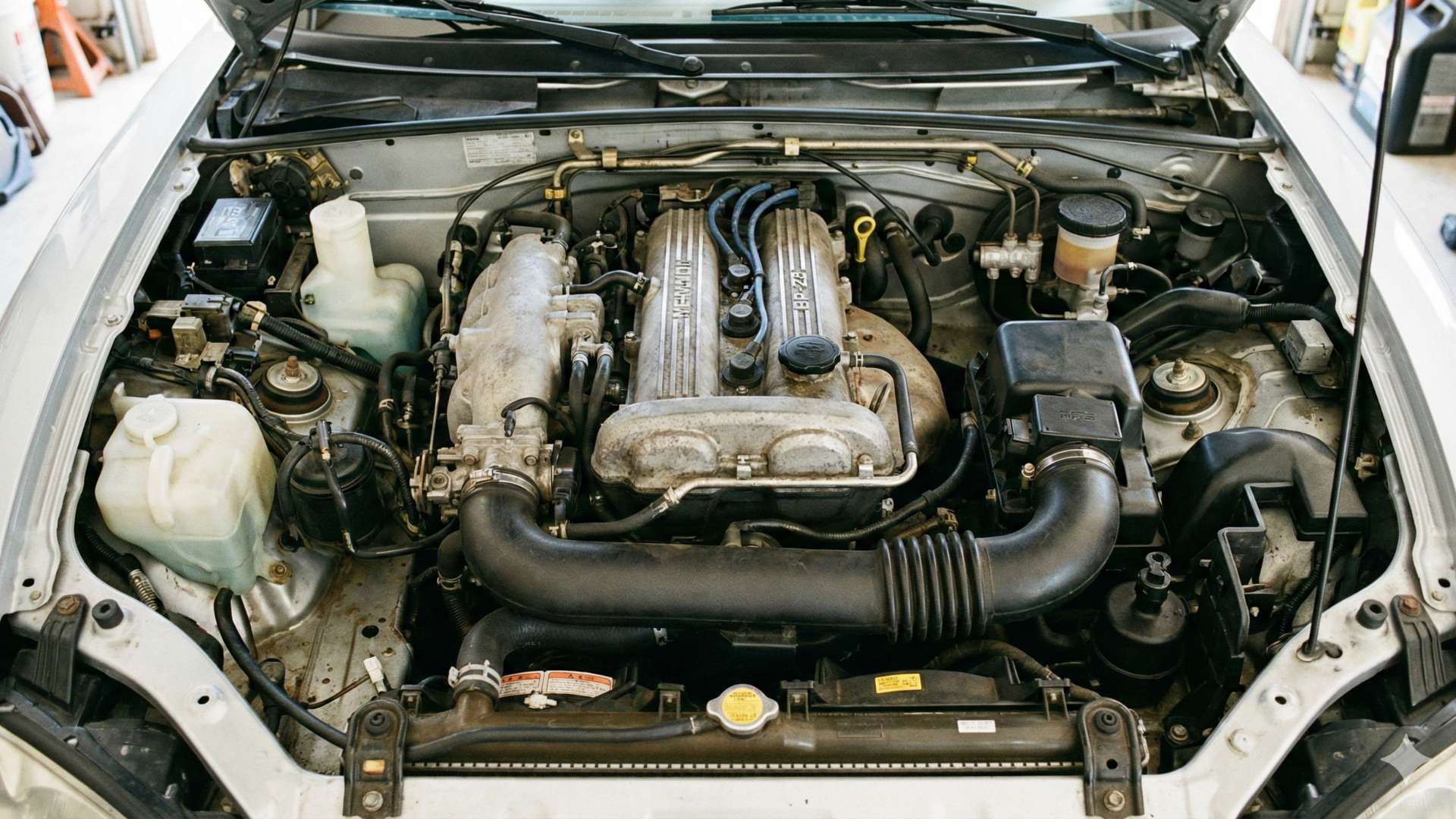
That small gap had a famous side effect. Here is a story that still surfaces in NB2 threads. Early U.S. catalogs quoted the higher output of the Japanese-market engine. Car and Driver and owners noticed the missing power. Mazda ended up offering to buy back 2001 cars, then gave apologies and free servicing to owners who kept them (ClassicCars.com Journal). The lesson has not aged: read what the car actually is, not what the paperwork claims.
A stiffer body and bigger brakes
The structural upgrade is the one you feel in every corner. According to Wikipedia (Mazda MX-5 (NB), 2026 revision), the 2001 body gained 16 percent in bending rigidity. Torsional rigidity rose 22 percent. That is why an NB2 feels more planted over broken pavement than an NB1 on the same road.
Top trims added 16-inch wheels with 205/45 tires and larger front and rear brakes. Extra chassis braces, Bilstein dampers and a limited-slip differential came with them. Car and Driver measured 0.91 g of lateral grip on the upgraded setup. For a car with a curb weight around 2,348 pounds in minimal spec, that is a serious number.
What owners notice from behind the wheel
There is a trade-off, and the people who race these cars talk about it openly. One owner in a Grassroots Motorsports thread on NB Miatas ran both a 2001 and a 1999 Sport. He preferred the newer car on the street. In E Street autocross, though, his six-speed NB2 was less competitive than the older car.
In the same thread, Keith Tanner of Flyin’ Miata pointed out a detail most buyers never consider. The 2001 refresh dropped the two-catalyst California emissions setup, which can be very expensive when the primary cat fails. He also noted the car got slightly heavier. Better on the road, heavier on the scale: both are true.
Transmission choices widened too. A five-speed manual remained standard and a six-speed manual appeared on higher trims. A four-speed automatic stayed on the options list. The six-speed is the one that sells fastest, although the five-speed is lighter and loved by autocrossers.
The NB2 Years One by One: 2001 to 2005
Five years, four lanes of change
What moved underneath the same NB2 body, year by year.
Five model years, one platform, and more trim drift than most buyers expect. The details below decide which car suits you and what it should cost.
2001: the launch year
The 2001 Mazda Miata got everything described above. The six-speed with its taller final drive was optional on the LS and standard on the Special Edition. Sport brakes and 16-inch wheels were optional. Miata.net’s buyer checklist flags a known 2001 to 2002 quirk. Expect possible clutch shudder on cold take-off, covered by a Mazda service bulletin.
2002: quiet carryover
Little changed for the U.S. market beyond another Special Edition. The interesting car was elsewhere. Australia received just 100 turbocharged MX-5 SP models. They were effectively a market test for the future Mazdaspeed. OnAllCylinders notes that the SP becomes eligible for U.S. import under the 25-year rule in 2027. Expect a few to appear at auction.
2003: the hardware year
This is the most underrated NB2 update. The bigger “Sport” brakes and 16-inch wheels became standard on every car. The limited-slip differential switched from a Torsen to a Tochigi-Fuji unit. Mazda also launched the Shinsen, a trim slotted between the base car and the LS. It wore titanium silver paint with a dark blue top and interior.

The rarest 2003 is the Miata Club Sport, built at the request of the SCCA. Only 50 were made, half Classic Red and half Pure White. They came without power steering, air conditioning or ABS, and with a Torsen, Bilstein dampers and a five-speed. Finding one is a real event.
Here is the second counterintuitive mistake. Buyers assume every NB2 limited-slip is the same. OnAllCylinders specifically recommends a 2001 or 2002 car if you plan to modify and want the Torsen. A later car is not worse to drive, but the diff under it is different.
2004 and 2005: the finale
The standard car carried over with minor changes. The headline was the Mazdaspeed MX-5 Miata, covered in its own section below. The 2005 Mazda MX-5 Miata closed the NB run before the NC arrived for 2006.
Mazdaspeed MX-5 Miata: The Only Factory Turbo You Can Buy Here
5,428
Mazdaspeed MX-5 Miatas built for the U.S. market, the only factory turbo Miata sold here.
Any other color on a U.S. car deserves a paint history question. Stock and documented beats tuned and undocumented.
Mazda's in-house performance arm took what it learned from the Australian SP and built a turbo Miata for the showroom. It stands as the only factory-turbocharged Miata sold in the U.S.
The recipe went well beyond a turbo. Per OnAllCylinders, output rose to 178 hp and 166 lb-ft. The six-speed received strengthened gears. The Torsen returned with a taller ratio and beefier axles, and the radiator, clutch and exhaust were revised. Underneath sat unique Bilstein dampers, springs, sway bars, 17 x 7-inch wheels and strut tower braces.
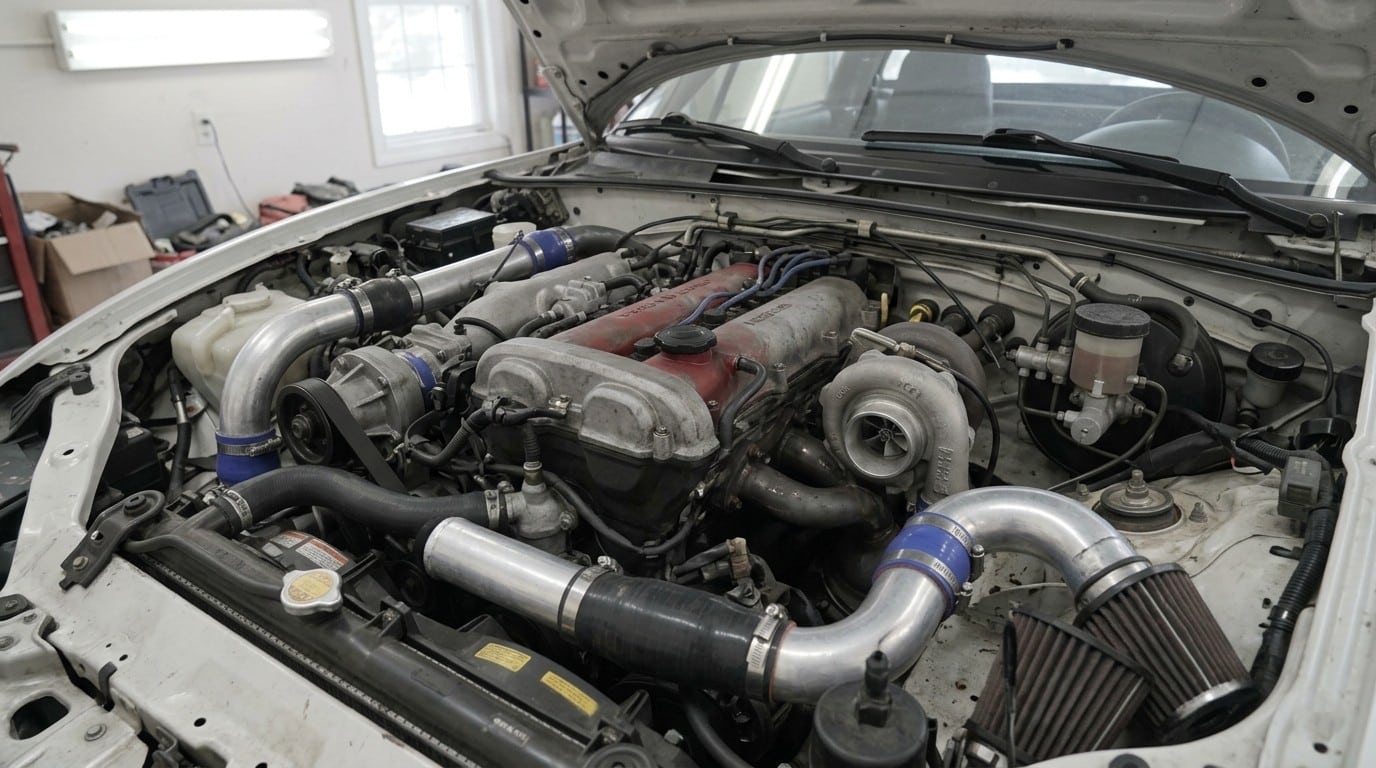
Scarcity is what makes the Mazdaspeed a collector car rather than just a fast NB. According to Wikipedia's Mazda MX-5 (NB) entry, updated in 2026, Mazda built 5,428 Mazdaspeed MX-5s for the U.S. market: 4,000 for 2004 and only 1,428 for 2005, a run cut short by a fire at the production facility. A clean, stock 2005 is the harder find of the two years.
U.S. colors were limited. The 2004 car came in Velocity Red Mica or Titanium Gray Metallic. For 2005, Lava Orange Mica and Black Mica joined the list. A Mazdaspeed in any other color deserves questions about its paint history.
How to approach a Mazdaspeed listing
Most Mazdaspeeds have been driven the way Mazda intended, which is hard. That is not a flaw, it is the car's purpose. Your job is to separate honest use from abuse and unrecorded modification.
Ask for every receipt tied to the turbo, the clutch and the intercooler piping. Check whether the factory wheels, dampers and airbox are still with the car. A stock, documented example is worth far more than a "tuned" one with no paperwork. That holds even when the tuned car makes more power.
NB2 Miata Rust: The Inspection That Decides the Deal
Where an NB2 rots, and why you rarely see it first
Three zones to check. On the rockers especially, what shows on the paint is the late stage.
Engines rarely kill an NB2. Rust does. Every other section of this guide is secondary to this one. Rust is the only fault that can turn a good buy into a parts car.
A typical NB2 trap is not a mechanical failure. Picture a 2001 car sold with a note about a minor valvetrain issue and nothing about the body. Weeks after purchase, the owner finds perforated rocker panels, hidden under a thick gray coating applied only on the damaged areas, and a body shop quote that eats a large share of the purchase price.
The lesson is simple: a suspiciously clean underside deserves more suspicion, not less. Fresh undercoating on one zone only is a warning sign, not a bonus.
The three NB2 rust zones
- Rear end of the rocker panels, just ahead of the rear wheels, where water and debris collect.
- Front frame rails, the NB-specific weak point, rusting from the inside out behind the front wheels.
- Rear fender arches and lips, where the fender meets the rocker seam.
Miata.net's guide to checking out a used NA or NB Miata names rust as the worst enemy of used Miatas. It singles out front frame rail rust on the NB. It also warns that once rust shows on a rocker, the structure beneath is likely worse.
Why the frame rails deserve a flashlight
Consider this owner report. In a Grassroots Motorsports thread on NB structural rust, an NB went to the shop for new sway bar mounts. The shop found rot, which members identified as the front frame rails. Another member explained that NB rails are double-layer, while NA rails are single-layer and far less rust-prone.
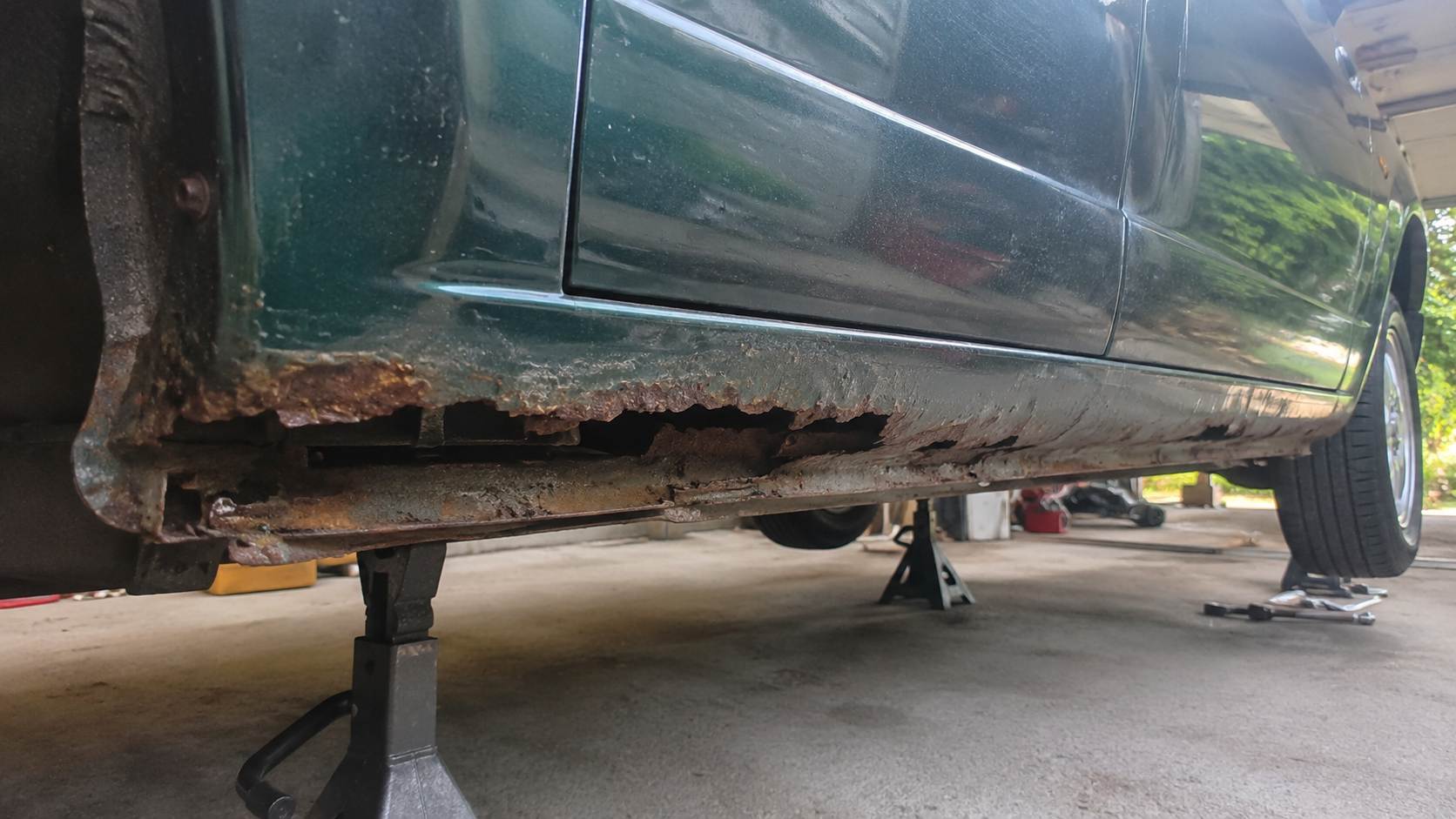
Some sellers argue that rocker rust is cosmetic. Keith Tanner of Flyin' Miata answered that directly in another Grassroots Motorsports thread: the rockers are structural. Treat any perforation there as a chassis issue, not a paint issue.
Rust Belt or Sun Belt: where the car lived matters
In the U.S., rust risk is a geography question. A car that spent twenty years in Arizona or Southern California may be structurally perfect. A car from Ohio, Michigan or New England has likely seen road salt every winter. Always ask where the car lived, not just where it is listed.
If you shop remotely, a Sun Belt car with a higher price usually costs less in the end. Shipping a clean car across the country is cheaper than rebuilding a frame rail.
The magnet test, and two other checks
Bring a small magnet. The NB hood is aluminum, but a magnet should stick everywhere else on the body. If it loses grip on a rocker or fender arch, you are likely touching filler, not steel.
Next, bring a JIS or Phillips screwdriver. If the car has metal door sill plates, ask to remove them and look underneath. Then lie down with a flashlight and look up behind the front wheels at the frame rails. Five minutes on the ground can save you thousands.
Mechanical Reliability: A Short List, Mostly Cheap
Ranked by what it can cost you
The NB2 drivetrain is tough. One fault is specific to these years, the rest are age and cheap parts.
The good news is genuine. The NB2 drivetrain is tough, simple and well supported. Most mechanical issues are age-related and inexpensive, with one notable exception that is specific to these years.
The NB2-specific issue: the immobilizer
Owner guides flag immobilizer failure as a growing problem on 2001 to 2005 cars. The fault is internal, and the immobilizer unit and engine computer are paired for life. That makes a simple part swap harder than it should be. On a test drive, restart the car several times, warm and cold. Then ask whether it has ever refused to start.
Ignition coils and misfires
Worth Driving's NB troubleshooting guide lists coil pack failure as common on both NB1 and NB2 cars. The symptoms are a rough idle, hesitation and misfires under load. Ignore them and unburnt fuel can damage the catalytic converter, which turns a cheap fix into an expensive one.
The smaller items worth a look
- Radiator top tank: Miata.net notes that a brown plastic top has usually turned brittle with age. Black is healthy.
- Shock top mounts: if small bumps feel spine-jarring, the "top hats" have likely collapsed. Replace all four together.
- The 65 mph shimmy: a known Miata trait, usually cured with properly balanced wheels or fresh tires.
- Valve tick: common and usually harmless, but a good reason to ask for oil change records.
A cold start and a code scan
Ask the seller not to start the car before you arrive. A cold start reveals ticking, rough idle and clutch shudder that disappear once everything is warm. Then plug in an inexpensive OBD-II reader. Stored or recently cleared codes tell you more than any conversation.
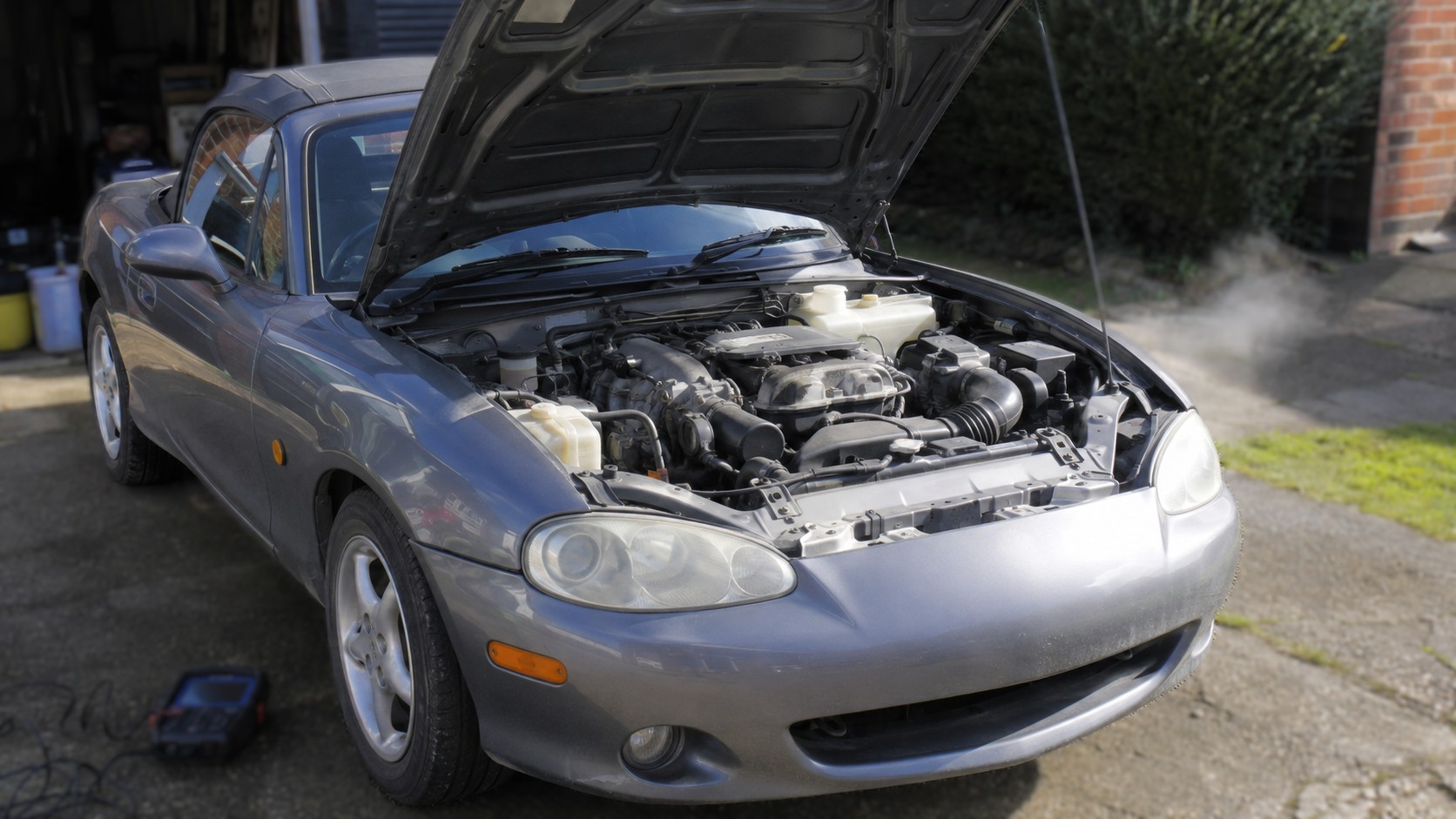
If anything still feels uncertain, pay for a pre-purchase inspection. Miata.net makes a blunt point about it: a seller who refuses one is giving you your answer.
What an NB2 Miata Costs in 2026
The price ladder, from tired to record
NB values from Hagerty. Six-speeds, limited-slips and Mazdaspeeds sit high on each rung.
Californiabiennial smog check
Pennsylvaniaannual safety inspection
Floridano periodic inspection
Rules are set state by state. Check your own DMV before buying across state lines.
The NB is no longer a throwaway car. It remains one of the most affordable ways into a proper rear-drive roadster. Condition, not model year, drives most of the price.
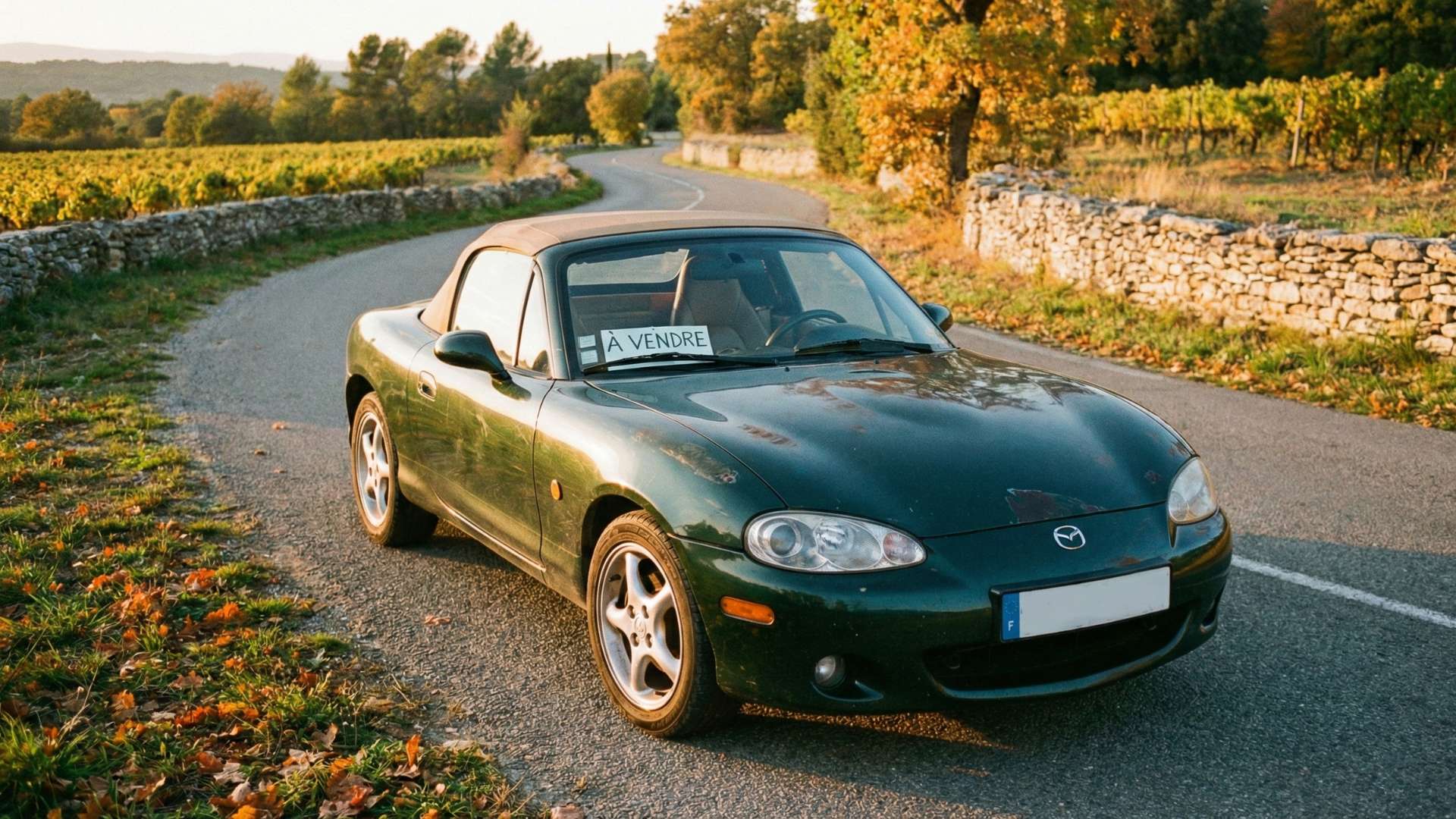
Hagerty's January 2026 analysis, Does Your Miata's Color Make It Worth More?, gives the clearest picture. According to Hagerty, NBs sit in the mid-$9,000 range in #3 "good" condition. In #2 "excellent" condition, they reach $16,000 to $17,000, depending on year and trim. The auction record for a stock NB stands at $29,925. The gap between a tired car and a great one is wider than most buyers expect.
Those figures cover the whole NB generation. Within that spread, the best-equipped NB2s sit toward the top. Think six-speed, documented limited-slip, factory hardtop or Mazdaspeed badges. Base automatics sit toward the bottom.
A little perspective helps explain why clean cars are climbing. According to Hagerty (The Base Price of Every Miata, Adjusted for Inflation, December 2025), the NB peaked above $39,000. That is its base price converted to 2025 dollars. In real terms, a used NB2 today costs a fraction of what the same car cost new.
Hagerty, The Base Price of Every Miata, Adjusted for Inflation
Titles: check before you fall in love
A cheap NB2 often hides a salvage or rebuilt title. On a car this age, even cosmetic damage can make an insurer total it. Miata.net estimates that salvage-title Miatas are worth about 50 percent of a clean-title car. They are also harder to insure and finance. Run the VIN through a history report before you travel.
Inspection, emissions and insurance depend on your state
There is no single American rule here. Requirements are set state by state, and they differ sharply. California requires a biennial smog check for a car of this age. Pennsylvania adds an annual safety inspection. Florida has no periodic vehicle inspection at all.
Check your own state's DMV before buying an out-of-state car. Be extra careful with a modified exhaust or a removed catalytic converter. Insurance follows the same logic. Some owners move to collector policies with agreed value, which usually come with mileage and usage limits. Compare them against a standard policy for how you really drive.
Three things that raise an NB2's value
- A dry-state history, documented through registrations or service records.
- Desirable hardware: six-speed, limited-slip, factory hardtop, or a Mazdaspeed or Club Sport pedigree.
- Paperwork: timing belt, clutch and cooling system receipts matter more than a fresh detail.
Which NB2 Should You Buy? Match the Year to the Driver
One question picks your year
Start with what the car is for. The right NB2 follows from that, not from the listing photos.
There is no single best NB2. There is a best NB2 for how you plan to use it. The right answer changes completely depending on whether you want a weekend car, a project or an investment.
The modifier: a 2001 or 2002 with a Torsen
If you plan to build the car, start with an early NB2 that has the Torsen limited-slip. You get the stiffer body, the VVT engine and the diff the aftermarket knows best. OnAllCylinders makes the same call, and the NB aftermarket is enormous.
The weekend driver: a 2003 to 2005
If you want to enjoy the car stock, pick a later NB2. The bigger brakes and 16-inch wheels come standard. Look for a well-kept LS or Shinsen with records. You get the most refined NB for the least effort.
The collector: Mazdaspeed or Club Sport
Rarity and originality are the whole game here. A stock, documented Mazdaspeed in a correct color is the blue-chip NB. A verified Club Sport is rarer still, although it is a car you may search years for.
The budget buyer: a clean base car
A base five-speed with honest miles and a solid body is a better buy than a loaded car with rust. Put your money into structure first. Options can be added later, frame rails cannot be wished back.
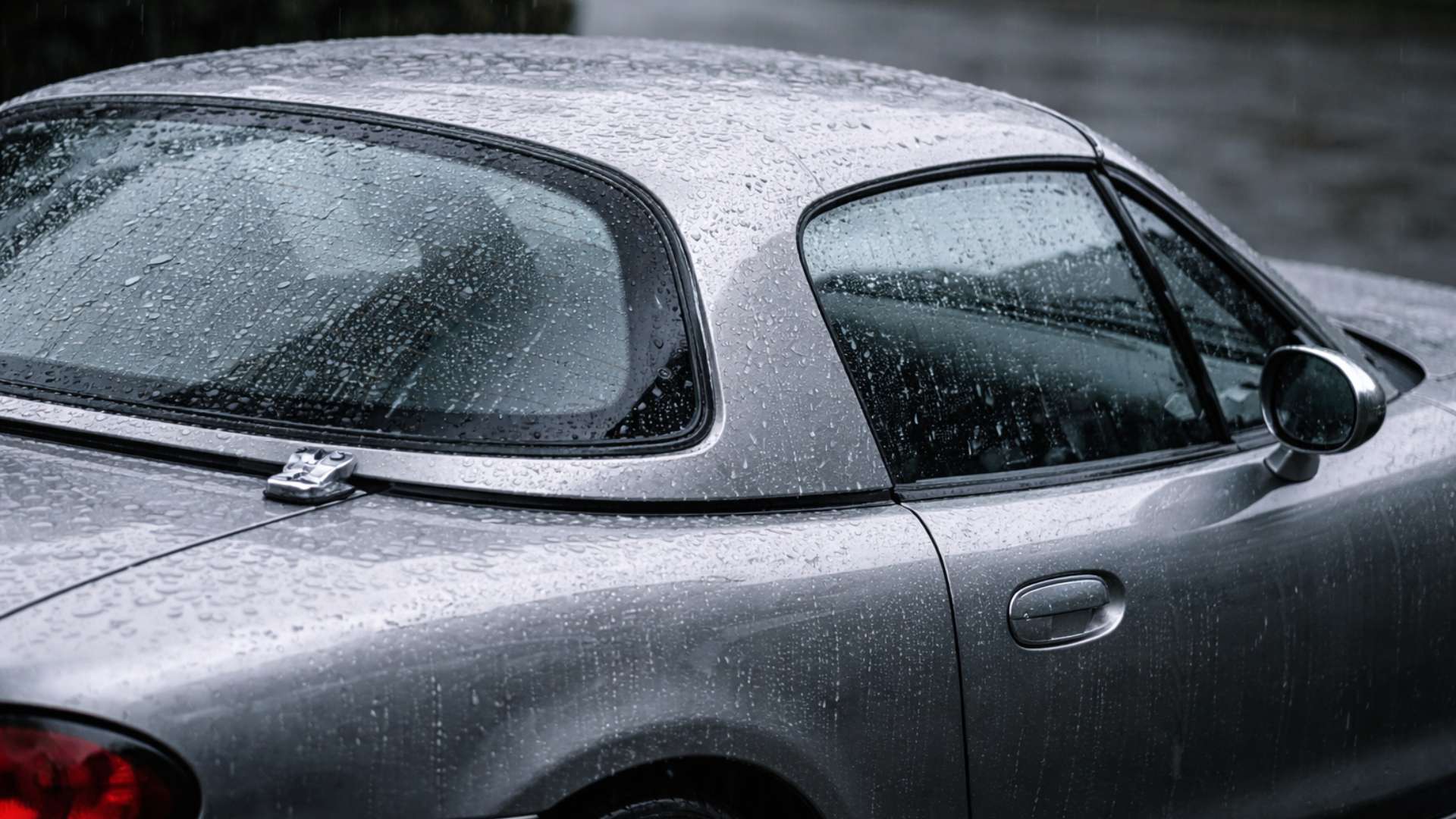
One question comes up for all four profiles: the roof. Some NB2s come with a factory hardtop. Miata.net notes that NA and NB hardtops interchange, sometimes with latch modifications. Maybe a roof that folds at a button matters more to you than period charm. In that case, the retractable-roof Miata RF is where Mazda took that idea much later.
The NB2 Is the Old-School Miata, Finished Properly
VIN before the face. Rails before the paint. Title before the price.
Three checks, in this order, turn an NB2 listing into a decision.
The NB2 is what happens when Mazda takes a great small roadster and fixes it quietly. Stiffer body, stronger brakes, a smarter engine, and still no screens between you and the road. It keeps the analog feel that made the Miata famous, with fewer of the compromises.
Buy it the right way. Check the VIN before the face, the frame rails before the paint, and the title before the price. Do that, and you end up with one of the most rewarding cheap sports cars ever sold in America.
ND
Want the same lightness with modern safety and a newer chassis?
Read the ND guide before you decide how old you want to go.
Your Most Common Questions About the NB2 Miata
Can NB2 parts upgrade an NB1 Miata?
Some can, but rarely as a simple bolt-on. The NB2 headlights need the NB2 front bumper and rewired sockets. The older lights use one bulb for both beams. The VVT cylinder head is a bigger job: you need the cams, actuator, solenoid, oil lines and coils. At that point, swapping in a complete NB2 engine is usually the saner route.
Is an automatic NB2 Miata worth buying?
It can be, if you buy it for what it is. The four-speed automatic blunts the acceleration and removes most of the involvement that defines a Miata. In exchange, an automatic NB2 usually sells for noticeably less and suits a relaxed cruiser. Just check the fluid: it should look clean and never smell burnt. Walk away if it does.
Does an NA hardtop fit an NB2 Miata?
Generally yes. Factory hardtops interchange between the NA and NB generations, although some need latch modifications to seal properly. That widens your search a lot, since used NA tops are plentiful. Check for a headliner and a rear defroster, which later tops include. A factory hardtop turns an NB2 into a far more usable winter car in dry climates.
Can you daily drive an NB2 Miata in winter?
Mechanically, yes. The problem is salt, not snow. In a Rust Belt state, a winter-driven NB2 Miata feeds salt to its rockers and frame rails every season. If you must, rinse the underside often, keep the drain holes clear and add cavity wax. Most owners in salt states keep the Miata for spring through fall and drive something cheaper in January.
Is an NB2 a good first autocross car?
It is one of the best. The NB2 is cheap to run, forgiving at the limit and supported by a huge aftermarket. Start with fresh tires, high-temperature brake fluid and healthy shock mounts before buying power. Check your local SCCA region's classing rules first, because modifications move a car between classes. A stock NB2 Miata already teaches car control better than most cars twice its price.
When is the NB2 Miata timing belt due?
Miata.net gives a 60,000-mile interval. Ask for the receipt, not a verbal promise. If there is no proof, budget for a timing belt service right after purchase. Many owners replace the water pump and seals at the same time, since the labor overlaps. It is cheap insurance on a car this age.
Sources
- Hagerty, NA and NB Miata values and auction records
- Hagerty, every Miata base price adjusted for inflation
- OnAllCylinders, NB Miata year-by-year buyer's guide
- Redline Auto Parts, NB Miata buyer's guide and trim changes
- Redline Auto Parts, NB2 to NB1 parts compatibility
- Miata.net, checking out a used NA or NB Miata
- Wikipedia, Mazda MX-5 NB technical history and production figures
- Grassroots Motorsports, owner reports on NB frame rail rust
- Grassroots Motorsports, why Miata rockers are structural
- Grassroots Motorsports, NB1 versus NB2 owner discussion
- Worth Driving, NB Miata common issues and fixes


Leave a Reply