

Inside this guide
NA vs NB, in 12 stops
- 01The difference in one table
- 02Pop-ups vs fixed lamps
- 03Weight and real-world pace
- 04Engines and diffs by year
- 05Trunk, top and fit
- 06Reliability and rust
- 072026 prices
- 08Smog, inspection and parts
- 09Autocross and track days
- 10Three costly mistakes
- 11Which one to buy
- 12The final verdict
Plus five answers in the FAQ and nine linked sources.
Two Miatas sit on the same lot. One blinks its pop-up headlights at you. The other just stares back, slightly wider and calmer. The asking prices are close. Both are light, rear-drive and built around a manual gearbox.
So which one do you buy? The NA vs NB Miata question hits almost every first-time shopper within a week. Forums answer with loyalty, not facts. NA owners talk about purity. NB owners talk about torque and a usable trunk.
This guide compares the first two generations of the Mazda MX-5 Miata, sold in the U.S. from 1990 to 2005. You will see how they drive, how they age and what they cost in 2026. You will also know which one suits your roads before any test drive.
Already leaning NB?
See which 2001 to 2005 years to buy, where rust hides and what to pay.
What Is the Difference Between an NA and NB Miata?
Two generations, one platform
Fifteen model years, one gap
What changed from NA to NB
- Gearbox5-speed5 or 6
- Rear windowplasticglass
- Spare and batteryin trunkunder floor
- Factory turbononeMazdaspeed
Same bones
Front engine, rear drive, double wishbones and a near-identical wheelbase: 89.2 in on the NA, 89.4 in on the NB.
White values: NA. Pink values: NB. U.S. model years only; Japan and Europe followed other calendars.
The NA Miata is the first generation, sold in the U.S. for the 1990 to 1997 model years. The NB is the second generation, sold for 1999 to 2005. There was no 1998 model year here.
The NB is not a clean-sheet car. It kept the NA’s layout, its double-wishbone suspension and nearly the same wheelbase. Mazda then replaced the pop-ups, stiffened the body and freed up more power. It also fixed most of the NA’s practical flaws, at the cost of roughly 200 extra pounds.
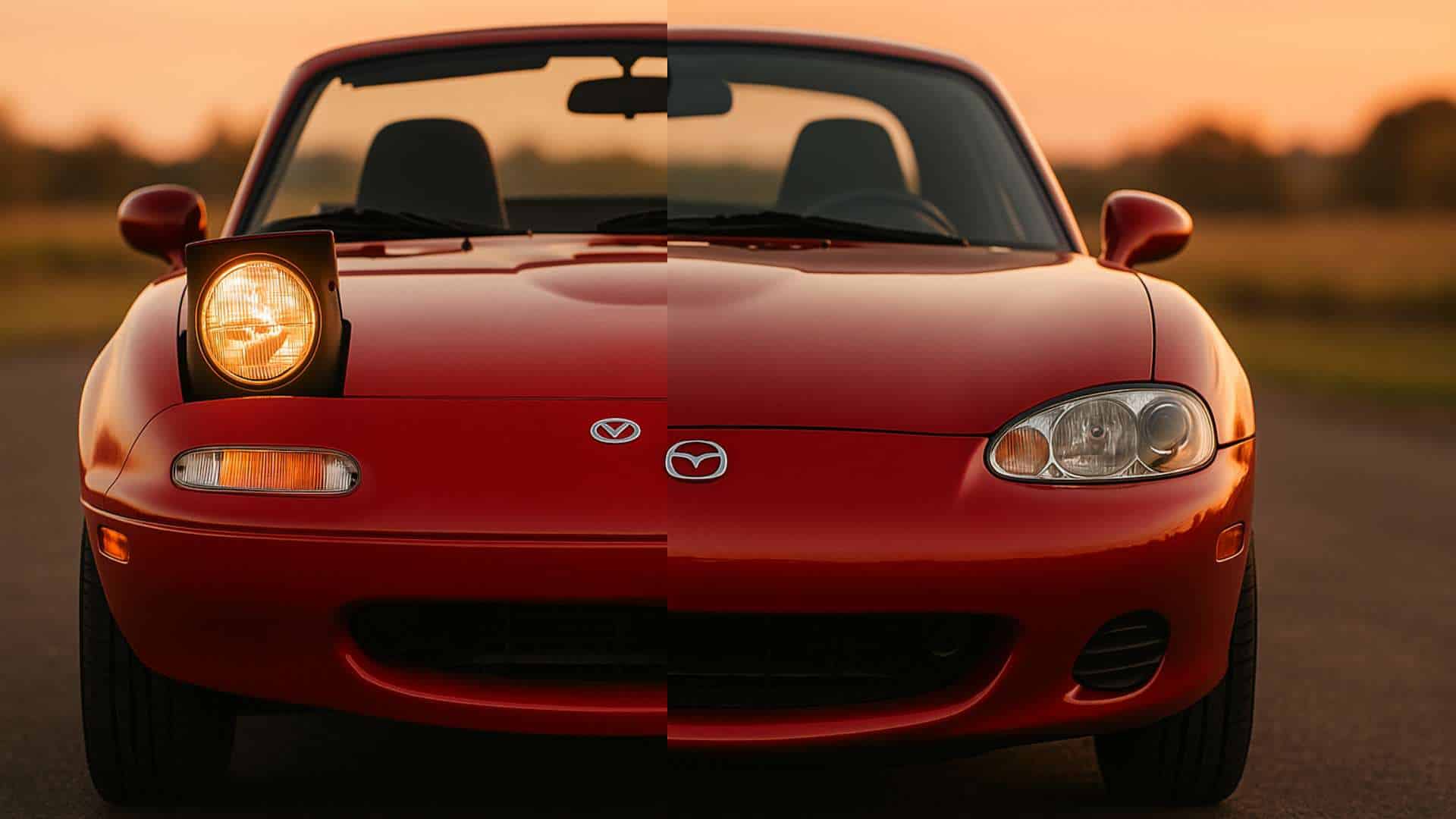
Here is how the two stack up on paper. Figures come from Wikipedia’s NA and NB entries, which cite Mazda and period road tests.
| Spec | NA Miata | NB Miata |
|---|---|---|
| U.S. model years | 1990 to 1997 | 1999 to 2005 |
| Engines | 1.6-liter (1990 to 1993), 1.8-liter (1994 to 1997) | 1.8-liter, VVT from 2001, turbo on the 2004 to 2005 Mazdaspeed |
| Output | About 115 hp (1.6), then 128 and 133 hp (1.8) | 140 hp, then about 142 hp with VVT, 178 hp Mazdaspeed |
| Lightest curb weight | About 2,160 lb (1990, no options) | About 2,348 lb (2001, minimum options) |
| Headlights | Pop-up | Fixed |
| Drag coefficient | 0.38 | 0.36 |
| Manual gearbox | 5-speed only | 5-speed, optional 6-speed |
| Soft top rear window | Plastic, zippered | Glass with defroster |
| Spare tire and battery | Inside the trunk space | Under the trunk floor |
In any NA Miata vs NB Miata debate, the table settles the facts. It does not settle the choice. That depends on what you want the car to do, and on which differences you will actually feel.
Design: Pop-Ups, Fixed Lamps and the Emotional Premium
The face is the first filter
Same roadster underneath. Two very different first impressions.
NA, 1990 to 1997
- Pop-up lamps, round and iconic
- Drag: Cd 0.38
- Lift motors and linkages to maintain
NB, 1999 to 2005
- Fixed lamps, RX-7 inspired
- Drag: Cd 0.36
- Pop-ups dropped for pedestrian safety tests
If the pop-ups are non-negotiable, the spec sheet no longer matters.
Let’s be honest about what drives most NA purchases. It is the face. The round pop-up headlights are the most recognizable detail of any Miata ever built.
Mazda did not drop them on a whim. According to Wikipedia’s NB entry, retractable lamps no longer passed pedestrian safety tests. The NB got fixed units instead, plus styling cues borrowed from the third-generation RX-7.
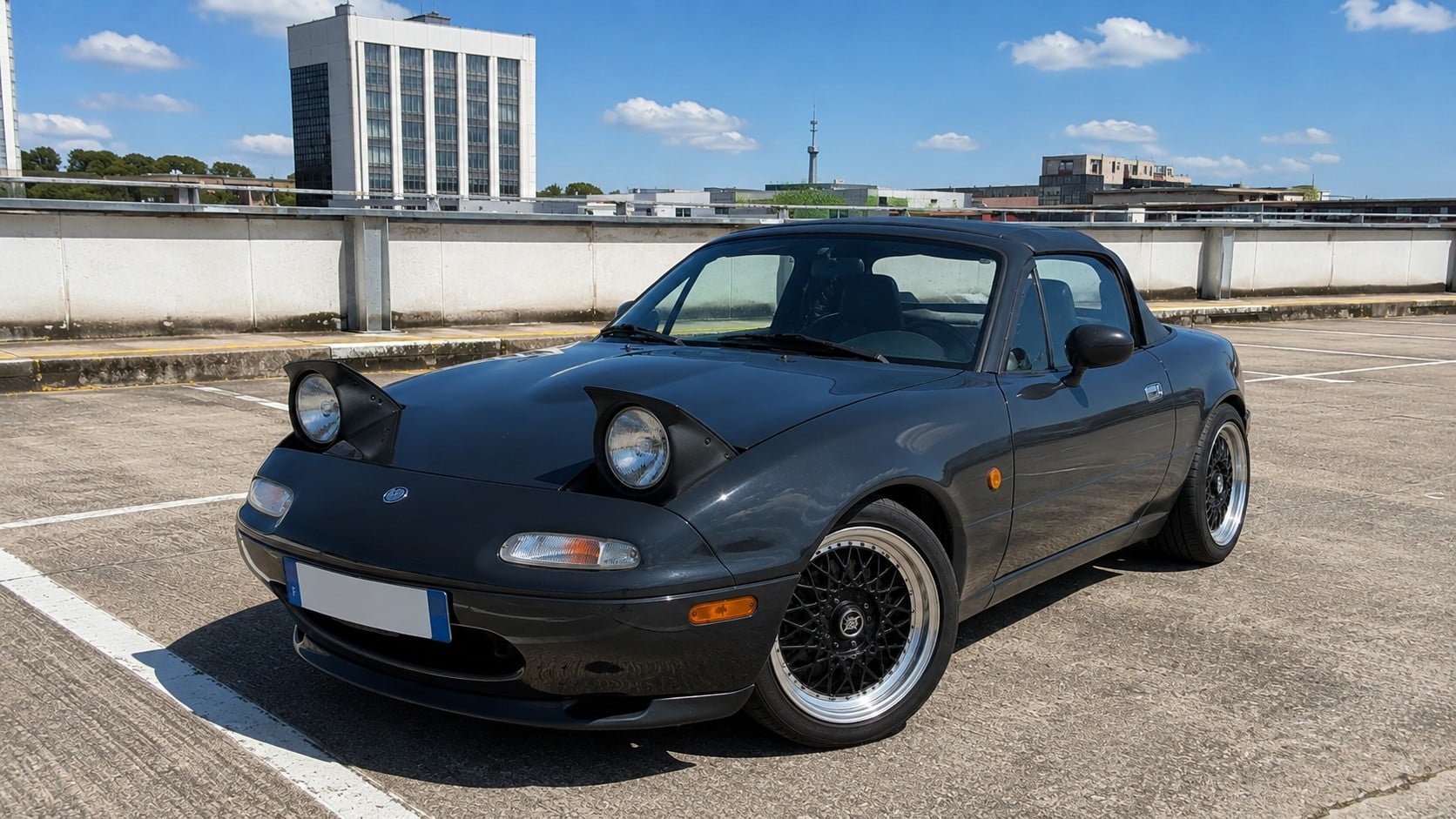
The redesign also cleaned up the airflow. Drag dropped from 0.38 to 0.36, and the NB grew slightly wider. Car and Driver’s 1999 road test noted that lift now changed more evenly front to rear. Handling stayed more consistent as speed climbed.
The cost of charm
Pop-ups are mechanical parts, and they are now decades old. Lift motors tire, linkages drift and the lamps stop rising in sync. None of this is expensive on its own. It is simply one more system the NB does not have.
Taste is the only real judge here. The NB’s early “catfish” face divides people. Brian Silvestro of The Autopian admits he dismissed it on looks, then grew attached after a year of ownership. If the pop-ups are non-negotiable for you, your decision is already made.
How They Drive: Weight, Stiffness and Real-World Pace
0.3 s
The 1999 NB beat every NA Car and Driver had tested to 60 mph.
Lightest curb weight
1990 NA without options vs 2001 NB with minimum options.
0 to 60 mph, Car and Driver
Shorter bar is quicker. NA value derived from the 0.3 s gap The Autopian reports.
On a back road, the two feel closer than the internet claims. Both have quick steering, a short-throw shifter and a chassis that talks through the seat. The differences show up at the edges.
The NA is the lighter, more nervous car. It rotates eagerly, transmits every ripple and feels busy in a way many owners love. The NB is calmer and more planted. Its stiffer body keeps the suspension working cleanly on broken pavement.
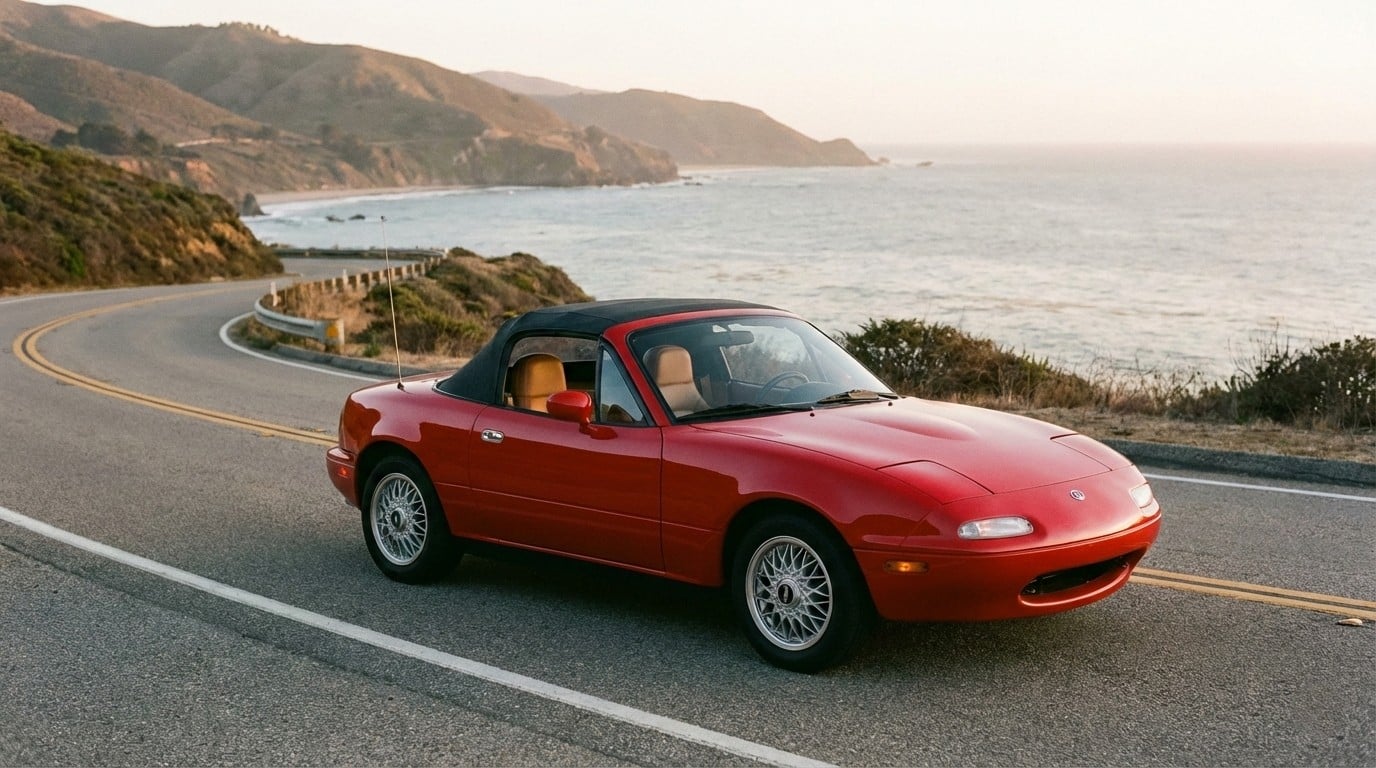
Straight-line pace is where the NB pulls clear. The Autopian (Actually, The NB Is The Best Miata, 2025) cites Car and Driver’s test. The 1999 NB ran 0 to 60 mph in 7.9 seconds. That beat every NA the magazine had tested by 0.3 seconds. On a small, light car, that gap shows on every on-ramp.
Silvestro has owned both generations, and his account is specific. In his NA, reaching highway speed meant several trips to redline. In his 2003 NB, merging into traffic became easy. The extra low-end torque did the work.
Here is a case the French edition of MX5Global documented. A buyer wanted an NA for its looks, but faced 40 minutes of rough two-lane road daily. He drove both back to back. The NB’s composure over bumps won him over, and the pop-up dream did not survive the commute.
The lesson is simple. If most of your miles are tight, smooth and slow, the NA’s lightness pays off. If they include highways and bad surfaces, the NB earns its extra weight.
Engines, Gearboxes and Differentials, Year by Year
U.S. rated output by model year
From 115 to 178 hp in fifteen years
Six-speed manual: NB only, from the 1999 10th Anniversary, then optional from 2001. Every manual NA is a five-speed.
“NA” and “NB” each hide several very different cars. The engine, the gearbox and the differential change more within each generation than most listings admit.
That is why model year matters more than badge. Read the VIN, then match it to the right drivetrain before you compare prices.
NA 1.6-liter, 1990 to 1993
The original B6 engine revs freely and makes about 115 hp. It feels lively below 60 mph and strained above 70. Manual cars could get a viscous limited-slip, the less durable type. The earliest cars also carry a crankshaft issue, covered in the reliability section below.
NA 1.8-liter, 1994 to 1997
The 1994 update brought the 1.8-liter BP engine at 128 hp, then 133 hp from 1996. Mazda added extra chassis bracing, including a bar between the seatbelt towers. A Torsen limited-slip became available, far more durable than the viscous unit, per Wikipedia.
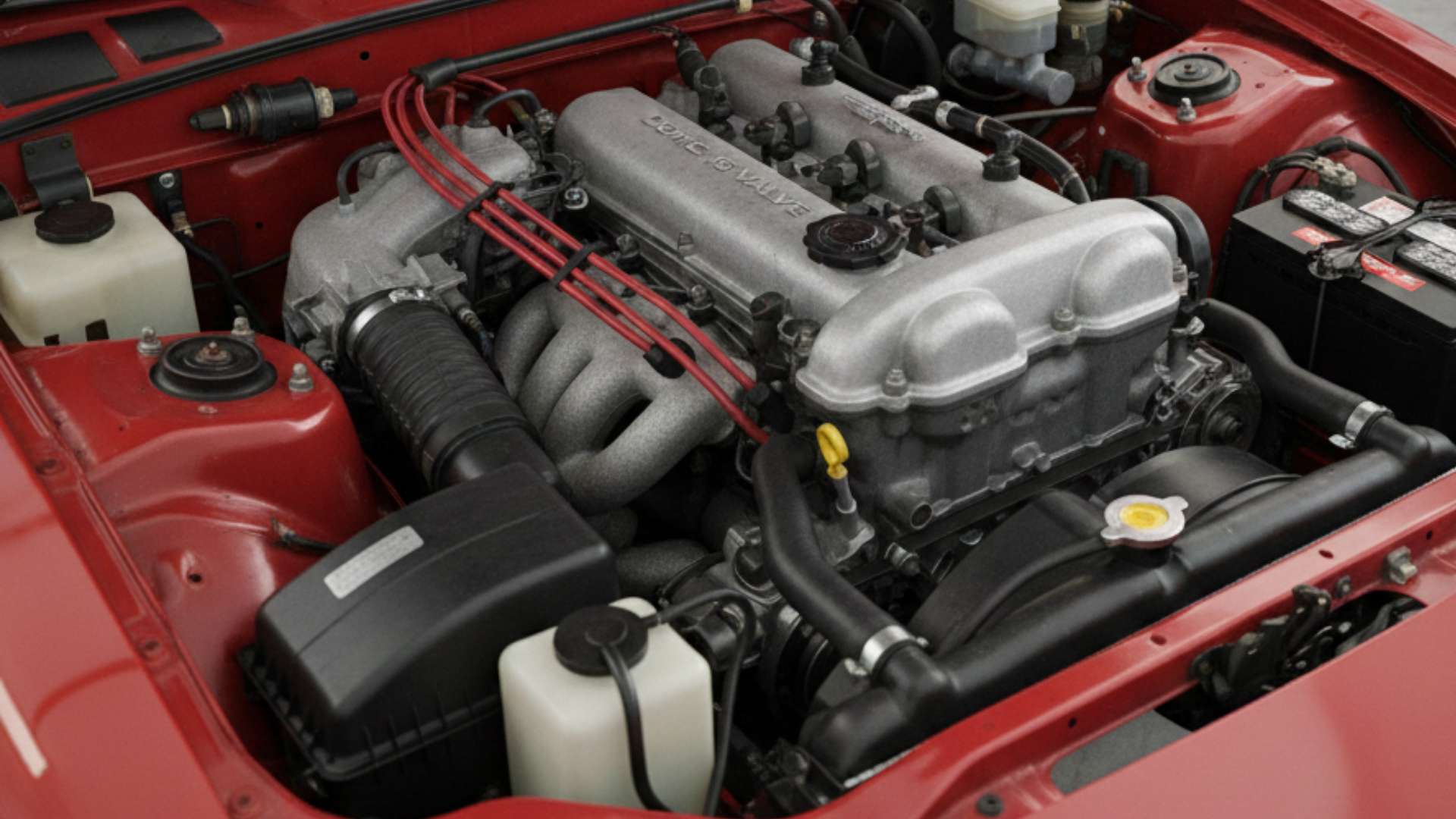
For many enthusiasts, this is the sweet spot of the NA. You keep the pop-ups and the light body, with more torque and a stronger differential. The R-Package added Bilstein dampers, stiffer bars and a Torsen, with only 1,841 built for the U.S.
NB 1.8-liter, 1999 to 2000
The early NB kept the 1.8-liter block with a revised head and higher compression. A variable intake system helped lift output to 140 hp. The 1999 10th Anniversary Edition introduced the six-speed and Bilstein dampers, with 3,000 cars for the U.S.
NB with variable valve timing, 2001 to 2005
From 2001, variable valve timing on the intake cam boosted midrange pull. The body gained further stiffness, and the six-speed became a regular option. The 2004 to 2005 Mazdaspeed added a factory turbo, the only one ever sold in the U.S.
One point often gets lost. A late NA 1.8 and an early NB feel far more alike than a 1990 NA and a 2003 NB. Compare specific years, not generation labels.
Living With Them: Trunk, Top, Cabin and Fit
Where the NB wins every single day
Top view of each trunk, drawn to show what eats the space.
NA trunkSpare tire on the left, battery in the right corner. Dashed box: what is left.
NB trunkFlat floor, spare and battery below. Dashed box: usable space.
NA: zippered plastic that browns and fogs. NB: glass with a defroster.
A/C and cruise are more common on NBs, and more likely to still work.
Factory hardtops interchange between NA and NB, sometimes with latch changes.
Over six feet tall? Sit in both, top up, before you shop in earnest.
This is where the NB builds its strongest case. Most of its daily advantages are small, but you meet them every single time you use the car.
Trunk space
In the NA, the spare tire bulges into the trunk and the battery fills the right-hand corner. The NB moved both under the trunk floor. That makes a weekend bag or a grocery run far easier.
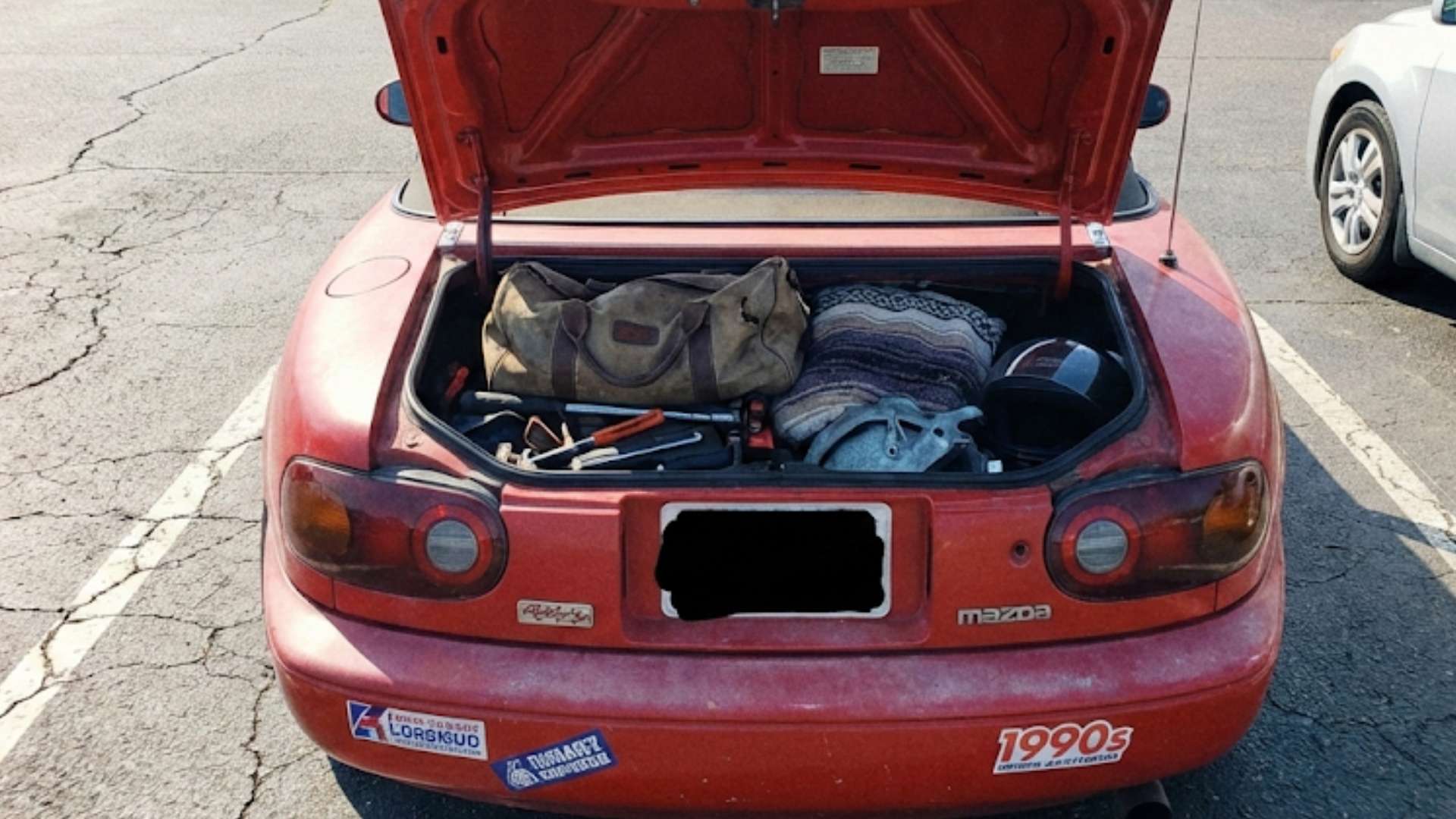
If you keep an NA, check the battery. Miata.net recommends a sealed unit with its two drain tubes still attached, never a regular lead-acid battery.
The soft top
Original NA tops use a plastic rear window that scratches, browns and turns opaque with age. The NB came with glass and a defroster. Some NAs now wear a newer glass-window top, so check the actual car.
Cabin and equipment
The NB cabin feels more modern and more cohesive. Air conditioning and cruise control appear more often, and they are more likely to still work. The later center console added usable cupholders. The NA cabin is simpler, lighter and charmingly bare.
Fitting inside
Neither car is roomy. Tall drivers should sit in both before shopping seriously, top up and top down. Some owners remove sun visors or lower the seat to fit. If you still feel cramped, the NC Miata offers noticeably more cabin space with the same basic recipe.
One shared perk helps both. A factory hardtop interchanges between NA and NB, sometimes with latch changes. That widens your search if you want a roof for winter.
Reliability and Rust: Where Each Generation Fails
Six hotspots, two generations
Numbers on the drawing match the cards below. Red marks rust, white marks NA mechanical issues, pink marks NB electrical issues.
Terminal rust where the front sway bar mounts.
Watch the crank pulley for wobble at idle.
Bubbles outside mean worse structure inside.
Where the arch meets the rocker seam.
An oil leak below it hides a cheap O-ring.
Paired for life with the engine computer.
Bring: a flashlightPlus: a small magnetAsk for: a cold start
Both generations have tough, simple drivetrains. What separates a good buy from a money pit is age-related wear and corrosion. Each generation has its own signature weak points.
Miata.net’s buyer guide, written for both generations, is the reference most owners use. The lists below follow its generation-specific notes.
NA-specific checks
- Short-nose crankshaft: Miata.net reports failures on 1990 cars and some 1991s, with VINs ending 209446 or lower.
- Lifter tick: hydraulic lash adjuster noise is common and usually harmless, often cured with the right oil.
- Crank angle sensor leak: oil below the sensor points to a cheap O-ring, and warns of coolant trouble.
- Bump stops: the original rubber stops have aged out on nearly every NA, and many have crumbled.
NB-specific checks
- Front frame rails: No Money Motorsports warns of terminal rust where the front sway bar mounts.
- Immobilizer: on 2001 to 2005 cars, it is paired for life with the engine computer.
- Cold clutch shudder: 2001 to 2002 cars can shudder on cold take-off, covered by a Mazda bulletin.
Rust on both: rockers and rear arches
Miata.net calls rust the worst enemy of used Miatas. Rockers and rear fender arches are the usual victims on both generations. On the rockers, visible bubbles mean the structure underneath is already worse.
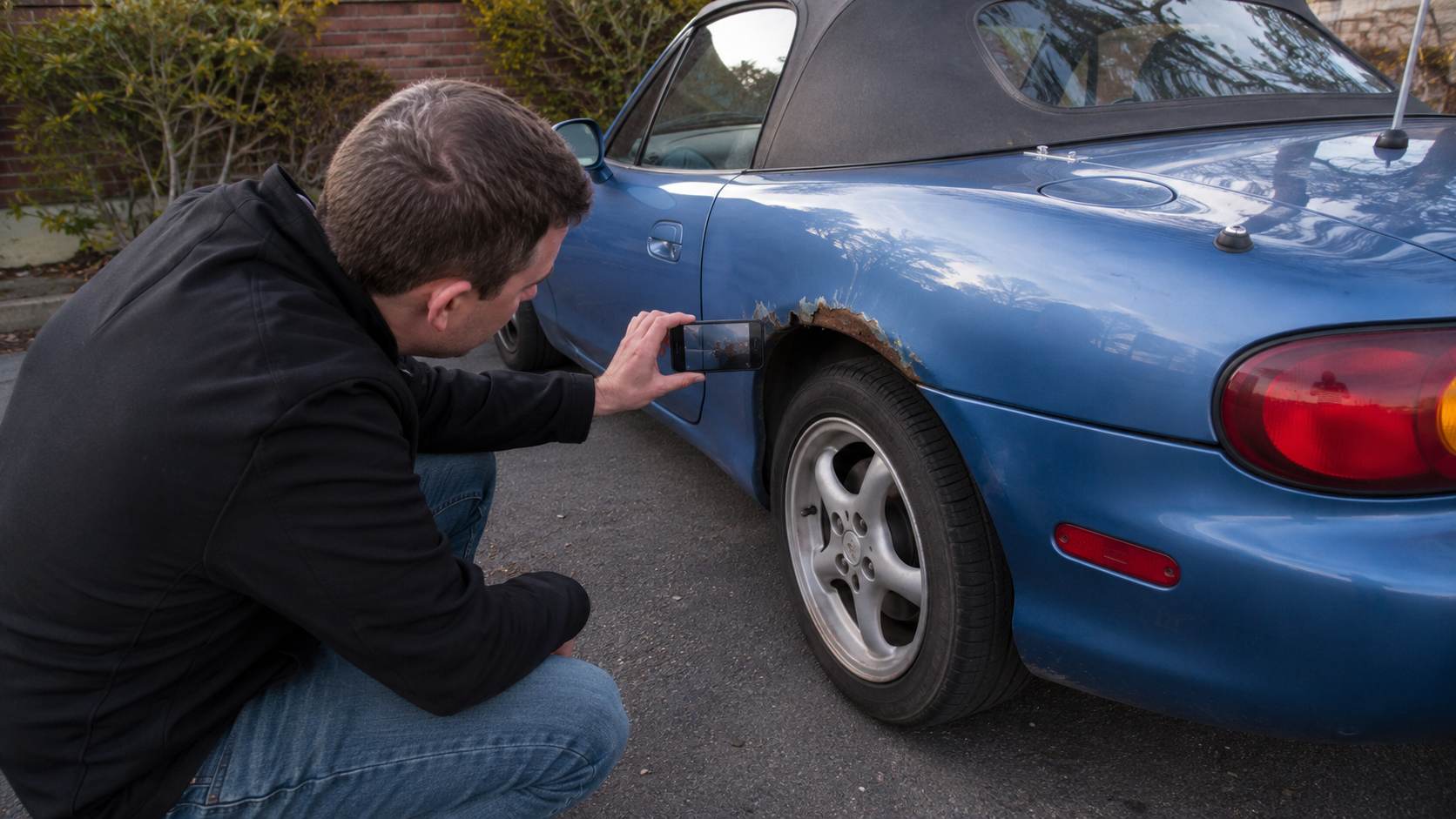
The NB case MX5Global documented most closely makes the point. A 2001 car in Europe had a thick gray coating applied only over the damaged rockers. Seven weeks after purchase, the owner found perforation underneath. The repair quote reached about 78 percent of the purchase price.
Three checks that take 15 minutes
- Read the VIN: on an early NA, compare the last digits with 209446. Then watch the crank pulley at idle.
- Use a magnet: the hood is aluminum, but a magnet should grip every other panel. Lost grip means filler.
- Arrive for a cold start: ask the seller not to run the car first. Then check the frame rails with a flashlight.
Geography matters as much as generation. A Miata from the salted Rust Belt deserves more scrutiny than one from Arizona or Southern California. Always ask where the car lived, not only where it is listed.
NA vs NB Miata Prices in 2026
$16,600
The #2-condition value of a 1999 to 2005 NB when Hagerty put it on its 2026 Bull Market List.
Good to excellent: the value spread
Hagerty, January 2026. Left end: #3 good. Right end: #2 excellent.
Neither generation is a throwaway car anymore. Clean, original examples have climbed steadily, and the best NAs now carry a clear premium.
Hagerty’s January 2026 analysis gives the clearest picture. According to Hagerty (Does Your Miata’s Color Make It Worth More?, 2026), #3 “good” NAs run $8,000 to $10,600. The low end is early 1.6 cars, the high end 1996 to 1997 cars. NBs sit in the mid-$9,000 range in the same condition. Stock auction records stand at $42,525 for an NA and $29,925 for an NB.
Read those numbers carefully. For driver-quality cars, the two generations cost about the same. The NA premium appears at the very top, where originality and pop-up nostalgia drive collector bids.
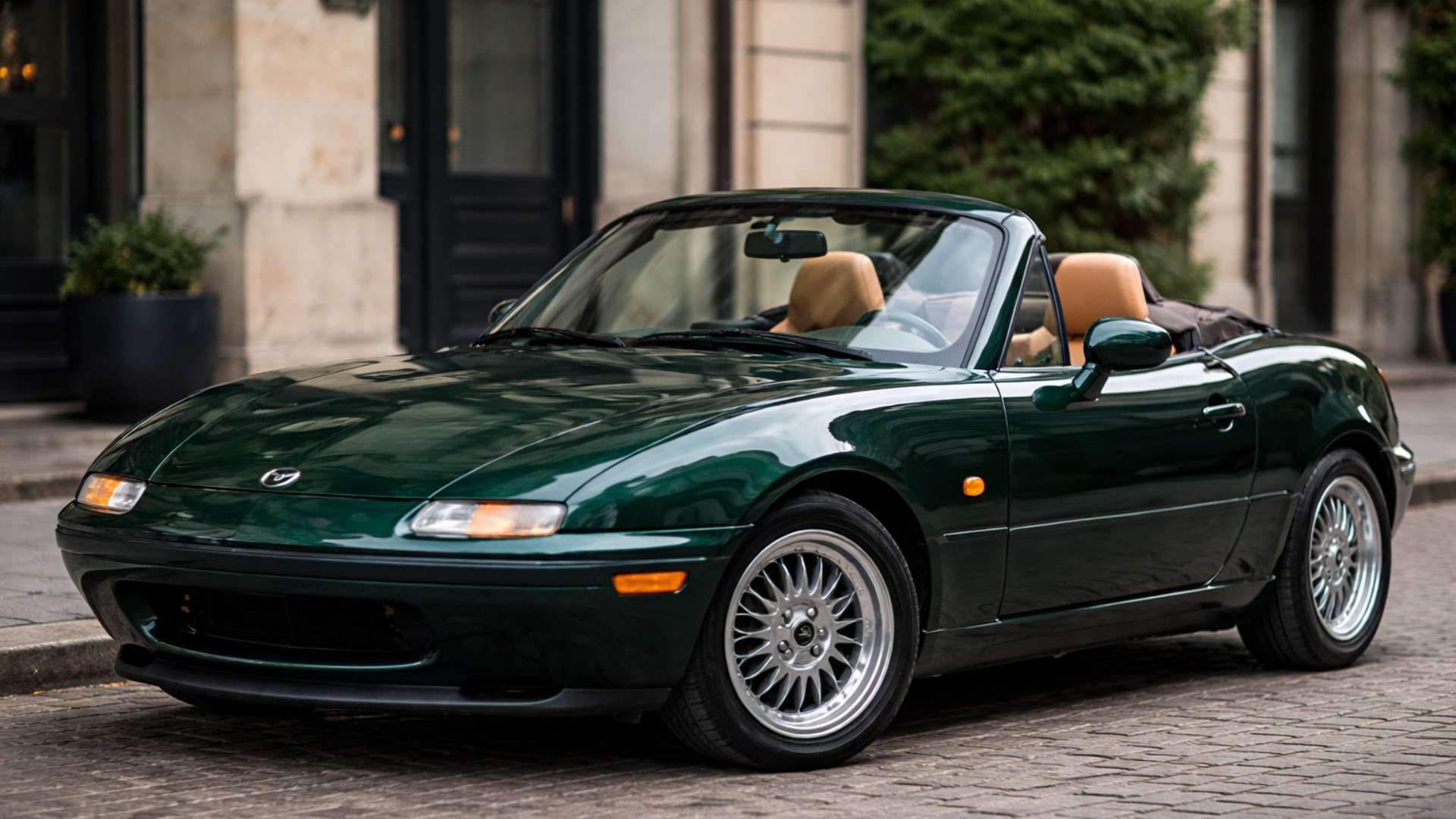
The NB may not stay the bargain for long. According to Hagerty (2026 Bull Market List, December 2025), the 1999 to 2005 Miata is expected to appreciate. Its #2-condition value was $16,600. Hagerty noted that demand stays consistently high, and that few cars appeal to so broad a demographic.
Special editions that move the price
Rare trims change the math on both sides. On the NA, look for the 1991 British Racing Green Special Edition, the 1993 Limited Edition or the M-Editions. On the NB, the 10th Anniversary, the Mazdaspeed and the 50-car Club Sport lead.
Titles and the real budget
Miata.net estimates that a salvage-title Miata is worth about half of a clean-title car. On cars this old, even cosmetic damage can trigger a total loss. Run a history report before you travel.
Across the questions MX5Global receives, one pattern stands out. The hard part is rarely a lack of information. It is the gap between the budget buyers imagine and the cost of a sound, sorted car.
Owning One in the U.S.: Inspections, Emissions and Parts
State by state, not one rulebook
California: smog check every two years and at most sales.
Pennsylvania: annual safety inspection, emissions in some counties.
Florida: no periodic vehicle inspection at all.
OBD-II arrives in 1996
Ask your testing station how it handles pre-1996 cars.
More cars built means more used parts. Totals as reported by Hagerty.
There is no single American rule for older cars. Inspection and emissions testing are set state by state, and they vary sharply.
California requires a smog check every two years on these cars, and usually at a change of ownership. Pennsylvania adds an annual safety inspection, with emissions testing in certain counties. Florida has no periodic vehicle inspection at all.
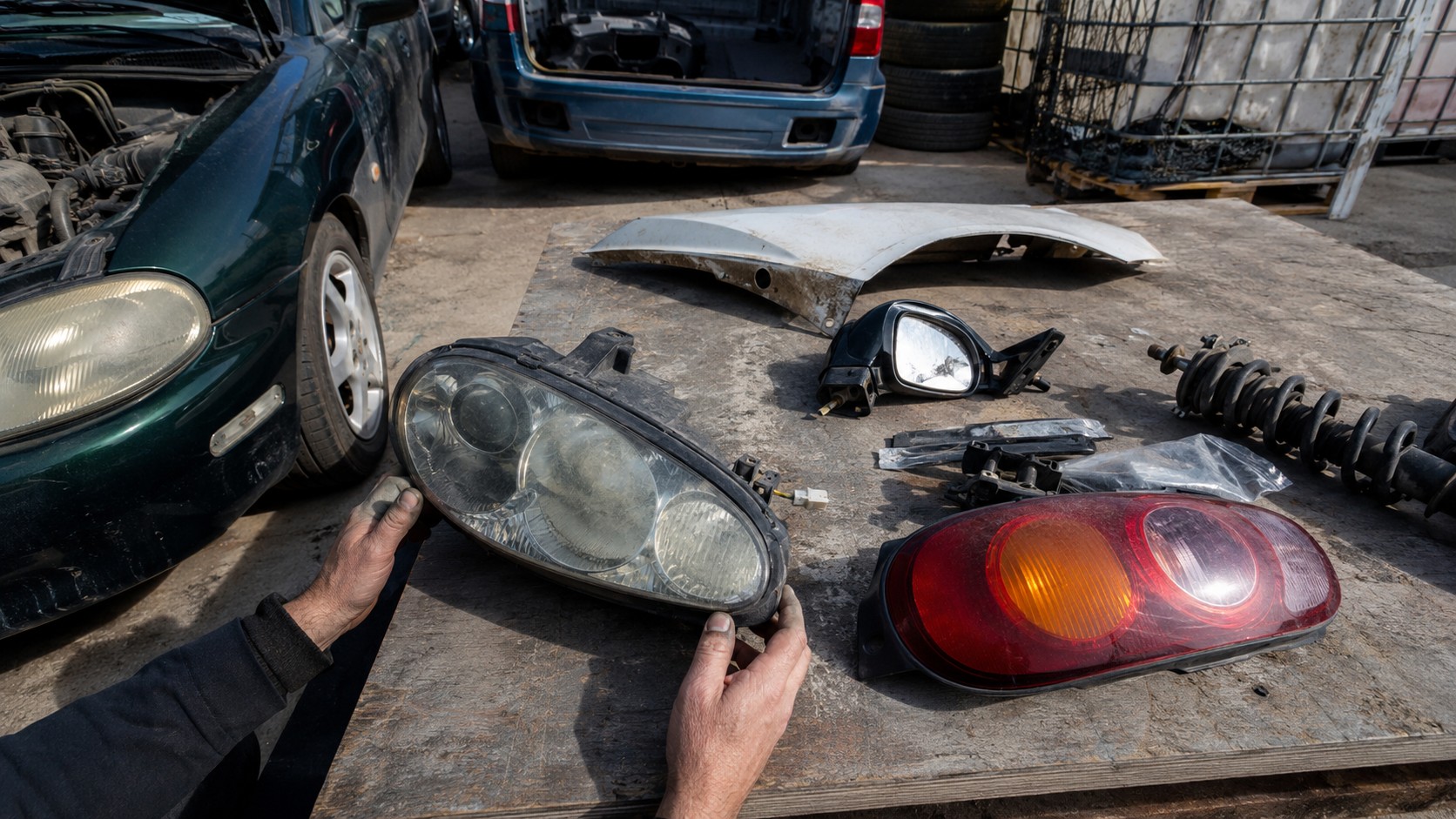
Check your own DMV before buying across state lines, especially with a modified exhaust. In states that test emissions, a removed catalytic converter can block registration.
Model year also changes the paperwork in some states. The 1996 and 1997 NAs and every NB use OBD-II diagnostics. Earlier NAs predate it, so they may face a different test.
Parts availability
Supply is one reason parts stay cheap. According to Hagerty (Having Trouble Picking the Right Miata?, 2025), the NB sold 290,123 units against 431,506 for the NA. That larger NA population feeds a deep pool of used panels and trim. It also explains why NA restoration is so well supported.
Mazda itself backs the first generation. In 2019, Mazda USA expanded its restoration parts program to over 1,100 new and legacy NA parts. Some NB items are now harder to find. No Money Motorsports notes that NB1 core engines are getting scarce and expensive.
Which Is Better for Autocross and Track Days?
Spec Miata balances them with weight
Minimum race weight with driver, per No Money Motorsports.
Spec Miata, one of the most popular club racing classes in the U.S., offers the best real-world answer. It runs both generations under one rule set, balanced with minimum weights and restrictor plates.
According to No Money Motorsports, the NB has become the dominant Spec Miata chassis. It has a slightly wider track, improved bump steer and a small aerodynamic edge. The same source stresses that the advantage is minimal. Driver skill and build quality matter far more.
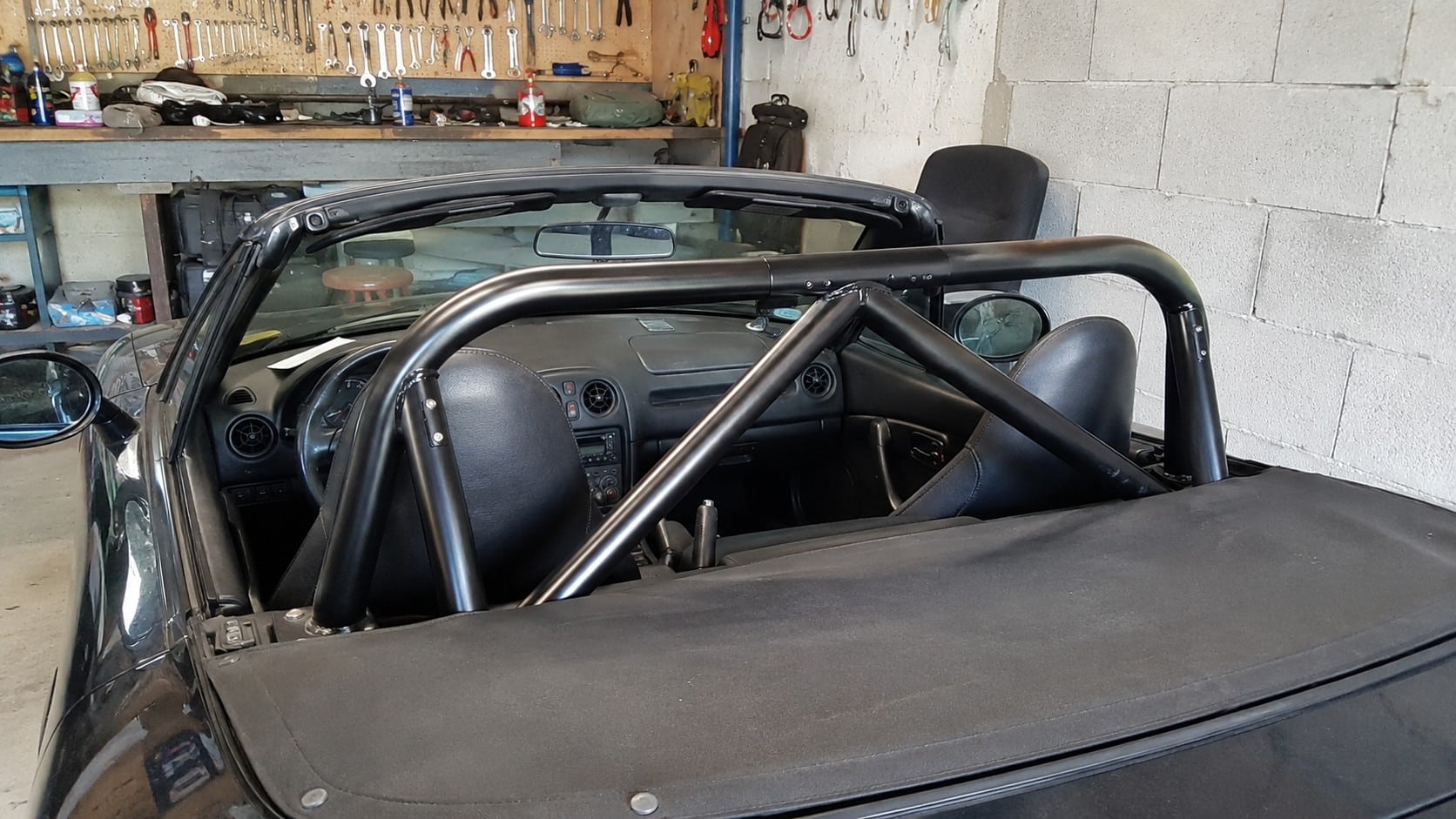
The NA holds its own on tight tracks. The 1990 to 1993 cars run the lowest minimum weight, which favors light drivers. The author of No Money Motorsports races a 1994 to 1997 NA himself. He calls it the best-valued Spec Miata, cheaper to buy and simpler to maintain.
For autocross and track days on a budget, both are excellent. Pick the NB for more torque out of slow corners. Pick the NA for the cheapest entry and the lightest car. Check the frame rails first either way.
Three Mistakes Buyers Make When Choosing NA or NB
Myth, then reality
Three assumptions to drop before the first viewing.
Myth 1
“Pop-ups are worth any price”
A rusty NA is still a rusty car. Price what sits under the headlights.
Myth 2
“Newer means less rust”
The NB’s frame rails are a weak point the NA does not share.
Myth 3
“Every NA is the same car”
A 1990 1.6 and a 1996 1.8 are two different purchases.
Search by model year and condition, never by generation label alone.
Most bad Miata purchases do not come from bad luck. They come from a wrong assumption made before the first inspection.
These three show up again and again in listings and owner reports. Each one is avoidable in under an hour of homework.
Paying the pop-up premium for a tired car
Nostalgia inflates NA asking prices, even on neglected cars. Sellers know that the face sells, and they price accordingly.
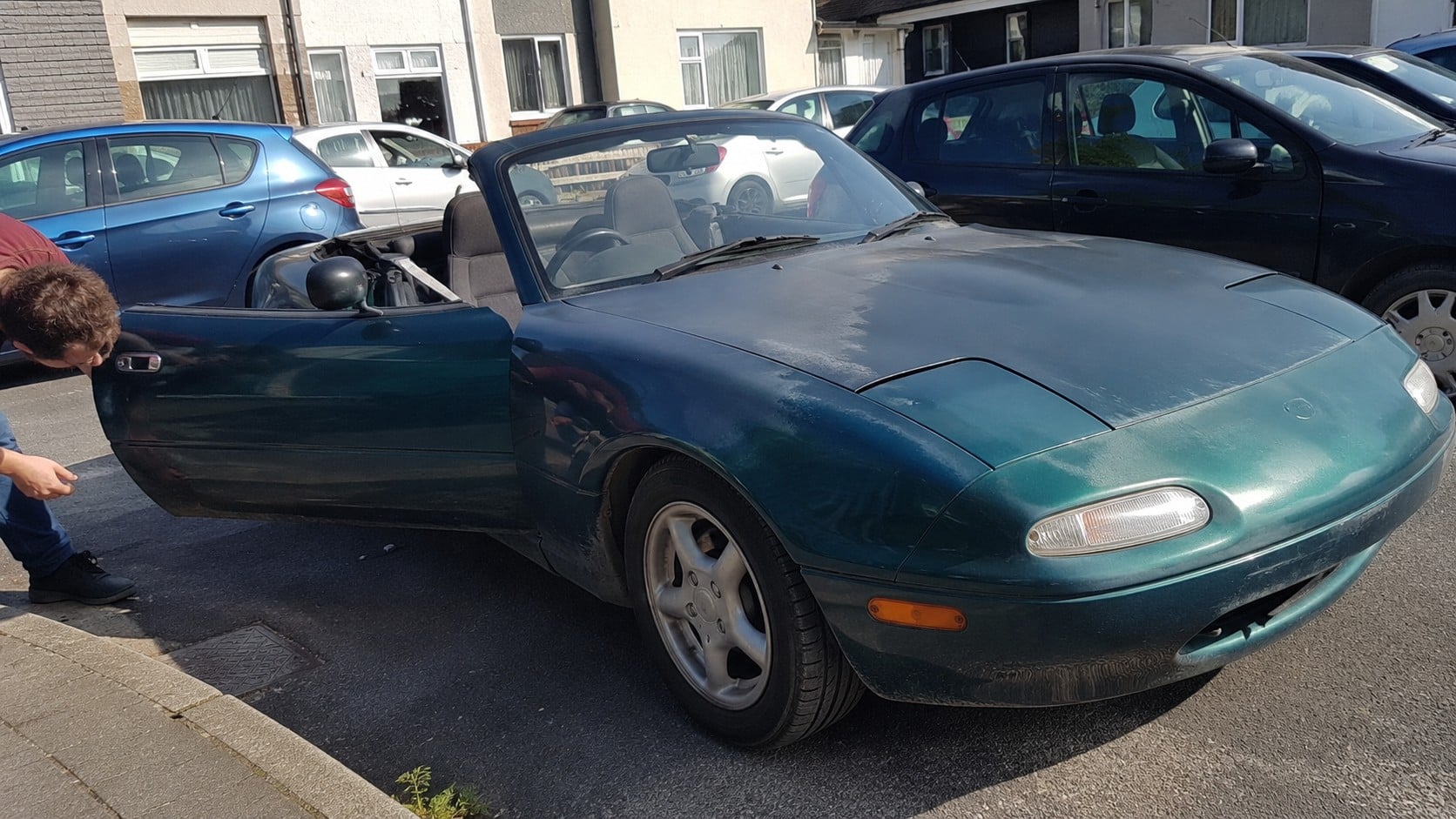
A pop-up face does not make a rusty NA a better buy than a clean NB. Price the car underneath the headlights, then decide how much the nostalgia is worth to you.
Assuming the newer car rusts less
Many buyers pick an NB because it is younger. Yet its front frame rails are a weak point the NA does not share. A dry-climate NA can be structurally healthier than a salted NB.
Treating every NA as the same car
A 1990 1.6 with a viscous diff and an early crank differs from a 1996 1.8 with a Torsen. The same goes for an NB1 versus a VVT NB. Narrow your search to model years, not generations.
NA or NB: Which Miata Should You Buy?
Start with the job, not the badge
Pick the question that matters most to you, then follow the line.
Whatever the branch, the frame rails and rockers get checked first.
There is no universal winner. There is a right car for how you plan to drive, store and spend. Match the generation to your use, then hunt for the best example.
The purist and future collector
Buy an NA, ideally a 1994 to 1997 1.8 or a documented special edition. Keep it original. That is where long-term value concentrates.
The regular driver
Buy an NB, preferably a 2001 to 2005 car. The torque, the glass rear window and the usable trunk make daily miles easier.

You give up very little of the driving feel. You gain a car that shrugs off highway stretches and rough roads far better.
The budget track builder
Either works. A 1994 to 1997 NA is usually cheapest to build. An NB offers more parts options and a small chassis advantage, at a higher entry price.
The first-time owner on a tight budget
Ignore the generation debate. Buy the most solid, best-documented car you can afford, NA or NB. Structure first, options later.
Buy the Miata in Front of You, Not the Generation
The heart picks the generation
Two answers to one idea
Purest and lightest, pop-ups on top, collector upside.
Same idea sharpened: torque, stiffness, a real trunk.
The head picks the car
Four checks, in this order
- 1VIN and model year
- 2Frame rails
- 3Rockers and arches
- 4Title, then price
A sound NA beats a rotten NB. A sound NB beats a rotten NA.
The NA and the NB share the same soul. The NA gives you the purest, lightest version of the idea, with pop-ups on top. The NB gives you the same idea, sharpened and easier to live with.
Choose the generation with your heart, then choose the actual car with your head. Check the VIN, the rails, the rockers and the title before you talk price.

Do that, and either one will reward you for years. The best Miata is rarely the rarest one. It is the honest one you can drive without worrying.
Want the same lightness with modern safety and a newer chassis?
Read it before you decide how old you want to go.
Your Most Common Questions About NA vs NB Miata
Which is safer in a crash, NA or NB?
Neither matches a modern car, so set expectations accordingly. U.S. NAs had a driver airbag from the start, and a passenger airbag from 1994 along with side-impact bracing. The NB offered optional ABS and kept dual airbags throughout. Euro NCAP gave a 2002 model four stars for adult protection. A well-maintained NB Miata has the newer structure, but no test compares the two directly.
Can I import a Japanese Eunos Roadster instead?
Yes. Every Eunos Roadster, the Japanese-market NA, is now over 25 years old and eligible for U.S. import. Japanese NB Roadsters built through 2001 now qualify as well. Expect right-hand drive, Japanese export paperwork and titling rules that vary by state. Some Japanese-market trims offer unusual colors and equipment, but parts for those specific pieces can be harder to source here.
Is classic car insurance a good idea?
Often, if the car is not your daily driver. Collector policies, such as Hagerty’s, usually offer agreed value, which protects a clean car’s real market price. They typically come with mileage limits and storage requirements. For a driver-quality NA or NB Miata used every day, a standard policy may fit better. Compare both before you buy.
When is the timing belt due on both?
Miata.net gives a 60,000-mile interval for both generations. Age matters too on cars this old. Ask for a dated receipt, not a verbal promise. If no proof exists, budget for a belt, water pump and seals right after purchase, since the labor overlaps.
Should I buy a modified NA or NB?
Only with paperwork. A modified Miata means inheriting someone else’s project, good or bad. Ask which brands were used, who installed them and whether the original parts come with the car. Coilovers, turbo kits and aftermarket engine management vary widely in quality. A stock, documented Miata is usually the safer first purchase, whatever the generation.
Sources
- Hagerty , NA and NB Miata values by condition and auction records
- Hagerty Newsroom , Bull Market List featuring the NB Miata
- Hagerty , choosing between Miata generations and production totals
- Miata.net , checking out a used NA or NB Miata
- The Autopian , an NA and NB owner’s comparison
- No Money Motorsports , NA versus NB in Spec Miata racing
- Mazda USA , NA Miata restoration parts program
- Wikipedia , Mazda MX-5 NA specifications and editions
- Wikipedia , Mazda MX-5 NB specifications and editions

The MX5Global editorial team
Edited by Alan Chevereau, founder of MX5Global. MX5Global is an independent site dedicated to the Mazda MX-5 Miata. Every guide is built from verified sources, current market prices and published owner reports. Last reviewed September 2026.

Leave a Reply